
There’s a quiet kind of pride that comes from stepping outside, coffee in hand, and seeing your garden thriving. The leaves look vibrant. The soil smells rich. Maybe there’s a tomato turning red on the vine or lavender swaying in the breeze.
Table of Contents
If you’ve ever struggled with drooping plants, stubborn pests, or disappointing harvests, you’re not alone. The truth is simple: a healthy garden begins with mastering the gardening basics. Once you understand the foundations, everything else becomes easier—and far more rewarding.
This guide walks you step by step through practical, proven gardening tips and tricks for a healthy garden, so you can grow with confidence.
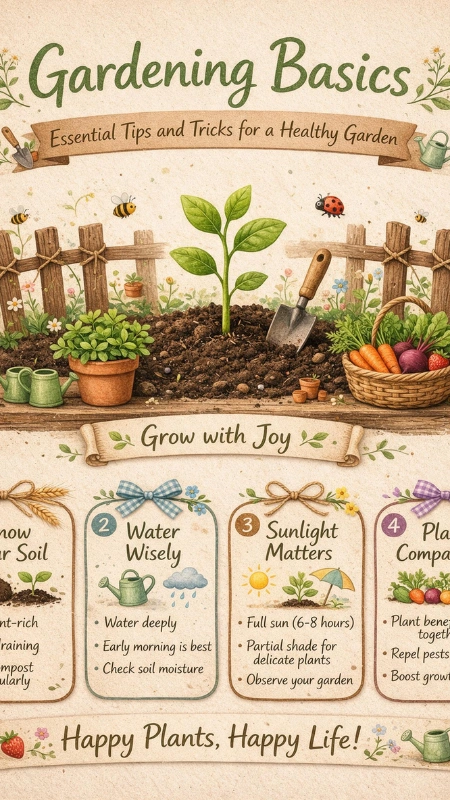
🌿 Understanding Gardening Basics
Before you buy seeds or dig your first hole, you need a plan. The most successful gardens aren’t accidents—they’re built on preparation.
Why Gardening Basics Matter
When you focus on the fundamentals, you:
- Prevent common plant diseases
- Improve crop yields
- Reduce maintenance time
- Save money on fertilizers and replacements
- Grow stronger, more resilient plants
Skipping the basics often leads to yellowing leaves, poor growth, and wasted effort. When you get the foundation right, everything else falls into place.
Know Your Growing Zone
One of the most overlooked gardening basics is understanding your climate.
How to Determine Your Zone
- Check the USDA Plant Hardiness Zone Map online.
- Identify your average annual minimum winter temperature.
- Match plants labeled for your zone.
If you plant something that isn’t suited to your region, no amount of watering or fertilizing will fix the mismatch.
Understand Frost Dates
You should know:
- Your last spring frost date
- Your first fall frost date
These dates help you plan when to start seeds indoors and when to transplant them outside.
🌸 Soil Health: The Foundation of a Healthy Garden
You can’t grow strong plants in weak soil. Think of soil as your garden’s engine. If it’s poor quality, performance suffers.
Test and Improve Your Soil
Start with a soil test. Many local extension offices offer affordable kits.
You’re checking for:
- pH level (Most plants prefer 6.0–7.0)
- Nitrogen (N)
- Phosphorus (P)
- Potassium (K)
Essential Nutrients for Plant Growth
| Nutrient | What It Does | Natural Sources |
|---|---|---|
| Nitrogen | Promotes leafy growth | Compost, manure |
| Phosphorus | Strengthens roots | Bone meal |
| Potassium | Boosts disease resistance | Wood ash |
If your soil lacks nutrients, organic matter is your best friend.
Make Your Own Compost
Composting is one of the smartest gardening basics you can practice.
Simple Compost Ingredients
| Green Materials (Nitrogen) | Brown Materials (Carbon) |
|---|---|
| Vegetable scraps | Dry leaves |
| Coffee grounds | Shredded paper |
| Grass clippings | Straw |
Composting Tips
- Keep a 2:1 ratio of browns to greens
- Turn the pile every 2–3 weeks
- Keep it damp but not soaking
Within a few months, you’ll have dark, crumbly compost that enriches your soil naturally.
💧 Smart Watering Techniques
Watering seems simple, but it’s where many gardens struggle.
How Much Water Does Your Garden Need?
Most gardens need about 1 to 1.5 inches of water per week, including rainfall.
Best Watering Practices
- Water early in the morning
- Avoid overhead watering late in the day
- Water deeply to encourage strong root growth
- Use drip irrigation for efficiency
Deep watering encourages roots to grow downward, making plants more drought-resistant.
Signs You’re Watering Incorrectly
Overwatering Symptoms
- Yellow leaves
- Mushy stems
- Fungal growth
- Root rot smell
Underwatering Symptoms
- Dry, brittle leaves
- Wilting during cool mornings
- Soil pulling away from edges
Pay attention to your soil. Stick your finger two inches down—if it feels dry, it’s time to water.
🌞 Choosing the Right Plants for Your Garden
Selecting the right plants saves you time and frustration.
Native vs. Non-Native Plants
Native plants are adapted to your local climate. That means:
- Less watering
- Fewer pest issues
- Lower maintenance
- Better support for pollinators
If you want a low-effort healthy garden, native species are a smart choice.
Companion Planting Basics
Companion planting is a powerful yet simple gardening trick.
| Plant | Companion | Benefit |
|---|---|---|
| Tomatoes | Basil | Repels insects, improves flavor |
| Carrots | Onions | Deters carrot flies |
| Cucumbers | Marigolds | Reduces pests |
| Lettuce | Radishes | Maximizes space |
When you combine compatible plants, you improve growth and reduce pests naturally.
🐛 Natural Pest Control Strategies
You don’t need harsh chemicals to protect your garden.
Organic Pest Control Options
- Neem oil spray
- Insecticidal soap
- Garlic spray
- Diatomaceous earth
- Introducing beneficial insects like ladybugs
Encouraging biodiversity often solves pest problems before they start.
DIY Natural Pest Spray Recipe
| Ingredient | Quantity | Purpose |
|---|---|---|
| Water | 1 liter | Base |
| Neem oil | 1 teaspoon | Kills insects |
| Mild dish soap | 1 teaspoon | Helps mixture stick |
Shake well and spray leaves in the early morning once a week.
✂️ Pruning and Regular Maintenance
Pruning keeps plants productive and healthy.
Why Pruning Matters
- Removes diseased branches
- Improves air circulation
- Encourages new growth
- Boosts flowering and fruiting
Basic Pruning Tips
- Use clean, sharp tools
- Cut at a 45-degree angle
- Remove dead or crossing branches
- Prune during dormancy for most plants
Regular maintenance prevents small issues from becoming major problems.
🌼 Seasonal Gardening Checklist
A thriving garden changes with the seasons.
Spring
- Test soil
- Add compost
- Plant cool-season crops
Summer
- Mulch heavily
- Monitor pests
- Water consistently
Fall
- Harvest remaining crops
- Plant cover crops
- Add organic matter
Winter
- Protect delicate plants
- Clean and store tools
- Plan next year’s layout
Following a seasonal rhythm keeps your healthy garden on track year-round.
🌻 Maximizing Garden Productivity
If you want bigger harvests and brighter blooms, consistency is key.
Crop Rotation
Rotate plant families yearly to prevent soil depletion and disease buildup.
Example rotation:
- Year 1: Tomatoes
- Year 2: Beans
- Year 3: Root vegetables
Mulching Benefits
Mulch helps you:
- Retain soil moisture
- Suppress weeds
- Regulate soil temperature
- Improve soil structure
Organic mulches like straw or shredded bark break down over time, enriching your soil.
🌷 Encouraging Pollinators
No pollinators means fewer fruits and vegetables.
You can attract bees and butterflies by:
- Planting native flowers
- Avoiding chemical pesticides
- Providing shallow water sources
- Growing a variety of blooming plants
Pollinators can increase yields significantly, especially in vegetable gardens.
❓ FAQ: Gardening Basics for a Healthy Garden
What are the most important gardening basics for beginners?
Focus on soil quality, proper watering, plant selection for your climate, and adequate sunlight. These core gardening basics form the foundation of a healthy garden.
How often should you water a garden?
Most gardens need 1–1.5 inches of water per week. However, your climate, soil type, and plant variety will influence the exact amount.
Why is soil preparation crucial in gardening basics?
Healthy soil provides nutrients, improves drainage, and supports root development. Without good soil, plants struggle to thrive.
What’s the easiest way to apply gardening basics right away?
Start small. Test your soil, plant native species, mulch generously, and monitor watering habits consistently.
🌿 Your Garden, Your Growth
A thriving garden doesn’t require expensive tools or complicated techniques. It requires attention, patience, and a commitment to the gardening basics.
When you focus on soil health, smart watering, thoughtful plant selection, and natural pest control, you create an ecosystem that supports itself. Your effort pays off in vibrant blooms, abundant harvests, and a space that feels alive.
Now it’s your turn.
Step outside. Check your soil. Plan your next planting. Make one small improvement today.Your healthy garden starts with the choices you make right now. 🌱