It’s 3 p.m. Lunch feels like a distant memory, dinner is hours away, and the vending machine down the hall is whispering your name. Sound familiar?
Table of Contents
If you’ve ever felt like snacking is the enemy of your weight loss journey — like every bite between meals is a small betrayal of your goals — take a deep breath. You’ve been told a half-truth. Snacks often get a bad reputation when it comes to weight loss, but they don’t have to be the enemy. In fact, the right snacks can keep your energy steady, prevent overeating at meals and make weight management more enjoyable.
The problem was never snacking. The problem is what you snack on. This guide walks you through exactly which healthy snacks for weight loss deserve a spot in your kitchen, why they work, and how to build a snacking strategy that quiets hunger instead of feeding it.
Can Snacking Actually Help You Lose Weight? What the Science Says
Before you write off your afternoon nibble, look at what researchers have found. The evidence points to one clear pattern: snack quality changes everything.
Studies that used nutrient-dense snack foods were associated with weight loss or weight maintenance, whereas those that used energy-dense snack foods were associated with weight gain or had no effects on body weight. In other words, an apple with almond butter and a bag of chips are not playing the same game — even at similar calorie counts.
The flip side matters too. Many popular snacks are energy dense, empty calories, and elicit a weak satiety response, so frequent snacking can result in excess daily energy intake. That’s why grazing on crackers and candy backfires, while strategic snacking works.
There’s also compelling long-term data. In a 20-year study of 120,000 adults conducted by the Department of Nutrition at Harvard School of Public Health, researchers found that people who ate a diet rich in fruits, vegetables, yogurt, nuts, and whole grains rather than lower nutrient dense foods were more apt to lose weight than gain it over the course of two decades.
Why the Right Snack Stops You From Overeating Later
Ever noticed how you make your worst food decisions when you’re ravenous? A well-timed snack provides a boost of energy if several hours pass between meals and blood glucose levels drop, and helps curb your appetite to prevent overeating at the next meal. Think of your afternoon snack as insurance against a runaway dinner.
What Makes a Snack “Weight-Loss Friendly”? The Simple Formula
You don’t need a nutrition degree to snack smart. You need a checklist. To make healthy snacks for weight loss, choose foods that have protein, fiber and healthy fats — try apples with nut butter or dark chocolate with almonds.
Here’s what to look for every time you reach for something between meals:
- Protein — protein promotes fullness and reduces hunger between meals
- Fiber — fiber-rich foods slow digestion and help control cravings
- Healthy fats — healthy fats increase satiety and make the snack more satisfying
- Portion awareness — prevents excess calories from adding up
- Minimal added sugar — avoids blood sugar spikes and energy crashes
How Many Calories Should Your Snack Have?
A practical starting point: stick to 100–200 calories per snack, depending on your daily needs. If you’re highly active or using snacks as mini-meals, you have more room — some experts suggest combining protein, fiber and healthy fats while staying in a calorie range of about 150 to 350 calories per serving. Your activity level, body size, and meal schedule determine where you land in that range.
A Bonus Ratio Worth Remembering
Want a shortcut when scanning labels? Snacks and meals with a 1:1 protein-to-fiber ratio further maximize satiety. A snack with 8 grams of protein and 8 grams of fiber will almost always outperform one with 2 and 0.
The 25 Best Healthy Snacks for Weight Loss
Now for the part you came for. These picks are organized by category so you can match your snack to your craving — creamy, crunchy, sweet, or savory.
High-Protein Snacks That Control Hunger
Protein is a game-changer for satiety. A snack that’s packed with protein will keep you full longer and support lean muscle growth.
1. Greek Yogurt With Berries
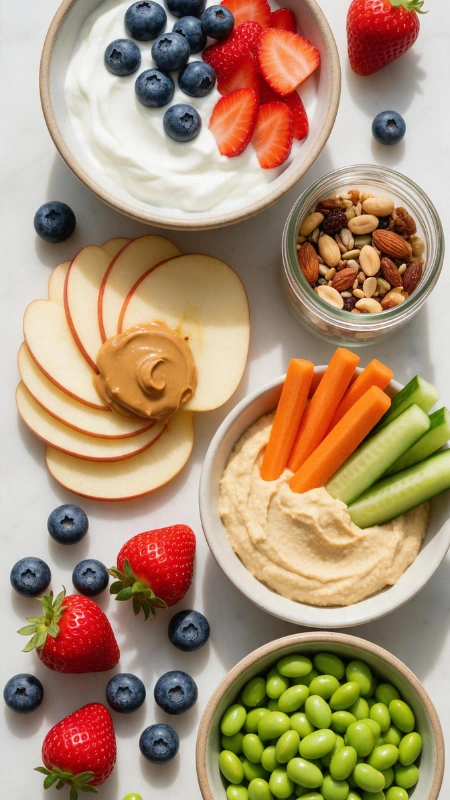
The gold standard. Greek yogurt contains about 15 to 20 grams of protein per cup, helping you stay full and maintain muscle during fat loss. It also provides live probiotics that support digestion and gut health, and adding berries increases fiber and antioxidants while naturally sweetening the snack.
2. Cottage Cheese With Fruit
Cottage cheese is rich in casein, a slow-digesting protein that helps you stay full longer. Adding fruit like pineapple, berries, or peaches to a serving of ½ to 1 cup gives natural sweetness and fiber for a balanced, creamy snack.
3. Edamame
If you eat plant-based, this one’s your workhorse. One cup of prepared edamame delivers 188 calories, 8 grams of fiber and 18 grams of protein. Even their natural chewiness and crunch add to satiety.
4. String Cheese
String cheese is a simple grab-and-go snack that provides protein without preparation — one stick usually contains around 6–7g of protein, and its portion size makes it easier to enjoy mindfully.
5. Beef or Turkey Jerky
High-quality jerky can be a convenient option, especially if you follow a higher-protein eating pattern — because it’s concentrated protein, it can help reduce hunger quickly. Just watch sodium on the label.
Quick-fire additions: hard-boiled eggs, ricotta with berries (a ½ cup serving provides around 10–14g of protein), turkey roll-ups, and drinkable yogurt for busy mornings.
Nuts and Seeds: Small Handfuls, Big Satiety
Afraid nuts will wreck your progress because of their calories? The research should put you at ease. Epidemiological studies report that nut consumers tend to be leaner than those who do not consume nuts, and clinical trials show lower than predicted weight gain from the addition of nuts. Even better, evidence from randomized controlled trials and observational cohorts indicates that higher nut consumption does not cause greater weight gain; rather, nuts may be beneficial for weight control and prevention of long-term weight gain.
Why do calorie-dense nuts get a pass? Nuts are rich in protein and dietary fiber, which are associated with increased satiety.
Your best options:
- Almonds — high in fiber, magnesium, calcium, and healthy fats, and small studies suggest snacking on almonds may promote satiety
- Pistachios — salty, crunchy and a good source of protein and healthy fats; shelling them slows you down naturally
- Walnuts and flaxseeds — high in omega-3s, linked to belly-fat reduction and improved heart health
Portion tip: even though snacks like nuts are dense in calories, they also contain fiber and are satiating, so smaller portions can calm hunger and create positive health outcomes. A single ounce — about a small palmful — is your sweet spot.
Sweet-Tooth Snacks That Won’t Derail You
- Apple + peanut butter — the natural fiber in apples slows digestion, while the healthy fats and protein in peanut butter extend satiety; together, they provide steady energy without dramatic blood sugar spikes. Portion guide: a medium apple provides around 3 grams of fiber; add 2 tablespoons of nut butter, about the size of your thumb.
- Frozen yogurt-covered blueberries — coat high-fiber, vitamin C-rich blueberries in protein-rich Greek yogurt, then freeze them on a flat surface.
- Dark-chocolate-covered almonds — look for brands without added sugars or a long list of artificial ingredients.
- Strawberry popsicles — blend naturally-sweet strawberries with a bit of honey and fresh lemon and freeze in a popsicle mold for a snack that feels like dessert.
Savory and Crunchy Low-Calorie Snacks
- Veggies + hummus — hummus provides plant-based protein, fiber, and heart-healthy fats; pair 2 to 3 tablespoons with carrots, cucumbers, or bell peppers for extra vitamins, crunch, and volume. Bonus: research published in The Journal of Nutrition found that snacking on low-sugar, highly nutritive snacks, such as hummus, can lead to improvements in diet quality, appetite, and glycemic control.
- Roasted chickpeas — a crunchy alternative to chips, with a ½ cup serving providing around 7–8g of protein along with fiber to help you stay full longer.
- Rice cake with peanut butter and Greek yogurt — simple, filling and great for at-home snacking.
- Air-popped popcorn — a whole-grain, high-volume choice that satisfies the crunch craving for minimal calories.
Smart Store-Bought and Grab-and-Go Picks
You won’t always have time to prep, and that’s fine. Store-bought choices can work too, as long as they’re minimally processed and made with wholesome ingredients.
- Greek yogurt cups with less than 6g of added sugar; drinkable yogurt is a great option for when you’re on the go
- High-protein snack mixes or cereals that combine protein and fiber with less sugar than typical versions
- Individually packaged oatmeal cookies — soft, fiber-rich and portion-controlled
- Fresh fruit, single-serve nut butter packs, and mini cheese rounds
Your one non-negotiable rule: check food labels, avoiding any options with sugar as the first ingredient.
Easy DIY Snack Recipes (With Ingredient Tables)
Recipe 1: Homemade Protein Trail Mix
| Ingredient | Amount | Why It Works |
|---|---|---|
| Raw almonds | ½ cup | Fiber, healthy fats, satiety |
| Pistachios | ½ cup | Protein + mindful shelling |
| Pumpkin seeds | ¼ cup | Plant protein and minerals |
| Unsweetened dried cranberries | ¼ cup | Natural sweetness |
| Dark chocolate chips (70%+) | 2 tbsp | Craving control |
Serving: ¼ cup | Prep: 5 minutes. Pre-portion into small containers so you’re never eating from the bag.
Recipe 2: Greek Yogurt Berry Power Bowl
| Ingredient | Amount | Benefit |
|---|---|---|
| Plain Greek yogurt | 1 cup | ~15–20g protein |
| Mixed berries | ½ cup | Fiber + antioxidants |
| Chia seeds | 1 tbsp | Omega-3s + extra fiber |
| Cinnamon | Pinch | Flavor without sugar |
Recipe 3: Frozen Blueberry Yogurt Bites
| Ingredient | Amount |
|---|---|
| Fresh blueberries | 1 cup |
| Plain Greek yogurt | ½ cup |
| Parchment-lined tray | — |
Dip, freeze, and store in a zip-top bag for a cold, sweet fix any evening.
Smart Snacking Strategies: Timing, Portions, and Pitfalls
When Should You Snack?
Aim for the gap that hurts most — usually mid-afternoon. A planned snack there bridges lunch and dinner so you arrive at your evening meal in control, not starving. For context, research finds that snacks provide at least 10% of daily calories, with people eating about two snacks per day — so build those two snacks intentionally rather than letting them happen to you.
Watch Your Snacking Context
It’s not just what you eat — it’s how. The consumption of energy-dense snacks may contribute to higher energy intake and weight in adults, and the context in which you snack — such as eating alone, late in the day, or in front of a TV or computer — matters too. Put the snack on a plate, sit down, and actually taste it.
Common Mistakes to Avoid
- Grazing all day instead of eating one or two planned snacks
- Screen snacking — mindless eating in front of a TV or laptop
- “Health halo” traps — granola, smoothie bowls, and sweetened dried fruit can pack serious sugar; remember, the best snacks are not pre-packaged or ultra-processed
- Skipping snacks entirely and arriving at dinner ravenous
And one honest caveat: snacking is a tool, not a requirement. If you genuinely feel great on three meals, you don’t need to force it.
Conclusion: Snack Smarter, Not Less
Here’s the mindset shift to carry with you: that afternoon hunger isn’t a character flaw, and answering it isn’t a failure. It’s simply feedback — and now you know how to respond. Build every snack around protein, fiber and healthy fats to help prevent cravings and keep you feeling full and satisfied, keep portions defined, and choose whole foods over ultra-processed packages.
No single snack will melt fat on its own. But dozens of small, smart choices — repeated daily — are exactly how sustainable weight loss happens.
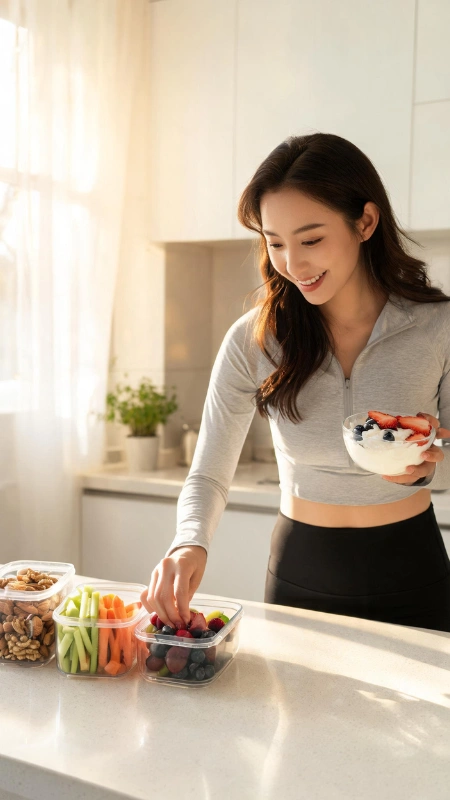
Your move: Pick three snacks from this list, prep them this Sunday, and pay attention to how different your hunger feels by Friday. Then come back and tell us in the comments which one worked best for you — and share this guide with the friend who’s always raiding the vending machine at 3 p.m.
FAQ: Healthy Snacks for Weight Loss
What are the best healthy snacks for weight loss?
The winners combine three things: choose foods that have protein, fiber and healthy fats — like apples with nut butter or dark chocolate with almonds. Greek yogurt with berries, edamame, hummus with veggies, and a small handful of nuts all fit the formula.
Do healthy snacks for weight loss actually work, or should I skip snacking?
They can work — quality decides the outcome. Nutrient-dense snack foods were associated with weight loss or weight maintenance, whereas energy-dense snack foods were associated with weight gain or had no effects on body weight. If your snacks are whole foods, keep them. If they’re chips and candy, that’s where the problem lives.
How many calories should healthy snacks for weight loss contain?
A good rule is 100–200 calories per snack, depending on your daily needs, though up to about 350 calories can work if you’re very active or your snack doubles as a mini-meal.
Can nuts really be healthy snacks for weight loss even though they’re high in calories?
Yes. Cumulative evidence from long-term large cohort studies supports that increased consumption of nuts is associated with less weight gain and lower risk of obesity, despite being calorically dense. Stick to about a one-ounce portion.
When is the best time to eat healthy snacks for weight loss?
Whenever your longest meal gap falls — for most people, mid-afternoon. A snack then helps curb your appetite to prevent overeating at the next meal.