
Metformin weight loss You’ve tried the diets that promised everything and delivered little. You’ve counted macros until numbers blurred together, forced yourself through workouts you dreaded, and stood on the scale hoping for a different result than the one staring back at you. Then, somewhere between a doctor’s visit and a late-night scroll through health forums, you heard about metformin — that decades-old diabetes pill everyone suddenly seems to be talking about for weight loss.
Table of Contents
Maybe you’re managing prediabetes. Maybe you’re living with PCOS. Or maybe you’re simply exhausted by empty promises and want to know if this medication is different — or just another letdown waiting to happen.
Here’s the honest answer: metformin can help some people lose modest amounts of weight, but it works quietly, gradually, and differently than you might expect. This guide breaks down exactly how it affects your body, what results are realistic, and how to know if it’s worth discussing with your doctor.
This article is for informational purposes only and isn’t a substitute for personalized medical advice. Always talk to your healthcare provider before starting or stopping any medication.
What Is Metformin, and Why Are People Talking About It for Weight Loss?
Metformin isn’t new, and it isn’t flashy. Approved by the FDA in 1994 to treat type 2 diabetes, metformin is a long-standing first-line treatment that helps lower blood sugar by reducing glucose production in the liver. It belongs to a drug class called biguanides, and it’s remained a cornerstone diabetes treatment for over three decades because it’s effective, affordable, and well-studied.
Here’s the important nuance: metformin is not FDA-approved for weight loss. It’s FDA-approved to manage blood sugar in individuals with type 2 diabetes. Any weight loss you might experience is technically an off-label, secondary effect — not the drug’s intended purpose. That said, a meta-analysis including over 5,000 patients with diabetes found metformin decreased weight compared to sulfonylureas and thiazolidinediones, which is part of why it’s earned a reputation as weight-friendly compared to many other diabetes medications.
Brand Names You Might Recognize
If your prescription doesn’t say “metformin” on the label, you might still be taking it. Metformin is the active ingredient in several medications, available as a generic drug and under brand names like Glucophage, Glumetza, and Fortamet.
How Does Metformin Cause Weight Loss? The Science Behind the Scale Drop
This is where things get genuinely interesting — and where a lot of the online buzz has some real science behind it.
The GDF15 Appetite Connection
Researchers have identified a hormone called GDF15 as a key player. In two independent randomized controlled clinical trials, metformin was shown to increase circulating levels of the peptide hormone growth/differentiation factor 15 (GDF15), which has been shown to reduce food intake and lower body weight through a brain-stem-restricted receptor.
In animal studies, this connection was even more direct: metformin completely prevented diet-induced weight gain in mice with normal GDF15 function but had no effect in mice lacking the GDF15 gene, and metformin significantly reduced cumulative food intake in normal mice, but this effect was abolished in mice lacking GDF15. In other words, without this hormone pathway, metformin’s appetite-suppressing effect largely disappears — at least in mice.
It’s worth noting the science isn’t fully settled. Metformin-induced increases in GDF15 were proposed to mediate appetite suppression, but recent findings have challenged whether this is the only or, indeed, the most important mechanism involved. Some newer mouse research even found that metformin lowered food intake in exercising mice independent of the GDF15 pathway, suggesting multiple overlapping mechanisms are likely at play.
It’s Appetite, Not Metabolism
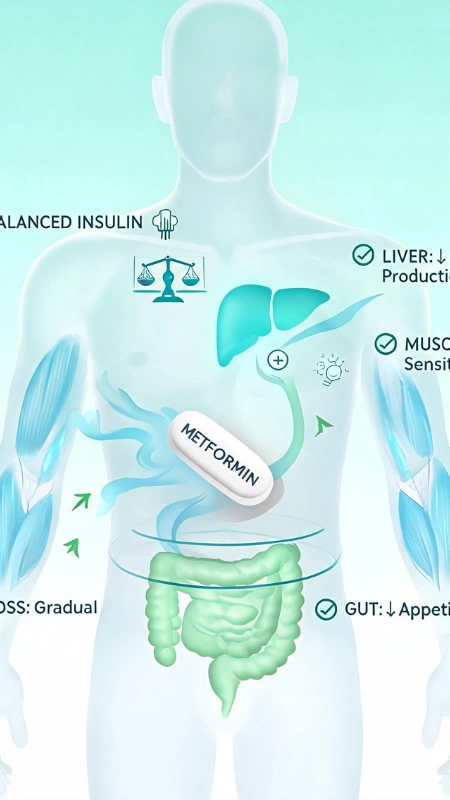
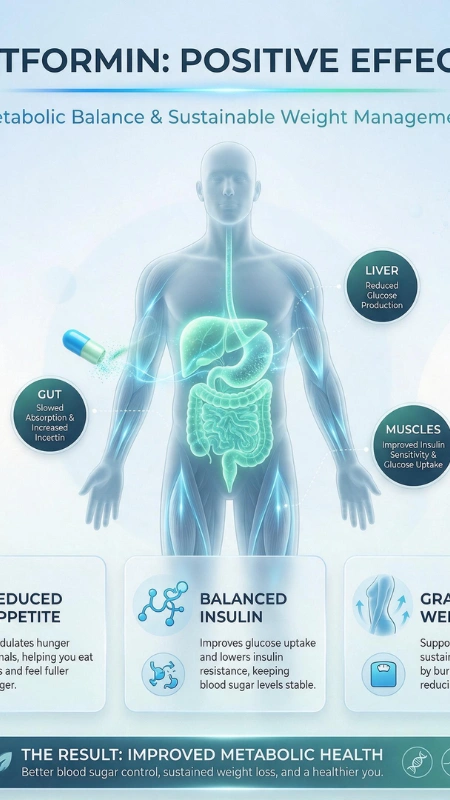
Unlike stimulant-based weight loss drugs, metformin doesn’t rev up your metabolism. The weight loss from metformin is largely a secondary effect of improved metabolic function rather than a primary mechanism — people lose weight partly because better insulin function reduces the drive to store fat and may slightly decrease hunger, but the effects on appetite are subtle compared to medications designed specifically for weight loss.
Three ways metformin may influence your weight:
- Improves insulin sensitivity — helping your body use blood sugar more efficiently rather than storing excess as fat
- Boosts satiety-related hormones like GDF15, which may quiet hunger signals
- Causes mild GI side effects early on (more on this below) that can temporarily reduce how much you eat
Metformin Weight Loss Results — How Much Weight Can You Realistically Lose?
This is the question everyone actually wants answered, and the honest response is: less than the internet hype suggests.
The Diabetes Prevention Program (DPP): The Gold-Standard Data
The most cited research on this topic comes from the DPP, a massive, long-running clinical trial. During the initial 2.8-year follow-up, the metformin group experienced an average weight loss of 2.1 kg, compared with 5.6 kg in the lifestyle intervention group, and 0.1 kg in the placebo group.
The results held up over time. Those on metformin had an average 2.5-kg weight loss over time, and approximately 30% of participants randomized to metformin lost more than 5% of their body weight in the first year, with a post hoc analysis showing their mean weight loss relative to baseline was 6.2% after 15 years of follow-up.
Comparison Table: What the Research Shows
| Study/Population | Details | Average Result |
|---|---|---|
| DPP (prediabetes, 2.8 yrs) | Metformin vs. lifestyle vs. placebo | 2.1 kg lost vs. 5.6 kg (lifestyle) vs. 0.1 kg (placebo) |
| DPP Outcomes Study (15-yr follow-up) | Long-term maintenance | 6.2% weight loss from baseline |
| Outpatient obesity cohort (non-diabetic) | Metformin up to 2,500 mg/day | ~5.8 kg average loss over 6 months |
| Meta-analysis (21 trials) | Mixed populations, doses >1,500 mg/day | ~1.3 BMI unit reduction |
| Review, Therapeutic Advances journal | Higher-dose users | Up to 5% body weight loss |
As one clinical summary put it plainly: across randomized trials and meta-analyses in people with type 2 diabetes or obesity, metformin typically produces small reductions in body weight or BMI — patients often lose about 1–3 kg over 6–12 months compared with placebo or standard care.
Who Tends to Lose More?
Results aren’t uniform. Larger weight losses have been seen in some subgroups, particularly individuals with marked insulin resistance or higher baseline BMI — in one outpatient cohort of non-diabetic adults with overweight or obesity, average weight loss was about 5.8 kg over 6 months, with greater losses in those with severe insulin resistance.
Metformin vs. GLP-1 Drugs (Ozempic, Wegovy)
If you’ve been comparing metformin to newer injectable medications, the gap is significant. Metformin can lead to an average of 2.5% weight loss in six months, while Ozempic can lead to almost 11% weight loss in the same time frame. Some analyses put the difference even more starkly, noting that Ozempic produces roughly 3 to 5 times more weight loss than metformin, averaging 14.9% of body weight over 68 weeks in the STEP 1 trial versus 2 to 5% for metformin.
The mechanisms explain the gap: semaglutide acts on GLP-1 receptors in the brain’s appetite-control centers, producing substantial hunger reduction — patients experience genuinely diminished appetite, not just willpower-based restriction. Metformin simply doesn’t work that aggressively.
Bottom line: If your goal is losing 30+ pounds, metformin alone is unlikely to get you there. If you’re looking for modest, sustainable support alongside lifestyle changes, it may have a role to play.
Who Might Benefit Most From Metformin for Weight Management?
Metformin’s weight effects tend to show up more reliably in certain groups:
- People with prediabetes or metabolic syndrome — where insulin resistance is already driving weight gain
- People with PCOS — a condition closely tied to insulin resistance, where metformin is frequently prescribed off-label
- People on antipsychotic medications experiencing drug-related weight gain
- People with higher baseline BMI or more significant insulin resistance, who saw larger average losses in cohort studies
Metformin Dosage for Weight Loss — What to Expect
Dosage matters more than most people realize. Most diabetes and obesity trials that observed weight changes used total daily doses between 1,500 and 2,000 mg, with some studies going up to 2,550 mg/day.
Timing and duration also play a role. A meta-analysis found an average BMI reduction of about 1.3 units across 21 trials, with more pronounced effects in people with BMI over 35 kg/m², at doses over 1,500 mg/day, used for six months or longer.
Immediate-Release vs. Extended-Release
You’ll typically encounter two formulations: immediate release (IR), typically taken two to three times a day, and extended-release (ER), taken once daily for a slower, more gradual effect. Neither formulation has been shown to dramatically outperform the other for weight purposes — the choice often comes down to tolerability and convenience.
What the Timeline Looks Like
- Weeks 1–4: Your doctor will likely start you on a low dose and increase it gradually to reduce stomach upset
- Months 1–6: If weight loss occurs, it typically begins after approximately four weeks, and most of the change tends to appear in the first 6–12 months.
- Beyond 6 months: Most of the weight loss occurs in the first 3 to 6 months, then often plateaus.
Side Effects and Safety — What Metformin Does to Your Body
No medication is free of trade-offs, and metformin is no exception.
Common, Manageable Side Effects
Common metformin side effects include diarrhea, nausea, and vomiting. It can also cause fatigue, weight loss, and low vitamin B12 levels. The good news: common metformin side effects, such as gastrointestinal issues and headaches, often improve as your body adjusts to the medication.
Rare but Serious Risks
The one to take seriously is lactic acidosis. When you have too much metformin in your body, it can result in lactic acidosis — a life-threatening condition caused by a pH imbalance and too much lactic acid in your bloodstream. The reassuring context: lactic acidosis is a very rare side effect — it’s more likely to occur if there are super high levels of metformin in the bloodstream and someone has reduced kidney function where it’s not being cleared out.
The B12 Issue Nobody Talks About Enough
Long-term use carries a lesser-known risk. In 29-week studies, about 7% of people had their B12 drop below normal, with no symptoms at the time, but the risk builds the longer you take it. One long-term study found something worth flagging: in a large long-term study that followed people for up to 13 years, long-term metformin use was linked to both B12 deficiency and anemia, and nerve symptoms were more common in people with low B12 levels.
Practical tip: Annual monitoring is recommended for patients on long-term metformin, and supplementation may be necessary if B12 levels drop.
Debunking the Myths
You may have heard scary long-term claims. Here’s what the evidence actually says: long-term metformin use isn’t known to cause dementia or kidney damage, or to worsen PCOS. In fact, when taken as prescribed, the benefits of metformin often outweigh the risks for most people.
Tips to Minimize GI Side Effects
- Take it with food, never on an empty stomach
- Start low and increase gradually, as your doctor directs
- Ask about the extended-release version if immediate-release upsets your stomach
- Stay consistent — most GI discomfort fades within weeks
Does the Weight Loss Last? Long-Term Outlook
One of the most encouraging findings from long-term research is durability. In long-term follow-up, the metformin group showed strong long-term weight-loss maintenance compared to other groups, and ongoing metformin use predicted better long-term results.
Compare that to typical lifestyle-only approaches, where metformin can help, but lifestyle changes typically produced larger effects upfront — yet metformin’s more modest results tend to stick around longer without the same rebound many people experience after crash diets.
Metformin Alternatives for Weight Loss
If metformin’s modest results don’t align with your goals, you’re not out of options. GLP-1 medications like semaglutide (Ozempic, Wegovy) offer far more dramatic results but come with a much higher price tag and different side-effect profile. Many clinicians now combine the two: metformin as a foundational, affordable option, with a GLP-1 added when more significant weight loss or blood sugar control is needed. The right combination depends entirely on your health history, budget, and goals — which is exactly the conversation to have with your provider.
FAQ — Your Metformin Weight Loss Questions Answered
Does metformin weight loss happen for everyone who takes it?
No. Results vary widely — some people lose a meaningful amount, others experience little to no change. Some patients lose no weight at all, while others lose up to 10% over several years, and weight loss tends to plateau or reverse over longer timeframes.
How much metformin weight loss can I expect realistically?
Most research points to a modest range. The bottom line is that you are likely to lose about 5% of your weight using metformin, with most of that occurring in the first several months.
Is metformin weight loss safe for long-term use?
Generally yes, when monitored properly. When taken as prescribed, the benefits of metformin often outweigh the risks for most people. Regular blood work to check kidney function and B12 levels is key.
Does metformin suppress appetite the way Ozempic does?
Not nearly as powerfully. Metformin simply does not produce the intense appetite suppression that GLP-1 drugs do — its effects are far subtler and rooted in different biological pathways.
Can I take metformin for weight loss if I don’t have diabetes?
Some doctors prescribe it off-label for this purpose, particularly for people with insulin resistance, PCOS, or prediabetes, though metformin is not FDA-approved for weight loss.
What dose of metformin is used for weight loss?
Most diabetes and obesity trials that observed weight changes used total daily doses between 1,500 and 2,000 mg, with some studies going up to 2,550 mg/day. Never adjust your dose without medical guidance.
Conclusion: Is Metformin Weight Loss Right for You?
If you came into this article hoping for a miracle pill, the science asks you to recalibrate — but not to give up hope. Metformin isn’t going to melt away 30 pounds in a month. What it can offer, for the right person, is a modest, steady nudge in the right direction: improved insulin sensitivity, a slightly quieter appetite, and weight loss that — while small — tends to stick around longer than the dramatic-but-fleeting results of extreme diets.
The real magic happens when metformin is paired with the lifestyle changes you’ve probably already been working on: consistent movement, a diet built around whole foods, and enough sleep to let your body actually cooperate with you. This medication isn’t a replacement for that effort — it’s a potential ally within it.
Every body responds differently, and your medical history, current medications, and health goals all matter here. If you’re curious whether metformin could fit into your weight management plan, the next right step is a conversation with your doctor — bring your questions, your history, and your goals, and let them help you figure out if this quiet, decades-old medication has a place in your story.
Have you tried metformin for weight management, or are you considering asking your doctor about it? Share your experience or questions in the comments below — your story might be exactly what someone else needs to read today.