
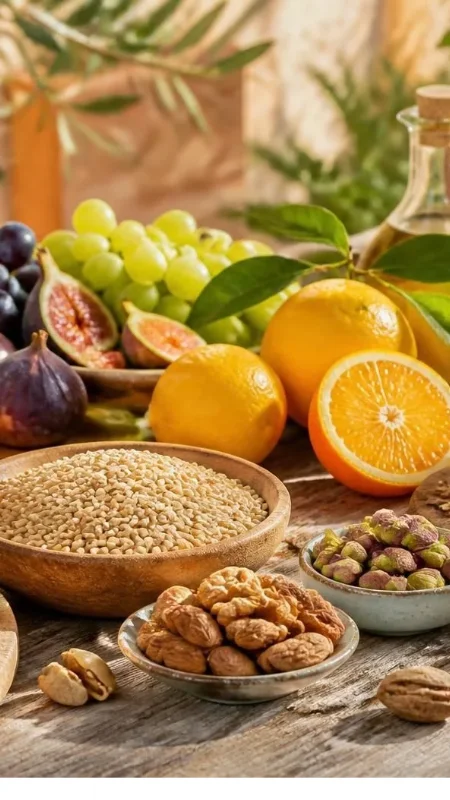
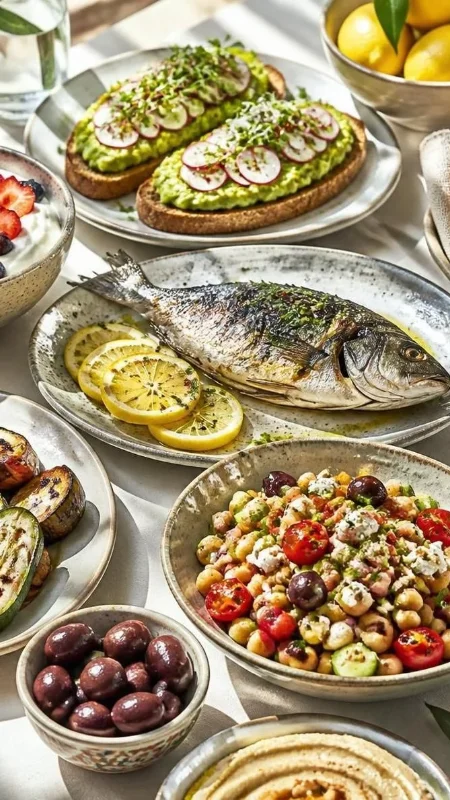
The Mediterranean diet is one of the most widely studied eating patterns, known for its emphasis on vegetables, fruits, whole grains, legumes, nuts, olive oil, and fish.
Unlike restrictive diets that rely on complicated rules, Mediterranean-style eating focuses on overall food choices and habits.
Meals often feature colorful produce, satisfying grains, beans, herbs, and unsaturated fats, with room for different cultural traditions and personal preferences.
Table of Contents
This Mediterranean diet complete guide explains the basics of the eating pattern, provides a practical food list, and includes a flexible seven-day meal plan.
You’ll also find three easy recipes, shopping suggestions, and tips for making Mediterranean-style eating affordable and convenient.
Whether you’re completely new to the Mediterranean diet or simply want more balanced meal ideas, this guide offers a practical starting point.
What Is the Mediterranean Diet?
The Mediterranean diet is a dietary pattern inspired by traditional eating habits found in parts of the Mediterranean region.
However, there is no single Mediterranean cuisine.
Food traditions vary widely across countries and communities, including Greece, Italy, Spain, Morocco, Turkey, and others.
The modern Mediterranean dietary pattern generally emphasizes plant foods, olive oil, and minimally processed ingredients.
A Dietary Pattern Rather Than a Strict Diet
The Mediterranean diet does not prescribe one universal calorie target or exact meal schedule.
Instead, it encourages an overall pattern of eating.
Common characteristics include:
- Eating vegetables and fruit regularly.
- Choosing whole grains frequently.
- Including beans and lentils.
- Using olive oil as a principal added fat.
- Eating nuts and seeds.
- Including fish and seafood.
- Consuming moderate amounts of dairy, eggs, and poultry.
- Limiting processed meats and foods high in added sugars.
Individual Mediterranean-style eating patterns can differ considerably.
Food Culture and Lifestyle
Traditional Mediterranean food cultures often emphasize shared meals, seasonal ingredients, and home cooking.
Physical activity and social connections are also important aspects of overall health.
However, eating Mediterranean-style food does not automatically reproduce the health effects of an entire traditional lifestyle.
Mediterranean Diet Health Benefits: What Research Suggests
Researchers have studied Mediterranean-style diets in relation to cardiovascular health, metabolic health, and other outcomes.
The strength of evidence varies depending on the specific outcome and study design.
Cardiovascular Health
Mediterranean-style eating patterns are associated with favorable cardiovascular outcomes in many studies.
Clinical trials, including the PREDIMED trial, have investigated Mediterranean dietary patterns supplemented with extra-virgin olive oil or nuts.
The findings support cardiovascular benefits in certain populations, particularly people at elevated cardiovascular risk.
However, results from individual studies should not be interpreted as support for every person.
The overall dietary pattern is more important than any single ingredient.
Blood Sugar and Metabolic Health
Meals containing vegetables, legumes, whole grains, and unsaturated fats can fit into dietary approaches used to support metabolic health.
Some research suggests Mediterranean dietary patterns may improve certain markers of metabolic health.
For people with diabetes, carbohydrate portions and medication requirements may need individualized attention.
Weight Management
The Mediterranean diet is not inherently a weight-loss diet.
Foods such as olive oil, nuts, and seeds provide beneficial nutrients but are energy-dense.
Weight changes depend on overall energy balance and individual factors.
A Mediterranean-style eating pattern can support dietary quality whether someone is trying to lose weight, maintain weight, or meet other nutritional goals.
Overall Dietary Quality
A diet rich in varied plant foods can provide fiber, vitamins, minerals, and beneficial unsaturated fats.
The Mediterranean pattern also encourages replacing some saturated fats with unsaturated fats.
These changes align with several established dietary recommendations.
Complete Mediterranean Diet Food List
A Mediterranean-style eating pattern is flexible.
The following food list provides common choices rather than strict rules.
Mediterranean Diet Food List at a Glance
| Food Group | Common Choices | Practical Guidance |
|---|---|---|
| Vegetables | Tomatoes, spinach, peppers, zucchini, carrots, broccoli | Include regularly |
| Fruits | Berries, apples, oranges, grapes, pears, figs | Enjoy a variety |
| Whole grains | Oats, barley, brown rice, quinoa, whole-wheat bread | Choose frequently |
| Legumes | Chickpeas, lentils, beans, peas | Include regularly |
| Healthy fats | Olive oil, nuts, seeds, avocado | Use portions suited to needs |
| Fish | Salmon, sardines, trout, tuna | Include regularly when suitable |
| Poultry | Chicken, turkey | Include according to preference |
| Eggs | Chicken eggs | Can fit into the pattern |
| Dairy | Plain yogurt, cheese, milk | Choose suitable portions |
| Herbs and spices | Garlic, oregano, basil, parsley, cumin | Use for flavor |
| Red meat | Beef, lamb, pork | Generally less frequent |
| Processed meats | Bacon, sausages, deli meats | Limit |
| Sweets | Cakes, pastries, candy | Enjoy less frequently |
Vegetables and Fruits
Vegetables and fruit are central components of Mediterranean-style eating.
Fresh, frozen, and appropriately canned produce can all contribute nutrients.
Choose a variety of colors and types.
Tomatoes, leafy greens, peppers, citrus fruits, berries, and seasonal produce are useful options.
Whole Grains
Whole grains provide carbohydrates, fiber, and varying amounts of vitamins and minerals.
Examples include oats, barley, brown rice, whole-wheat pasta, and whole-grain bread.
Traditional Mediterranean eating patterns also include refined grains.
The modern health-oriented pattern generally emphasizes whole grains more often.
Beans and Lentils
Legumes provide plant protein, fiber, and minerals.
Chickpeas can be used in salads and grain bowls.
Lentils work well in soups.
White beans can be added to pasta and vegetable dishes.
Canned legumes are convenient alternatives to dried varieties.
Olive Oil, Nuts, and Seeds
Olive oil is a characteristic source of fat in Mediterranean-style eating.
It contains predominantly monounsaturated fat.
Nuts and seeds provide unsaturated fats, protein, fiber, and minerals.
These foods are nutritious, but portions still matter according to individual energy needs.
Fish and Seafood
Fish provides protein and other nutrients.
Fatty fish such as salmon, sardines, and trout contain omega-3 fatty acids.
The American Heart Association recommends eating fish, particularly fatty fish, twice per week.
People who are pregnant, breastfeeding, or feeding young children should follow current FDA/EPA fish advice.
Poultry, Eggs, and Dairy
Chicken, turkey, eggs, plain yogurt, and cheese can fit into Mediterranean-style eating.
There is no universal requirement to eat all these foods.
Vegetarian adaptations can emphasize legumes, tofu, nuts, seeds, and dairy or eggs when included.
Foods to Limit
Mediterranean-style eating generally includes fewer processed meats, refined sweets, and foods high in saturated fat.
This does not mean that every traditional dessert or refined-grain food must be eliminated.
Overall dietary patterns matter more than rigid food rules.
How to Build a Mediterranean Diet Plate
The USDA MyPlate approach provides a useful way to assemble balanced meals.
Aim for a generous portion of vegetables and fruit, a whole-grain or other carbohydrate source, and protein.
For example, a Mediterranean-inspired lunch might include quinoa, chickpeas, cucumber, tomatoes, olive oil, and lemon dressing.
A dinner could combine baked salmon, roasted vegetables, and brown rice.
Portions should reflect individual nutritional needs.
Flexible 7-Day Mediterranean Diet Meal Plan
This beginner-friendly meal plan provides breakfast, lunch, dinner, and snack suggestions.
It is not a prescribed calorie-controlled diet.
Adjust portions according to appetite, activity level, health circumstances, and preferences.
| Day | Breakfast | Lunch | Dinner | Snack |
|---|---|---|---|---|
| Monday | Greek yogurt with berries and walnuts | Chickpea quinoa bowl | Lemon herb salmon with vegetables | Apple and almonds |
| Tuesday | Oatmeal with fruit and chia | Hummus vegetable pita | Lentil tomato soup with whole-grain bread | Plain yogurt |
| Wednesday | Whole-grain toast with avocado and egg | Leftover lentil soup | Chicken with roasted vegetables and brown rice | Orange and walnuts |
| Thursday | Yogurt with oats and berries | White bean and tomato salad | Whole-wheat pasta with vegetables and olive oil | Carrots and hummus |
| Friday | Overnight oats with fruit | Chickpea salad wrap | Baked fish with potatoes and greens | Pear and almonds |
| Saturday | Vegetable omelet and whole-grain toast | Quinoa salad with beans | Mediterranean lentil soup | Fruit and yogurt |
| Sunday | Oatmeal with nuts and cinnamon | Hummus, vegetables, and whole-grain pita | Roast chicken with vegetables and barley | Berries |
How to Use the Plan
Prepare grains and legumes in batches when convenient.
Use overlapping ingredients to reduce shopping costs.
Cooked leftovers generally should be refrigerated for no longer than three to four days.
Freeze additional portions for later in the week.
This plan is intentionally flexible rather than a strict Mediterranean diet prescription.
Three Easy Mediterranean Diet Recipes
The following recipes use accessible ingredients and straightforward cooking techniques.
They are Mediterranean-inspired adaptations rather than claims of traditional authenticity.
Nutrition note: Nutritional values are preliminary estimates per serving. Recalculate using ingredient-specific USDA FoodData Central information before publication.
1. Mediterranean Chickpea and Quinoa Bowl
This colorful grain bowl combines chickpeas, quinoa, cucumber, tomatoes, and a simple lemon dressing.
It is convenient for lunch or a light dinner.
Recipe Details
- Prep time: 10 minutes
- Cook time: 15 minutes
- Total time: 25 minutes
- Servings: 2
- Difficulty: Easy
- Dietary preference: Vegetarian
Ingredients
| Ingredient | Quantity |
|---|---|
| Cooked quinoa | 1 cup |
| Cooked chickpeas, drained | 1 cup |
| Cucumber, diced | 1 cup |
| Cherry tomatoes, halved | 1 cup |
| Red onion, finely chopped | 2 tablespoons |
| Olive oil | 1 tablespoon |
| Lemon juice | 2 tablespoons |
| Crumbled feta | 2 tablespoons |
| Fresh parsley | 2 tablespoons |
| Dried oregano | ½ teaspoon |
| Black pepper | To taste |
Step-by-Step Instructions
Step 1: Cook quinoa according to package directions if it has not already been prepared.
Step 2: Rinse and drain chickpeas.
Step 3: Wash and chop the vegetables.
Step 4: Combine quinoa, chickpeas, cucumber, tomatoes, and onion.
Step 5: Whisk olive oil, lemon juice, oregano, and black pepper.
Step 6: Pour the dressing over the grain mixture.
Step 7: Toss gently.
Step 8: Sprinkle feta and parsley over the top.
Estimated Nutrition Per Serving
| Nutrient | Amount |
|---|---|
| Calories | 370 kcal |
| Protein | 14 g |
| Carbohydrates | 48 g |
| Fiber | 10 g |
| Fat | 15 g |
Variation: Omit feta for a vegan version.
2. Lemon Herb Baked Salmon With Vegetables
This easy dinner combines salmon with zucchini, tomatoes, and potatoes.
It provides protein, vegetables, and unsaturated fats.
Recipe Details
- Prep time: 15 minutes
- Cook time: 25 minutes
- Total time: 40 minutes
- Servings: 4
- Difficulty: Easy
Ingredients
| Ingredient | Quantity |
|---|---|
| Salmon fillets | 4 fillets, approximately 4 oz each |
| Baby potatoes, halved | 1 lb |
| Zucchini, sliced | 2 medium |
| Cherry tomatoes | 2 cups |
| Olive oil | 2 tablespoons |
| Fresh lemon juice | 2 tablespoons |
| Garlic, minced | 3 cloves |
| Dried oregano | 1 teaspoon |
| Fresh parsley | ¼ cup |
| Black pepper | To taste |
Step-by-Step Instructions
Step 1: Preheat the oven to 425°F (220°C).
Step 2: Toss potatoes with half the olive oil and oregano.
Step 3: Arrange potatoes on a baking sheet.
Step 4: Roast for 10 minutes.
Step 5: Add sliced zucchini and cherry tomatoes.
Step 6: Place salmon fillets on the baking sheet.
Step 7: Combine remaining olive oil, lemon juice, garlic, and black pepper.
Step 8: Brush over the salmon and vegetables.
Step 9: Roast for approximately 12–15 additional minutes, until salmon reaches 145°F (63°C) and the potatoes are tender. Continue cooking vegetables separately if needed.
Step 10: Garnish with parsley and serve.
Estimated Nutrition Per Serving
| Nutrient | Amount |
|---|---|
| Calories | 450 kcal |
| Protein | 32 g |
| Carbohydrates | 30 g |
| Fiber | 5 g |
| Fat | 23 g |
Preparation tip: Cut potatoes into small, even pieces to help them cook within the stated time.
3. Mediterranean Lentil and Tomato Soup
This vegetable-rich soup uses lentils, tomatoes, carrots, celery, and herbs.
It is affordable and suitable for batch cooking.
Recipe Details
- Prep time: 15 minutes
- Cook time: 35 minutes
- Total time: 50 minutes
- Servings: 4
- Difficulty: Easy
- Dietary preference: Vegan
Ingredients
| Ingredient | Quantity |
|---|---|
| Dry brown or green lentils | 1 cup |
| Diced tomatoes | 1 can, 28 oz |
| Carrots, diced | 2 medium |
| Celery stalks, chopped | 2 |
| Onion, diced | 1 medium |
| Garlic, minced | 3 cloves |
| Olive oil | 1 tablespoon |
| Low-sodium vegetable broth | 4 cups |
| Water | 2 cups |
| Dried oregano | 1 teaspoon |
| Ground cumin | ½ teaspoon |
| Fresh lemon juice | 1 tablespoon |
| Fresh parsley | ¼ cup |
Step-by-Step Instructions
Step 1: Rinse the lentils.
Step 2: Heat olive oil in a large soup pot.
Step 3: Add onion, carrots, and celery.
Step 4: Cook for approximately five minutes.
Step 5: Add garlic, oregano, and cumin.
Step 6: Stir in lentils, tomatoes, broth, and water.
Step 7: Bring to a boil.
Step 8: Reduce heat and simmer for approximately 30–35 minutes, until the lentils are tender.
Step 9: Stir in lemon juice.
Step 10: Garnish with parsley and serve.
Estimated Nutrition Per Serving
| Nutrient | Amount |
|---|---|
| Calories | 290 kcal |
| Protein | 15 g |
| Carbohydrates | 43 g |
| Fiber | 15 g |
| Fat | 7 g |
Meal-prep tip: Refrigerate promptly in shallow containers and use within three to four days, or freeze additional portions.
Mediterranean Diet Shopping List
This list supports the three recipes and provides ingredients for the seven-day meal plan.
Quantities for meals without full recipes are flexible and should be adjusted for household size.
Vegetables and Fruits
| Ingredient | Suggested Quantity |
|---|---|
| Tomatoes | 4–6 fresh plus canned tomatoes |
| Cherry tomatoes | 3 cups |
| Cucumbers | 2 |
| Zucchini | 2 |
| Carrots | 4–6 |
| Celery | 1 bunch |
| Onions | 2–3 |
| Garlic | 2 bulbs |
| Leafy greens | 1 large bag |
| Lemons | 4 |
| Apples | 4 |
| Oranges | 3 |
| Berries | 3–4 cups |
| Pears | 2 |
Grains and Legumes
| Ingredient | Suggested Quantity |
|---|---|
| Quinoa | 1 package |
| Brown rice | 1 package |
| Rolled oats | 1 container |
| Whole-grain bread | 1 loaf |
| Whole-wheat pasta | 1 package |
| Chickpeas | 2 cans |
| Dry lentils | 1 package |
| White beans | 1 can |
| Whole-grain pita | 1 package |
Protein, Dairy, and Fats
| Ingredient | Suggested Quantity |
|---|---|
| Salmon | Four 4-oz fillets |
| Chicken | As needed for two dinners |
| Eggs | 6–12 |
| Plain Greek yogurt | 1 large container |
| Feta cheese | 1 small package |
| Olive oil | 1 bottle |
| Walnuts | 1 small bag |
| Almonds | 1 small bag |
| Chia seeds | 1 small package |
Pantry Ingredients
Keep oregano, cumin, black pepper, low-sodium broth, canned tomatoes, and other preferred herbs available.
Shopping note: This is a flexible starter list, not a quantity-reconciled grocery list for a defined household. Adapt quantities to the number of people and the portions required.
How to Start the Mediterranean Diet on a Budget
Mediterranean-style eating does not require expensive imported ingredients.
Many economical foods fit the pattern.
Beans, lentils, oats, rice, canned tomatoes, frozen vegetables, and seasonal produce can form the foundation of affordable meals.
Extra-virgin olive oil may be more expensive than some other oils, but it can be used in measured quantities.
Canned fish such as sardines and salmon may be economical alternatives to fresh fish.
Compare unit prices and choose foods your household will use.
Preparing beans, grains, and soups in batches can reduce cooking time, provided leftovers are stored safely.
For more ideas, explore our Mediterranean Meal Plans collection.
Common Mediterranean Diet Mistakes
One common mistake is assuming that every Mediterranean-inspired meal is automatically healthy.
Large portions of calorie-dense foods can contribute substantial energy intake.
Another mistake is focusing exclusively on olive oil or fish while overlooking vegetables, legumes, and whole grains.
The dietary pattern matters more than individual ingredients.
Some readers also assume that all carbohydrates should be avoided.
However, whole grains, fruit, and legumes are central components of Mediterranean-style eating.
Finally, the Mediterranean diet should not be presented as a expected treatment for chronic disease.
People with specific medical conditions should discuss major dietary changes with an appropriate healthcare professional.
Frequently Asked Questions About the Mediterranean Diet
What Foods Can You Eat on the Mediterranean Diet?
Common foods include vegetables, fruit, whole grains, beans, lentils, nuts, seeds, olive oil, fish, yogurt, eggs, and poultry.
There is no single universal food list.
The emphasis is on overall dietary patterns rather than strict food rules.
Is the Mediterranean Diet Good for Beginners?
Yes.
It can be introduced gradually.
Start by adding vegetables to meals, replacing some refined grains with whole grains, and including legumes more frequently.
Small changes may be easier to maintain than an immediate complete dietary overhaul.
Can You Eat Bread and Pasta?
Yes.
Bread and pasta can fit into Mediterranean-style eating.
Whole-grain versions generally provide more fiber.
Serving sizes and accompaniments should reflect individual nutritional needs.
Is the Mediterranean Diet a Weight-Loss Diet?
Not specifically.
It is a dietary pattern associated with several health outcomes.
Weight loss depends on overall energy balance and other individual factors.
Can Vegetarians Follow the Mediterranean Diet?
Yes.
Vegetarian Mediterranean-style meals can emphasize beans, lentils, whole grains, vegetables, fruit, nuts, seeds, and olive oil.
Eggs and dairy may be included according to preference.
People following vegan diets should ensure reliable vitamin B12 intake.
Do You Have to Drink Red Wine?
No.
Alcohol is not required for Mediterranean-style eating.
People who do not drink alcohol should not begin drinking for perceived health benefits.
Final Thoughts: Start Mediterranean-Style Eating One Meal at a Time
The Mediterranean diet offers a flexible approach to eating that emphasizes vegetables, fruit, legumes, whole grains, olive oil, nuts, and other nutritious foods.
Rather than following rigid rules, focus on building meals you enjoy and can prepare consistently.
This Mediterranean diet complete guide provides a practical food list, a seven-day meal plan, and three easy recipes to help you get started.
Begin with a few simple changes, such as adding chickpeas to lunch, preparing a vegetable-rich soup, or serving fish with whole grains and vegetables.
Over time, these choices can become part of a varied, enjoyable eating routine.
For more weekly menus and recipes, explore our Mediterranean Meal Plans collection.
References and Further Reading
- USDA MyPlate. https://www.myplate.gov/
- USDA FoodData Central. https://fdc.nal.usda.gov/
- NIH National Heart, Lung, and Blood Institute. https://www.nhlbi.nih.gov/
- NIH National Institute on Aging. https://www.nia.nih.gov/
- NIH Office of Dietary Supplements. https://ods.od.nih.gov/
- FoodSafety.gov — Safe Minimum Internal Temperatures. https://www.foodsafety.gov/food-safety-charts/safe-minimum-internal-temperatures
- FoodSafety.gov — Cold Food Storage Chart. https://www.foodsafety.gov/food-safety-charts/cold-food-storage-charts
- American Heart Association. https://www.heart.org/
Disclaimer: This article is for general educational purposes and is not medical or professional advice. Please consult a qualified healthcare professional before making changes to your diet, exercise, or health routine. See our Medical Disclaimer.