Finding time to prepare a nutritious lunch can be challenging, especially when work, school, and everyday responsibilities fill your schedule. Fortunately, healthy eating doesn’t have to involve complicated recipes or hours in the kitchen.
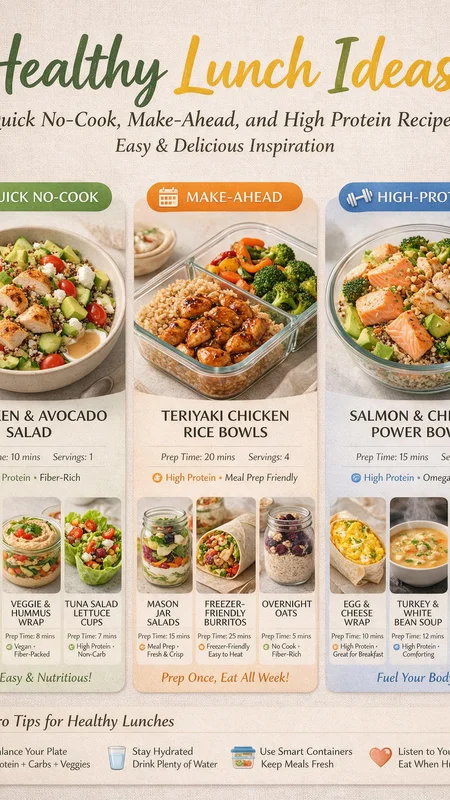
This healthy lunch ideas guide features seven simple recipes designed to make midday meals easier, more satisfying, and enjoyable.
From colorful grain bowls and protein-rich wraps to no-cook salads and convenient lunch boxes, these recipes use accessible ingredients and straightforward preparation methods.
Table of Contents
You’ll also learn how to combine protein, fiber-rich carbohydrates, vegetables, and healthy fats to create balanced lunches that support your nutritional needs.
Whether you’re preparing meals for work, packing a school lunch, or eating at home, these ideas can help you establish a practical lunchtime routine.
What Makes a Healthy Lunch?
A healthy lunch doesn’t need to follow a strict formula.
Instead, aim for a balanced combination of nutrient-dense foods that provide energy, support fullness, and contribute to your overall dietary needs.
The USDA’s MyPlate guidance offers a useful starting point.
Include Protein for a More Satisfying Meal
Protein contributes to the maintenance and repair of body tissues and plays an important role in many biological processes.
Protein-rich foods can also contribute to feelings of fullness.
Useful lunch proteins include:
- Chicken and turkey.
- Fish and seafood.
- Eggs.
- Beans and lentils.
- Tofu and tempeh.
- Greek yogurt.
- Nuts and seeds.
Protein requirements vary according to body size, age, activity level, and health status.
For many adults, including approximately 20–30 grams of protein at lunch is a practical meal-planning option rather than a universal requirement.
Add Fiber-Rich Carbohydrates
Whole grains, vegetables, fruits, beans, and lentils provide carbohydrates alongside varying amounts of fiber, vitamins, and minerals.
Examples include brown rice, quinoa, whole-wheat bread, oats, and legumes.
Fiber contributes to digestive health and can help meals feel more satisfying.
Carbohydrate-containing foods are also an important source of energy.
Choosing fiber-rich options and pairing them with protein and fat can make lunch more balanced.
Include Healthy Fats
Unsaturated fats are found in foods such as olive oil, avocados, nuts, and seeds.
These foods can add flavor and improve meal satisfaction.
Because fats are energy-dense, portions should reflect individual energy needs.
Build a Balanced Plate
A simple way to organize lunch is to use the MyPlate model:
- Approximately half the plate: vegetables and fruit.
- Approximately one-quarter: grains, preferably whole grains.
- Approximately one-quarter: protein foods.
Dairy or fortified alternatives can be included according to dietary preferences and nutritional needs.
Mixed dishes such as grain bowls and wraps can provide these food groups without separating them into individual portions.
7 Healthy Lunch Ideas to Try This Week
The following recipes are designed for convenience, ingredient flexibility, and balanced nutrition.
Nutrition note: All nutritional figures are approximate per serving. They are illustrative calculations based on typical food composition values, not independently verified FoodData Central recipe analyses. Actual values depend on ingredient brands, measurements, substitutions, and cooking methods.
1. Mediterranean Chickpea and Quinoa Bowl
This colorful Mediterranean-inspired bowl combines plant-based protein, fiber-rich grains, fresh vegetables, and a lemon-olive oil dressing.
It works well as a make-ahead lunch because most ingredients can be prepared in advance.
Recipe details
- Prep time: 10 minutes
- Cook time: 15 minutes
- Total time: 25 minutes
- Servings: 2
- Difficulty: Easy
- Dietary preference: Vegetarian; vegan if served without feta
Ingredients
| Ingredient | Quantity |
|---|---|
| Cooked quinoa | 1 cup |
| Cooked chickpeas, drained | 1 cup |
| Cucumber, diced | 1 cup |
| Cherry tomatoes, halved | 1 cup |
| Red onion, finely chopped | 2 tablespoons |
| Olive oil | 1 tablespoon |
| Fresh lemon juice | 2 tablespoons |
| Crumbled feta cheese | 2 tablespoons |
| Fresh parsley | 2 tablespoons |
| Dried oregano | ½ teaspoon |
| Black pepper | To taste |
Instructions
Step 1: If starting with uncooked quinoa, rinse approximately ⅓ cup dry quinoa and cook according to package directions until it yields about 1 cup.
Step 2: Rinse and drain the chickpeas.
Step 3: Dice the cucumber, halve the tomatoes, and finely chop the onion.
Step 4: Combine quinoa, chickpeas, cucumber, tomatoes, and onion in a large bowl.
Step 5: Whisk olive oil, lemon juice, oregano, and black pepper together.
Step 6: Pour the dressing over the ingredients and toss gently.
Step 7: Sprinkle feta cheese and parsley over the top before serving.
Estimated Nutrition Per Serving
| Nutrient | Amount |
|---|---|
| Calories | 370 kcal |
| Protein | 14 g |
| Carbohydrates | 48 g |
| Fiber | 10 g |
| Fat | 15 g |
Meal-prep tip: Refrigerate promptly in an airtight container and use within three to four days.
For a vegan version, omit the feta or replace it with a suitable plant-based alternative.
2. High-Protein Chicken and Avocado Wrap
This chicken wrap is a convenient option for anyone who prefers a portable lunch.
It combines lean protein, whole grains, vegetables, and avocado in a meal that takes only minutes to assemble when cooked chicken is available.
Recipe details
- Prep time: 10 minutes
- Cook time: 0 minutes when using precooked chicken
- Total time: 10 minutes
- Servings: 2
- Difficulty: Easy
Ingredients
| Ingredient | Quantity |
|---|---|
| Cooked chicken breast, sliced | 6 oz (170 g) |
| Whole-wheat tortillas | 2 medium |
| Avocado | ½ medium |
| Romaine lettuce, chopped | 1 cup |
| Tomato, sliced | 1 medium |
| Plain Greek yogurt | ¼ cup |
| Fresh lemon juice | 1 teaspoon |
| Garlic powder | ¼ teaspoon |
| Black pepper | To taste |
Instructions
Step 1: Place the Greek yogurt, lemon juice, garlic powder, and black pepper in a small bowl.
Step 2: Stir until smooth.
Step 3: Lay the tortillas on a clean work surface.
Step 4: Spread half the yogurt dressing over each tortilla.
Step 5: Divide the cooked chicken evenly between the wraps.
Step 6: Add avocado slices, lettuce, and tomato.
Step 7: Fold the sides inward and roll tightly.
Step 8: Cut each wrap in half and serve immediately.
Estimated Nutrition Per Serving
| Nutrient | Amount |
|---|---|
| Calories | 390 kcal |
| Protein | 36 g |
| Carbohydrates | 30 g |
| Fiber | 7 g |
| Fat | 14 g |
Food safety reminder: If cooking chicken from raw, verify that its thickest portion reaches an internal temperature of 165°F (74°C).
Use a food thermometer rather than relying on appearance or color.
Lunch box tip: Pack the wrap in an insulated lunch bag with cold packs to help maintain a safe temperature.
3. No-Cook Tuna and White Bean Salad
This simple salad is useful when you need lunch without using the stove or oven.
Canned tuna and white beans provide protein, while vegetables and lemon dressing add freshness.
Recipe details
- Prep time: 10 minutes
- Cook time: 0 minutes
- Total time: 10 minutes
- Servings: 2
- Difficulty: Very easy
Ingredients
| Ingredient | Quantity |
|---|---|
| Canned light tuna in water, drained | 1 can, 5 oz |
| Canned white beans, drained and rinsed | 1 cup |
| Cucumber, diced | ½ cup |
| Cherry tomatoes, halved | 1 cup |
| Red onion, chopped | 2 tablespoons |
| Olive oil | 1 tablespoon |
| Lemon juice | 2 tablespoons |
| Fresh parsley | 2 tablespoons |
| Black pepper | To taste |
Instructions
Step 1: Drain the tuna thoroughly.
Step 2: Rinse and drain the white beans.
Step 3: Chop the cucumber, tomatoes, onion, and parsley.
Step 4: Combine the tuna and beans in a mixing bowl.
Step 5: Add the vegetables.
Step 6: Drizzle with olive oil and lemon juice.
Step 7: Season with black pepper and toss gently.
Step 8: Serve immediately or refrigerate until lunchtime.
Estimated Nutrition Per Serving
| Nutrient | Amount |
|---|---|
| Calories | 300 kcal |
| Protein | 24 g |
| Carbohydrates | 27 g |
| Fiber | 7 g |
| Fat | 10 g |
Ingredient tip: Choose canned light tuna rather than bigeye tuna to generally reduce mercury exposure.
For people who are pregnant, breastfeeding, or feeding young children, follow current FDA/EPA advice about fish choices and serving frequency.
Storage: Refrigerate promptly and consume within three to four days.
4. Make-Ahead Turkey and Brown Rice Bowl
This meal combines lean turkey, brown rice, and colorful vegetables.
It’s a practical choice for readers who prefer cooking several lunch portions at once.
Recipe details
- Prep time: 15 minutes
- Cook time: 25 minutes
- Total time: 40 minutes
- Servings: 4
- Difficulty: Easy
Ingredients
| Ingredient | Quantity |
|---|---|
| Lean ground turkey | 1 lb (454 g) |
| Cooked brown rice | 2 cups |
| Broccoli florets | 2 cups |
| Carrots, sliced | 1 cup |
| Red bell pepper, sliced | 1 |
| Olive oil | 1 tablespoon |
| Reduced-sodium soy sauce | 2 tablespoons |
| Garlic, minced | 2 cloves |
| Ground ginger | ½ teaspoon |
| Black pepper | To taste |
Instructions
Step 1: Cook brown rice according to package instructions.
Step 2: Heat olive oil in a large skillet over medium heat.
Step 3: Add ground turkey and cook, breaking it into smaller pieces.
Step 4: Continue cooking until the turkey reaches 165°F (74°C).
Step 5: Add garlic, ginger, and black pepper.
Step 6: Steam broccoli, carrots, and bell pepper until tender-crisp.
Step 7: Stir the reduced-sodium soy sauce into the cooked turkey.
Step 8: Divide the rice, turkey, and vegetables evenly among four meal-prep containers.
Step 9: Cool promptly and refrigerate.
Estimated Nutrition Per Serving
| Nutrient | Amount |
|---|---|
| Calories | 400 kcal |
| Protein | 32 g |
| Carbohydrates | 36 g |
| Fiber | 5 g |
| Fat | 14 g |
Meal-prep tip: Refrigerate portions you plan to eat within three to four days. Freeze additional portions for later in the week.
Reheat leftovers to 165°F (74°C).
5. Hummus and Rainbow Vegetable Pita
This colorful pita is a convenient plant-based lunch that requires no cooking.
Hummus contributes protein and fat, while vegetables and whole-wheat pita add fiber and texture.
Recipe details
- Prep time: 10 minutes
- Cook time: 0 minutes
- Total time: 10 minutes
- Servings: 2
- Difficulty: Very easy
- Dietary preference: Vegan when made with vegan ingredients
Ingredients
| Ingredient | Quantity |
|---|---|
| Whole-wheat pita breads | 2 |
| Hummus | ½ cup |
| Cucumber, sliced | ½ cup |
| Shredded carrots | ½ cup |
| Red bell pepper, sliced | ½ cup |
| Baby spinach | 1 cup |
| Pumpkin seeds | 2 tablespoons |
| Lemon juice | 1 tablespoon |
Instructions
Step 1: Wash and dry the vegetables.
Step 2: Slice the cucumber and bell pepper.
Step 3: Cut each pita in half to create pockets.
Step 4: Spread hummus inside each pocket.
Step 5: Add spinach, carrots, cucumber, and bell pepper.
Step 6: Sprinkle pumpkin seeds over the vegetables.
Step 7: Add a small squeeze of lemon juice.
Step 8: Serve immediately or pack for lunch.
Estimated Nutrition Per Serving
| Nutrient | Amount |
|---|---|
| Calories | 350 kcal |
| Protein | 13 g |
| Carbohydrates | 46 g |
| Fiber | 10 g |
| Fat | 14 g |
Variation: Add baked tofu or extra chickpeas for more protein.
For a less soggy packed lunch, store the hummus separately and assemble the pita shortly before eating.
6. Egg and Spinach Lunch Box
A homemade lunch box can be just as convenient as purchasing a prepared meal.
This combination includes eggs, whole grains, vegetables, fruit, and nuts.
It also offers flexibility because the ingredients can be packed in separate compartments.
Recipe details
- Prep time: 10 minutes
- Cook time: 10–12 minutes
- Total time: Approximately 22 minutes
- Servings: 2
- Difficulty: Easy
Ingredients
| Ingredient | Quantity |
|---|---|
| Large eggs | 4 |
| Whole-grain crackers | 12 |
| Baby spinach | 2 cups |
| Cherry tomatoes | 1 cup |
| Baby carrots | 1 cup |
| Almonds | 2 tablespoons |
| Small apples | 2 |
| Black pepper | Optional |
Instructions
Step 1: Place the eggs in a saucepan and cover with water.
Step 2: Bring the water to a boil, then remove the saucepan from the heat, cover it, and allow the eggs to stand for approximately 10–12 minutes, adjusting for egg size.
Step 3: Transfer the eggs to ice water to cool.
Step 4: Peel the eggs or leave their shells on until lunchtime.
Step 5: Wash the spinach, tomatoes, carrots, and apples.
Step 6: Divide the eggs, vegetables, crackers, almonds, and apples evenly between two lunch boxes.
Step 7: Refrigerate until needed.
Estimated Nutrition Per Serving
| Nutrient | Amount |
|---|---|
| Calories | 410 kcal |
| Protein | 19 g |
| Carbohydrates | 45 g |
| Fiber | 9 g |
| Fat | 19 g |
Food safety: Refrigerate hard-boiled eggs within two hours of cooking and use within one week.
When packing them for lunch, keep them cold until eating.
For people with egg allergies, substitute another suitable protein source.
7. Lentil and Roasted Vegetable Bowl
Lentils are versatile, economical, and naturally rich in fiber.
This recipe combines cooked lentils with roasted vegetables and a simple lemon dressing.
It can be served warm or chilled.
Recipe details
- Prep time: 15 minutes
- Cook time: 30 minutes
- Total time: 45 minutes
- Servings: 4
- Difficulty: Easy
- Dietary preference: Vegan
Ingredients
| Ingredient | Quantity |
|---|---|
| Cooked lentils | 3 cups |
| Sweet potato, diced | 1 medium |
| Zucchini, diced | 1 medium |
| Red bell pepper, chopped | 1 |
| Red onion, chopped | ½ medium |
| Olive oil | 2 tablespoons |
| Fresh lemon juice | 2 tablespoons |
| Smoked paprika | 1 teaspoon |
| Garlic powder | ½ teaspoon |
| Fresh parsley | ¼ cup |
| Black pepper | To taste |
Instructions
Step 1: Preheat the oven to 425°F (220°C).
Step 2: Wash and chop the vegetables into similar-sized pieces.
Step 3: Spread the sweet potato, zucchini, bell pepper, and onion on a baking sheet.
Step 4: Drizzle with olive oil and season with smoked paprika, garlic powder, and black pepper.
Step 5: Roast for approximately 25–30 minutes, stirring halfway through, until the vegetables are tender.
Step 6: Warm the cooked lentils if desired.
Step 7: Divide the lentils among four bowls.
Step 8: Add roasted vegetables.
Step 9: Finish with lemon juice and chopped parsley.
Estimated Nutrition Per Serving
| Nutrient | Amount |
|---|---|
| Calories | 330 kcal |
| Protein | 16 g |
| Carbohydrates | 49 g |
| Fiber | 15 g |
| Fat | 8 g |
Budget tip: Dried lentils are often economical and can be cooked in larger batches.
Canned lentils are a convenient alternative when time is limited.
Store prepared portions in the refrigerator for three to four days or freeze them for longer storage.
Healthy Lunch Box Ideas for Work and School
Packing lunch at home can make it easier to choose foods that fit your preferences, schedule, and budget.
The best lunch box is one that keeps food safe, tastes good, and contains enough food to satisfy your appetite.
How to Build a Balanced Lunch Box
A convenient lunch box can contain four components.
1. Protein
Choose eggs, chicken, tuna, beans, tofu, hummus, or another protein-rich food.
2. Fiber-rich carbohydrates
Include whole-grain crackers, brown rice, quinoa, whole-wheat bread, fruit, or legumes.
3. Vegetables or fruit
Try cucumber slices, cherry tomatoes, carrots, berries, apples, or bell peppers.
4. A source of unsaturated fat
Examples include avocado, olive oil dressing, nuts, or seeds.
Not every lunch needs to contain every component in equal quantities.
Your overall eating pattern matters more than making each individual meal nutritionally perfect.
Easy Ingredient Swaps
Healthy recipes should be flexible.
For example, replace quinoa with brown rice, chicken with tofu, or fresh vegetables with suitable frozen alternatives.
Canned beans and lentils can reduce preparation time.
Rinsing canned beans can also remove some of the sodium, although the reduction varies.
If fresh produce is expensive or unavailable, frozen and canned vegetables without excessive added salt can be practical alternatives.
Keep Packed Lunches Safe
Perishable lunches require temperature control.
According to FoodSafety.gov, bacteria can multiply rapidly when perishable foods remain in the temperature danger zone between 40°F and 140°F (4°C and 60°C).
Keep cold foods at 40°F (4°C) or below.
Use an insulated lunch bag with adequate frozen gel packs when refrigeration is unavailable.
Do not leave perishable food at room temperature for more than two hours, or more than one hour when temperatures exceed 90°F (32°C).
These recommendations are particularly important for lunches containing cooked poultry, eggs, fish, dairy products, or other perishable ingredients.
How to Meal Prep Healthy Lunches for Five Days
Meal preparation doesn’t mean eating exactly the same lunch every day.
Preparing a few versatile ingredients can help you assemble different meals with less daily effort.
Step 1: Choose Recipes With Shared Ingredients
Select recipes that use overlapping ingredients.
For example, spinach can appear in wraps, salads, and lunch boxes.
Chickpeas can be added to quinoa bowls, salads, or pita pockets.
Using ingredients across several recipes can reduce unnecessary purchases and food waste.
Step 2: Prepare Proteins and Grains
Cook brown rice, quinoa, lentils, or poultry in advance.
Wash vegetables and prepare dressings separately.
Keep ingredients in clean, covered containers.
For cooked foods, divide large batches into shallow containers to promote rapid cooling.
Refrigerate promptly rather than leaving food on the counter to cool completely.
Step 3: Follow a Five-Day Plan
| Day | Lunch | Preparation Strategy |
|---|---|---|
| Monday | Mediterranean Chickpea and Quinoa Bowl | Prepare quinoa ahead |
| Tuesday | Chicken and Avocado Wrap | Use refrigerated cooked chicken |
| Wednesday | Tuna and White Bean Salad | Assemble shortly before eating |
| Thursday | Turkey and Brown Rice Bowl | Use a safely refrigerated or frozen portion |
| Friday | Hummus and Vegetable Pita | Assemble fresh |
This schedule offers variety without requiring complicated cooking every day.
For Thursday’s meal, freeze a portion prepared earlier in the week and thaw it safely in the refrigerator when needed.
Avoid keeping cooked meat or rice refrigerated beyond recommended storage periods.
Healthy Lunch Ideas for Different Dietary Preferences
People have different nutritional needs, food preferences, budgets, and schedules.
The best lunch is one that provides appropriate nourishment while remaining practical.
High-Protein Lunch Ideas
For readers who prefer protein-rich meals, the chicken wrap and turkey rice bowl are useful options.
The tuna and white bean salad also combines animal and plant protein sources.
Vegetarian readers can increase protein by incorporating tofu, tempeh, edamame, lentils, or Greek yogurt.
Vegetarian and Vegan Lunches
Plant-based lunches can provide protein, fiber, and a wide range of vitamins and minerals.
The chickpea quinoa bowl, hummus pita, and lentil vegetable bowl are suitable starting points.
People following fully vegan diets should pay particular attention to vitamin B12, which generally requires fortified foods or supplementation.
NIH resources provide further information about vitamin B12 requirements and sources.
Budget-Friendly Lunches
Affordable ingredients can form the foundation of nutritious lunches.
Beans, lentils, eggs, oats, rice, frozen vegetables, and seasonal produce are often practical choices.
Buying larger quantities only saves money when ingredients can be stored safely and used before spoiling.
No-Cook Lunches
No-cook meals are especially convenient for office workers, students, and anyone with limited kitchen access.
Try:
- Tuna and white bean salad.
- Hummus and vegetable pita.
- Chicken wraps using safely prepared cooked chicken.
- Chickpea salads with ready-to-eat grains.
- Greek yogurt with fruit, nuts, and whole-grain accompaniments.
Use refrigerated ingredients safely and follow package instructions for ready-to-eat products.
Common Mistakes That Make Lunch Less Satisfying
A nutritious lunch should match your appetite and energy needs.
One common mistake is preparing a lunch that is too small.
A light salad containing only leafy vegetables may not provide enough energy or protein for someone with a busy afternoon.
Adding beans, grains, eggs, chicken, tofu, or another substantial ingredient can make the meal more complete.
Another mistake is overlooking fiber.
Meals made primarily from refined grains may contain less fiber than versions incorporating whole grains, vegetables, and legumes.
Skipping lunch can also leave some people feeling unusually hungry later in the day.
However, individual meal timing preferences vary, and there is no single schedule that works for everyone.
Finally, avoid assuming that a food is automatically healthy because its packaging uses terms such as “natural,” “protein-packed,” or “low-fat.”
Check the ingredient list and Nutrition Facts label when choosing packaged foods.
Frequently Asked Questions About Healthy Lunches
What Is the Healthiest Lunch to Eat?
There is no single healthiest lunch for everyone.
A balanced lunch generally includes vegetables or fruit, a protein source, fiber-rich carbohydrates, and some healthy fat.
For example, a quinoa bowl containing chickpeas, vegetables, olive oil, and lemon dressing offers several important food groups.
The best choice depends on individual nutritional needs, allergies, preferences, and activity levels.
What Can I Eat for Lunch Instead of a Sandwich?
Healthy sandwich alternatives include grain bowls, bean salads, lettuce wraps, soups, vegetable pitas, rice bowls, and lunch boxes containing several complementary foods.
The Mediterranean chickpea bowl and lentil vegetable bowl are particularly convenient alternatives.
How Much Protein Should Lunch Contain?
Protein needs vary.
For a generally healthy adult, the Recommended Dietary Allowance is approximately 0.8 grams per kilogram of body weight per day.
This is a baseline daily reference, not a recommended amount for each meal.
Some individuals, including athletes and certain older adults, may have different protein needs.
A lunch providing approximately 20–30 grams of protein can be a practical option for many adults, but it is not necessary or appropriate for everyone.
Can I Prepare Healthy Lunches for the Entire Week?
Yes, but food storage requires planning.
Most cooked leftovers should be refrigerated for no longer than three to four days.
Freeze meals intended for later in the week.
Prepared lunches containing perishable foods should be kept refrigerated at 40°F (4°C) or below.
When reheating leftovers, heat them to 165°F (74°C).
What Are Easy Healthy Lunches Without Cooking?
Convenient options include tuna and bean salads, hummus vegetable pitas, chickpea bowls made with precooked grains, and wraps containing ready-to-eat proteins.
Choose ingredients that are safe to eat without additional cooking.
Wash produce appropriately and refrigerate perishable ingredients.
Are Healthy Lunches Good for Maintaining Afternoon Energy?
Balanced meals can contribute to consistent energy intake throughout the day.
Including protein, fiber-rich carbohydrates, and appropriate portions of fat may also help with fullness.
However, afternoon fatigue has many possible causes, including insufficient sleep, dehydration, stress, medical conditions, and overall energy intake.
No particular lunch can support that afternoon tiredness will disappear.
Final Thoughts: Make Healthy Lunches Simple and Sustainable
Healthy lunches don’t need expensive ingredients, complicated preparation, or rigid meal plans.
A satisfying lunch can be as simple as a chickpea grain bowl, chicken wrap, vegetable pita, or homemade lunch box.
The goal is to create meals that provide useful nutrients, suit your appetite, and fit your daily routine.
Start with one or two recipes from this healthy lunch ideas guide, experiment with ingredient substitutions, and gradually build a collection of dependable favorites.
For more meal inspiration, explore our Lunch Recipes collection.
Small, practical changes to your lunchtime routine can make nutritious eating easier to maintain over time.
References and Further Reading
- USDA MyPlate. https://www.myplate.gov/
- USDA FoodData Central. https://fdc.nal.usda.gov/
- FoodSafety.gov — Safe Minimum Internal Temperatures. https://www.foodsafety.gov/food-safety-charts/safe-minimum-internal-temperatures
- FoodSafety.gov — Cold Food Storage Chart. https://www.foodsafety.gov/food-safety-charts/cold-food-storage-charts
- FoodSafety.gov — Food Safety by Type of Food. https://www.foodsafety.gov/keep-food-safe/food-safety-by-type-food
- NIH Office of Dietary Supplements — Vitamin B12. https://ods.od.nih.gov/factsheets/VitaminB12-HealthProfessional/
- NIH Office of Dietary Supplements — Iron. https://ods.od.nih.gov/factsheets/Iron-HealthProfessional/
- FDA — Advice About Eating Fish. https://www.fda.gov/food/consumers/advice-about-eating-fish
Disclaimer: This article is for general educational purposes and is not medical or professional advice. Please consult a qualified healthcare professional before making changes to your diet, exercise, or health routine. See our Medical Disclaimer.