Smoothies can be a convenient way to enjoy fruit, vegetables, protein, and other nutritious ingredients, especially when mornings are busy.
With the right combination of ingredients, they can provide vitamins, minerals, fiber, and protein in a quick, portable format.
But there’s an important distinction: a healthy smoothie isn’t automatically a weight-loss smoothie.
Weight management depends on your overall eating pattern, energy intake, physical activity, sleep, and individual health needs. No combination of berries, greens, or seeds can support weight loss or significantly increase metabolism on its own.
Table of Contents
However, thoughtfully prepared smoothies can fit into a balanced eating plan and may help some people manage hunger and plan convenient meals.
This guide shares four healthy smoothie recipes for weight loss goals, along with practical advice about ingredients, portions, common mistakes, and safe preparation.
Whether you’re looking for morning smoothie recipes, a protein-rich snack, or a refreshing fruit blend, these ideas can help you make informed choices.
Can Drinking Smoothies Help With Weight Loss?
Smoothies may support weight-management efforts when they fit into an appropriate overall eating pattern.
Their usefulness depends on what they contain, how much you drink, and what other foods you consume throughout the day.
Weight Management Depends on Overall Eating Habits
According to the NIH National Institute of Diabetes and Digestive and Kidney Diseases, weight management involves sustainable changes to eating habits, physical activity, and other lifestyle factors.
A smoothie does not independently create weight loss.
For weight loss to occur, energy intake generally needs to be lower than energy expenditure over time.
However, individual weight changes are influenced by medical conditions, medications, genetics, sleep, and other factors.
Highly restrictive diets are not necessary or appropriate for everyone.
Protein and Fiber May Help With Fullness
Protein and dietary fiber can contribute to feelings of fullness.
Adding plain Greek yogurt, soy milk, tofu, or another protein-rich ingredient can make a smoothie more substantial.
Fruit, vegetables, oats, and chia seeds contribute fiber.
These ingredients may help some people feel satisfied for longer, although responses vary.
Liquid Calories Still Count
A smoothie can contain a substantial amount of energy.
Large servings of nut butter, sweetened yogurt, juice, syrup, and protein powder can increase calorie content quickly.
These ingredients are not inherently unhealthy, but portions matter when managing total energy intake.
Smoothies Aren’t Automatically Better Than Whole Fruit
Whole fruits generally require more chewing and may promote fullness differently from blended foods.
Blending whole fruit retains much of its fiber, unlike juicing, which often removes significant amounts.
However, smoothies can be consumed quickly, and some people find them less satisfying than eating the same ingredients separately.
Both whole fruit and smoothies can fit into a nutritious diet.
What Makes a Healthy Smoothie?
A balanced smoothie should provide more than sweetness.
The best combination depends on whether you’re preparing a snack, breakfast, or a more substantial meal.
Start With Whole Fruit and Vegetables
Fruit contributes naturally occurring sugars alongside vitamins, minerals, water, and fiber.
Useful choices include:
- Berries.
- Bananas.
- Apples.
- Mango.
- Pineapple.
- Peaches.
- Spinach.
- Kale.
Frozen fruit works well and can create a thick texture without requiring ice.
Choose unsweetened frozen fruit when possible.
Add Protein
Protein-rich ingredients can make smoothies more substantial.
Examples include plain Greek yogurt, milk, fortified soy milk, silken tofu, and suitable protein powders.
Protein powders are optional.
Most people can obtain sufficient protein from food, although individual requirements vary.
Include Fiber-Rich Ingredients
Fiber contributes to digestive health and may help with satiety.
Useful smoothie ingredients include oats, chia seeds, flaxseed, berries, and vegetables.
Increase fiber gradually if your usual intake is low, particularly if you experience digestive discomfort.
Choose the Right Liquid
Water, dairy milk, and unsweetened fortified plant-based beverages are common options.
Milk and fortified soy milk generally contribute more protein than water or many almond beverages.
Check labels because nutrient content differs by brand.
Be Mindful of Added Sugar
Whole fruit can provide natural sweetness.
You may not need honey, maple syrup, flavored yogurt, or sweetened juice.
The USDA recommends choosing dietary patterns that limit added sugars.
A smoothie can taste sweet without containing added sugar.
4 Healthy Smoothie Recipes for Weight Loss Goals
These four recipes emphasize simple ingredients, practical portions, and nutritional variety.
They are not intended to produce expected weight loss.
Each can be adjusted to suit personal preferences and energy needs.
Nutrition note: All figures are approximate per serving. Values depend on ingredient brands and exact quantities. Nutritional estimates should be recalculated using USDA FoodData Central or another reliable database before publication.
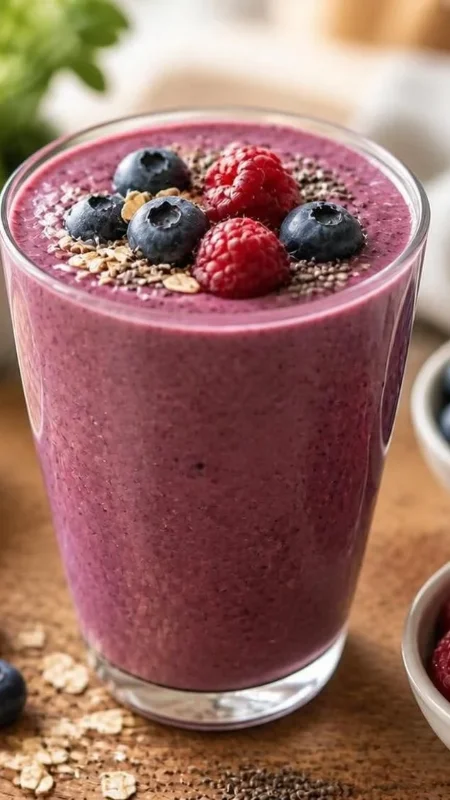
1. Berry Greek Yogurt Protein Smoothie
This berry smoothie combines Greek yogurt, mixed berries, oats, and chia seeds.
It provides protein and fiber, making it a convenient breakfast or substantial snack.
The berries add natural sweetness and a refreshing flavor.
Recipe Details
- Prep time: 5 minutes
- Cook time: 0 minutes
- Total time: 5 minutes
- Servings: 1
- Difficulty: Very easy
- Dietary preference: Vegetarian
Ingredients
| Ingredient | Quantity |
|---|---|
| Frozen mixed berries, unsweetened | 1 cup |
| Plain nonfat Greek yogurt | ¾ cup |
| Unsweetened almond milk | ½ cup |
| Rolled oats | 2 tablespoons |
| Chia seeds | 1 tablespoon |
| Ground cinnamon | ¼ teaspoon |
| Ice cubes | Optional |
Step-by-Step Instructions
Step 1: Add the almond milk to a blender.
Step 2: Add the Greek yogurt.
Step 3: Add frozen berries, oats, chia seeds, and cinnamon.
Step 4: Blend for approximately 30–60 seconds, or until smooth.
Step 5: Add a small amount of water or additional almond milk if the mixture is too thick.
Step 6: Pour into a glass and serve immediately.
Estimated Nutrition Per Serving
| Nutrient | Amount |
|---|---|
| Calories | 300 kcal |
| Protein | 23 g |
| Carbohydrates | 38 g |
| Fiber | 11 g |
| Fat | 7 g |
Why This Combination Works
Greek yogurt contributes protein.
Berries, oats, and chia seeds provide fiber and other nutrients.
The combination may be more satisfying than a smoothie made only with fruit juice.
Easy substitution: Replace almond milk with unsweetened fortified soy milk for additional protein.
Allergy note: This recipe contains dairy unless a suitable alternative is used.
2. Green Apple and Spinach Smoothie
This refreshing green smoothie combines apple, spinach, banana, and yogurt.
It offers a simple way to include leafy vegetables in a morning drink without relying on added sweeteners.
Recipe Details
- Prep time: 5 minutes
- Cook time: 0 minutes
- Total time: 5 minutes
- Servings: 1
- Difficulty: Very easy
- Dietary preference: Vegetarian
Ingredients
| Ingredient | Quantity |
|---|---|
| Fresh baby spinach | 1 cup |
| Small apple, cored and chopped | 1 |
| Banana | ½ medium |
| Plain nonfat Greek yogurt | ½ cup |
| Unsweetened fortified soy milk | ½ cup |
| Ground flaxseed | 1 tablespoon |
| Fresh lemon juice | 1 teaspoon |
| Ice cubes | ½ cup |
Step-by-Step Instructions
Step 1: Wash the spinach and apple thoroughly.
Step 2: Core and chop the apple.
Step 3: Add soy milk and Greek yogurt to the blender.
Step 4: Add spinach, apple, banana, flaxseed, and lemon juice.
Step 5: Add ice.
Step 6: Blend until smooth.
Step 7: Serve immediately.
Estimated Nutrition Per Serving
| Nutrient | Amount |
|---|---|
| Calories | 280 kcal |
| Protein | 19 g |
| Carbohydrates | 42 g |
| Fiber | 8 g |
| Fat | 6 g |
Why This Combination Works
Spinach contributes vitamins and minerals, including folate and vitamin K.
Apple and banana provide carbohydrates and natural sweetness.
Greek yogurt and soy milk contribute protein.
Flaxseed provides fiber and alpha-linolenic acid, a plant-based omega-3 fatty acid.
Preparation tip: Keep the apple peel on after washing it, if preferred, for additional fiber.
Important: People taking warfarin should maintain consistent vitamin K intake and discuss major dietary changes with their healthcare professional.
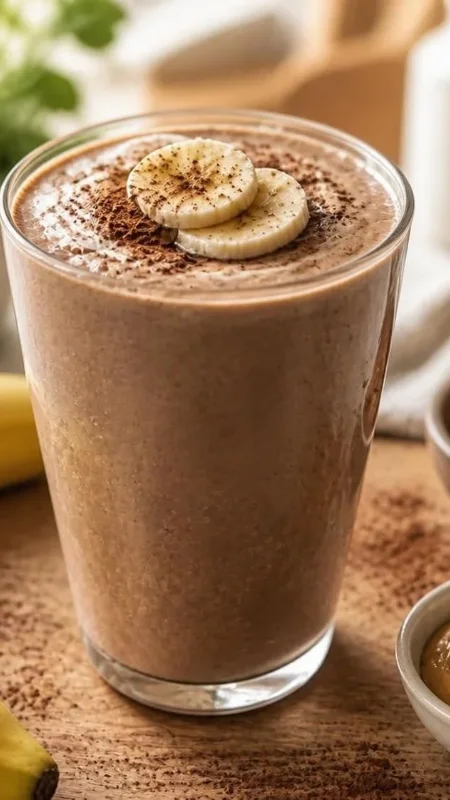
3. Chocolate Banana Protein Smoothie
This chocolate smoothie provides a familiar dessert-like flavor without requiring added syrup or sugar.
Banana adds sweetness, while cocoa powder and peanut butter contribute flavor.
Recipe Details
- Prep time: 5 minutes
- Cook time: 0 minutes
- Total time: 5 minutes
- Servings: 1
- Difficulty: Very easy
- Dietary preference: Vegetarian
Ingredients
| Ingredient | Quantity |
|---|---|
| Banana | 1 medium |
| Plain nonfat Greek yogurt | ¾ cup |
| Unsweetened fortified soy milk | ¾ cup |
| Unsweetened cocoa powder | 1 tablespoon |
| Natural peanut butter | 1 tablespoon |
| Rolled oats | 2 tablespoons |
| Ice cubes | ½ cup |
| Vanilla extract | ¼ teaspoon |
Step-by-Step Instructions
Step 1: Peel the banana and cut it into chunks.
Step 2: Add soy milk and Greek yogurt to the blender.
Step 3: Add banana, cocoa powder, peanut butter, oats, and vanilla.
Step 4: Add ice.
Step 5: Blend until thick and creamy.
Step 6: Adjust the consistency with a small amount of water if necessary.
Step 7: Pour into a glass and serve.
Estimated Nutrition Per Serving
| Nutrient | Amount |
|---|---|
| Calories | 430 kcal |
| Protein | 31 g |
| Carbohydrates | 53 g |
| Fiber | 7 g |
| Fat | 12 g |
Why This Combination Works
Greek yogurt and soy milk provide protein.
Banana and oats contribute carbohydrates.
Peanut butter adds unsaturated fats and flavor.
This smoothie is more energy-dense than the other recipes, which may make it suitable for a substantial breakfast or as part of a meal.
It should not automatically be considered a low-calorie snack.
Allergy note: Contains peanuts and dairy.
For a peanut-free version, use a suitable seed butter, checking labels for cross-contact warnings.
4. Tropical Mango and Chia Smoothie
This bright tropical smoothie combines mango, pineapple, yogurt, and chia seeds.
It’s refreshing, naturally sweet, and easy to prepare with frozen fruit.
Recipe Details
- Prep time: 5 minutes
- Cook time: 0 minutes
- Total time: 5 minutes
- Servings: 1
- Difficulty: Very easy
- Dietary preference: Vegetarian
Ingredients
| Ingredient | Quantity |
|---|---|
| Frozen mango chunks | ¾ cup |
| Frozen pineapple chunks | ½ cup |
| Plain nonfat Greek yogurt | ¾ cup |
| Unsweetened fortified soy milk | ½ cup |
| Chia seeds | 1 tablespoon |
| Fresh lime juice | 1 tablespoon |
| Fresh ginger, grated | ¼ teaspoon |
| Water | As needed |
Step-by-Step Instructions
Step 1: Add soy milk and Greek yogurt to the blender.
Step 2: Add frozen mango and pineapple.
Step 3: Add chia seeds, lime juice, and ginger.
Step 4: Blend until smooth.
Step 5: Add a small amount of water if the mixture is too thick.
Step 6: Pour into a glass.
Step 7: Serve immediately.
Estimated Nutrition Per Serving
| Nutrient | Amount |
|---|---|
| Calories | 310 kcal |
| Protein | 24 g |
| Carbohydrates | 45 g |
| Fiber | 8 g |
| Fat | 6 g |
Why This Combination Works
Mango and pineapple contribute vitamin C and other nutrients.
Greek yogurt and soy milk provide protein.
Chia seeds contribute fiber and unsaturated fats.
The fruit provides sweetness without requiring honey or syrup.
Variation: Substitute strawberries for pineapple to create a different flavor.
Common Smoothie Mistakes to Avoid
Even smoothies made with nutritious ingredients can become less practical when portions or preparation methods don’t match your needs.
Mistake 1: Adding Too Much Juice or Sweetener
Fruit juice can increase the amount of sugar and energy in a smoothie without providing the same fiber as whole fruit.
Large amounts of honey, syrup, or sweetened yogurt can also contribute additional calories.
Instead, use whole fruit for sweetness and choose unsweetened liquids when practical.
Mistake 2: Forgetting Protein
A smoothie made only with fruit and water may be refreshing but might not keep everyone satisfied for long.
Including Greek yogurt, fortified soy milk, tofu, or another suitable protein source can make it more substantial.
Protein needs vary, so there is no single amount required in every smoothie.
Mistake 3: Using Large Portions Without Considering Total Intake
Smoothies are easy to drink quickly.
A large blender container can hold multiple servings, particularly when filled with fruit, milk, nut butter, seeds, and oats.
There is nothing inherently wrong with larger smoothies, but portion size should match appetite, activity level, and nutritional needs.
Measure calorie-dense ingredients when consistency matters.
Mistake 4: Assuming Every Smoothie Is a Complete Meal
Some smoothies provide enough energy and nutrients for a breakfast, while others are better suited to snacks.
A smoothie containing 150 calories and very little protein is unlikely to meet the breakfast needs of many adults.
The appropriate size depends on the person.
If a smoothie leaves you hungry, consider eating it alongside eggs, whole-grain toast, or another suitable food.
Mistake 5: Believing Detox or Fat-Burning Claims
There is no convincing evidence that an ordinary smoothie can detoxify the body or selectively burn abdominal fat.
The liver, kidneys, digestive system, and other organs perform essential functions involved in processing and eliminating substances.
Ingredients such as ginger, lemon, and green tea may contain useful nutrients or plant compounds, but they should not be promoted as expected fat-burning solutions.
Morning Smoothie Recipes: How to Build a Better Breakfast
Smoothies can work particularly well in the morning because they require little preparation.
However, breakfast needs vary.
Some people prefer a light breakfast, while others need something more substantial.
Choose a Smoothie That Matches Your Appetite
The Berry Greek Yogurt Smoothie and Chocolate Banana Smoothie contain substantial protein and may work as breakfast options.
The Green Apple and Spinach Smoothie can be paired with another food if additional energy is needed.
Avoid choosing smoothie portions solely according to a rigid calorie target without considering individual needs.
Prepare Ingredients in Advance
To make morning blending faster, create individual freezer packs.
Place measured portions of frozen fruit and suitable vegetables into freezer-safe containers or bags.
Label them with the recipe name and date.
Keep yogurt, milk, and other refrigerated ingredients separate until blending.
Frozen fruit can be blended directly without thawing, provided the blender is suitable.
Store Smoothies Safely
Smoothies containing milk, yogurt, or other perishable ingredients should be refrigerated promptly.
Keep them at 40°F (4°C) or below.
For best quality, drink freshly blended smoothies soon after preparation.
If preparing ahead, store them in a clean, tightly covered container and aim to consume within 24 hours.
This is a conservative quality recommendation, not a universal safety deadline.
Do not leave perishable smoothies at room temperature for more than two hours, or more than one hour when temperatures exceed 90°F (32°C).
When transporting smoothies, use an insulated container with adequate cold packs.
Healthy Smoothie Ingredient Swaps
Smoothie recipes can be adapted to fit dietary preferences and ingredient availability.
| Instead Of | Try | Main Consideration |
|---|---|---|
| Sweetened yogurt | Plain Greek yogurt | Usually less added sugar |
| Fruit juice | Water or unsweetened milk | Changes energy and nutrient content |
| Almond milk | Fortified soy milk | Often provides more protein |
| Banana | Frozen berries | Different flavor and carbohydrate content |
| Peanut butter | Sunflower seed butter | Alternative for some peanut allergies |
| Dairy yogurt | Unsweetened soy yogurt | Nutrients vary by brand |
| Honey | Whole fruit | Adds sweetness with fiber |
| Protein powder | Greek yogurt or tofu | Whole-food protein alternative |
Always check labels when managing allergies.
A plant-based substitution does not automatically provide the same protein, calcium, or vitamin B12 as the original ingredient.
Frequently Asked Questions About Healthy Smoothies for Weight Loss
Can Drinking Fruit Smoothies Help You Lose Weight?
Fruit smoothies can fit into a weight-loss plan, but they do not directly cause weight loss.
Their effect depends on ingredients, serving sizes, overall energy intake, and individual circumstances.
A smoothie made with whole fruit, protein-rich yogurt, and fiber-containing ingredients may be more satisfying than one made primarily with juice.
However, whole fruit is also an excellent choice and may be more filling for some people.
What Is the Best Smoothie for Weight Loss?
There is no single best smoothie for everyone.
A useful smoothie contains ingredients that provide appropriate nourishment and fit your energy needs.
Protein, fiber, and reasonable portions can make a smoothie more satisfying.
The Berry Greek Yogurt Protein Smoothie is one practical example, but it is not inherently superior for weight loss.
Are Green Smoothies Better Than Fruit Smoothies?
Not necessarily.
Green smoothies can provide vegetables, while fruit smoothies may supply fiber, vitamin C, and other nutrients.
Their nutritional quality depends on the complete recipe.
A smoothie containing spinach, fruit, yogurt, and seeds can provide a variety of nutrients.
The color alone does not determine how healthy a smoothie is.
Is It Healthy to Drink a Smoothie Every Morning?
A smoothie can be part of a nutritious breakfast routine.
However, dietary variety remains important.
Eating different fruits, vegetables, whole grains, and protein foods across the day helps provide a broader range of nutrients.
Some people may also find solid breakfasts more satisfying than blended meals.
Choose the option that works for your nutritional needs and preferences.
Can Smoothies Replace Meals?
Some smoothies can function as meals when they provide sufficient energy, protein, fat, carbohydrates, and other nutrients.
Others are better suited to snacks.
A smoothie should not automatically replace a meal simply because it contains fruit and vegetables.
For people with medical conditions, a history of disordered eating, or specialized nutritional needs, individualized guidance may be appropriate.
Do Smoothies Boost Metabolism?
No smoothie ingredient has been shown to produce substantial, sustained weight loss by meaningfully increasing metabolism on its own.
Protein digestion requires energy, and certain compounds may produce small temporary effects on energy expenditure.
However, these effects do not make smoothies a reliable metabolism-boosting weight-loss strategy.
Focus on overall dietary quality and sustainable habits instead.
Final Thoughts: Make Smoothies Nutritious, Convenient, and Enjoyable
Smoothies can be a convenient way to include fruit, vegetables, protein, and fiber in your daily routine.
The four recipes in this guide offer different flavors and nutritional combinations, from berry yogurt blends to refreshing green and tropical smoothies.
When considering healthy smoothie recipes for weight loss, remember that individual ingredients cannot support weight changes.
A more useful approach is to choose balanced recipes, pay attention to portions, and consider how smoothies fit into your overall eating pattern.
Start with a recipe that appeals to you, adjust the ingredients to suit your preferences, and enjoy smoothies as one option among many nutritious foods.
For more ideas, explore our Smoothies & Drinks collection.
References and Further Reading
- USDA MyPlate. https://www.myplate.gov/
- USDA FoodData Central. https://fdc.nal.usda.gov/
- NIH NIDDK — Weight Management. https://www.niddk.nih.gov/health-information/weight-management
- NIH Office of Dietary Supplements. https://ods.od.nih.gov/
- FoodSafety.gov — Food Safety by Type of Food. https://www.foodsafety.gov/keep-food-safe/food-safety-by-type-food
- FoodSafety.gov — Cold Food Storage Chart. https://www.foodsafety.gov/food-safety-charts/cold-food-storage-charts
- CDC — Healthy Weight. https://www.cdc.gov/healthy-weight-growth/
- Dietary Guidelines for Americans. https://www.dietaryguidelines.gov/
Disclaimer: This article is for general educational purposes and is not medical or professional advice. Please consult a qualified healthcare professional before making changes to your diet, exercise, or health routine. See our Medical Disclaimer.