Protein is an essential nutrient that helps your body build and repair tissues, maintain muscles, and produce important enzymes and hormones. It also contributes to normal immune function and can help make meals satisfying.
But finding good protein foods involves more than choosing whatever has the highest protein number on its label.
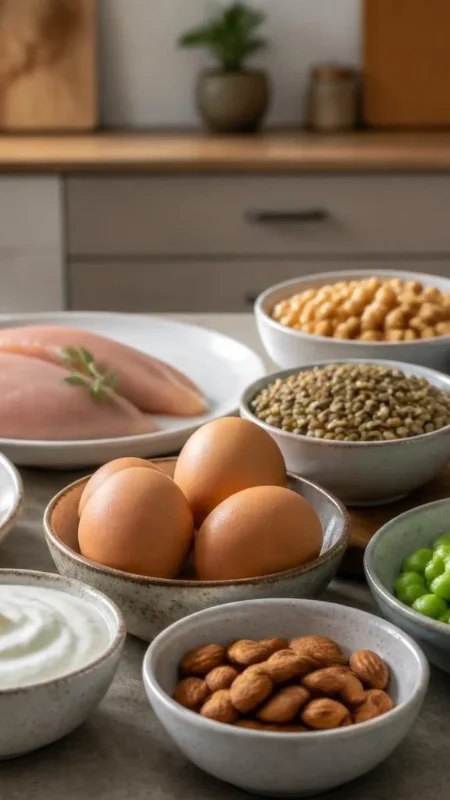
Chicken, eggs, fish, Greek yogurt, lentils, beans, tofu, and nuts all provide protein. Each also offers a different combination of vitamins, minerals, fats, carbohydrates, and fiber.
Table of Contents
For example, salmon provides protein and omega-3 fatty acids, while lentils offer protein, fiber, and iron.
The best approach is to choose a variety of protein sources that fit your preferences, budget, and nutritional needs.
This guide explains which foods provide protein, how much you may need, and how to build balanced meals without making eating complicated.
What Makes a Food a Good Source of Protein?
A good protein food provides a meaningful amount of protein while contributing to an overall nutritious eating pattern.
Protein is made from smaller building blocks called amino acids.
Your body uses these amino acids for numerous functions, including repairing tissues, maintaining muscle proteins, and making certain hormones, enzymes, and immune-system components.
Protein and Essential Amino Acids
There are 20 amino acids commonly used to build proteins in the body.
Nine are considered essential for adults because the body cannot produce them in sufficient amounts.
They must come from food.
Animal foods such as eggs, milk, meat, and fish generally provide all nine essential amino acids in proportions that support human protein needs.
Some plant foods, including soy products, also provide all nine.
Other plant foods may contain relatively smaller amounts of one or more essential amino acids.
However, you do not need to combine specific plant proteins at every meal.
Eating a variety of plant protein sources throughout the day can provide an adequate amino acid intake when total food and protein intake are sufficient.
Protein Quantity Is Only Part of the Picture
Consider two foods that both provide around 20 grams of protein.
One might be fish, which may also supply beneficial unsaturated fats.
Another might be a processed meat product containing substantial sodium and saturated fat.
Their protein amounts may be similar, but their broader nutritional profiles differ.
For everyday eating, emphasize a mixture of nutrient-dense protein sources, including seafood, lean meats, eggs, legumes, soy foods, nuts, seeds, and dairy or fortified alternatives.
Good Protein Foods List: 20 Everyday Options
The following table compares common protein foods.
Protein values are approximate and depend on the product, cooking method, and serving size.
Animal-Based and Plant-Based Protein Comparison
| Food | Typical Serving | Approximate Protein |
|---|---|---|
| Chicken breast, cooked | 3 oz (85 g) | 26 g |
| Turkey breast, cooked | 3 oz (85 g) | 25 g |
| Lean beef, cooked | 3 oz (85 g) | 22–25 g |
| Salmon, cooked | 3 oz (85 g) | 22 g |
| Tuna, canned in water, drained | 3 oz (85 g) | 20–22 g |
| Shrimp, cooked | 3 oz (85 g) | 20 g |
| Eggs | 2 large | 12–13 g |
| Plain Greek yogurt | ¾ cup | 15–18 g |
| Cottage cheese | ½ cup | 12–14 g |
| Milk | 1 cup | 8 g |
| Tempeh | 3 oz (85 g) | 15–18 g |
| Firm tofu | ½ cup | 10–20 g |
| Edamame, cooked | ½ cup | 9 g |
| Lentils, cooked | 1 cup | 18 g |
| Chickpeas, cooked | 1 cup | 14–15 g |
| Black beans, cooked | 1 cup | 15 g |
| Kidney beans, cooked | 1 cup | 13 g |
| Quinoa, cooked | 1 cup | 8 g |
| Pumpkin seeds | 1 oz (28 g) | 8–9 g |
| Peanut butter | 2 tablespoons | 7–8 g |
Note: These are rounded reference estimates consistent with common USDA food-composition entries, not values independently calculated for a specific brand. Tofu and yogurt protein content can vary considerably, so check packaging.
Which Foods Provide the Most Protein?
Lean poultry, fish, lean meat, and some dairy foods provide substantial protein relative to their serving sizes.
Soy foods, legumes, and seeds are useful alternatives, particularly for people who prefer plant-based meals.
However, protein concentration is not the only consideration.
For example, lentils contain less protein per calorie than skinless chicken breast, but they also contribute fiber, which supports digestive health.
Similarly, nuts contain protein but also substantial amounts of fat and energy. They can fit into a healthy eating pattern, even though they are not necessarily the most calorie-efficient protein source.
Practical tip: Choose protein foods based on your whole meal rather than ranking individual foods as universally best or worst.
How Much Protein Do You Need Each Day?
Daily protein requirements depend on factors including body size, age, activity level, health status, and life stage.
For most healthy adults, the established Recommended Dietary Allowance is:
0.8 grams of protein per kilogram of body weight per day.
This is a population-level recommendation intended to meet the needs of nearly all healthy adults, not an individualized target for every situation.
How to Calculate Your Protein Requirement
First, convert your body weight from pounds to kilograms.
Divide your weight in pounds by 2.2.
Then multiply your weight in kilograms by 0.8.
For example, someone weighing 150 pounds:
150 ÷ 2.2 = approximately 68 kg
68 × 0.8 = approximately 54 g protein daily
This gives a starting reference amount of about 54 grams per day.
Daily Protein Intake Requirements by Age
| Population | General Protein Guidance |
|---|---|
| Children ages 1–3 | RDA: 13 g/day |
| Children ages 4–8 | RDA: 19 g/day |
| Children ages 9–13 | RDA: 34 g/day |
| Girls ages 14–18 | RDA: 46 g/day |
| Boys ages 14–18 | RDA: 52 g/day |
| Healthy adults ages 19+ | RDA: 0.8 g/kg/day |
| Pregnant adults | RDA: approximately 1.1 g/kg/day, with individual needs varying |
| Breastfeeding adults | RDA: approximately 1.3 g/kg/day, with individual needs varying |
| Older adults | Adult RDA applies; some expert groups recommend higher individualized targets |
| Resistance-training adults | Often approximately 1.2–2.0 g/kg/day, depending on training and goals |
These figures are general references rather than individualized prescriptions.
For pregnancy and lactation, protein requirements change with life stage, and clinical recommendations may account for additional factors.
For older adults, the adult RDA remains the official U.S. reference, although some expert groups advocate approximately 1.0–1.2 g/kg/day for healthy older people to help maintain muscle. The most appropriate amount depends on overall health and clinical circumstances.
People with kidney disease, certain metabolic disorders, or other conditions affecting protein metabolism should seek individualized advice.
Should You Eat Protein at Every Meal?
Spreading protein across meals can be a convenient way to meet your daily needs.
For example, a person aiming for 75 grams daily might eat:
- Breakfast: 20 grams
- Lunch: 25 grams
- Dinner: 25 grams
- Snack: 5 grams
There is no requirement for every meal to contain exactly the same amount.
The most important starting point is meeting your overall nutritional needs consistently.
Best High-Protein Foods for Weight Loss
Protein can contribute to fullness and help preserve lean tissue during weight loss, especially when combined with resistance exercise.
However, eating more protein does not automatically cause weight loss.
Changes in body weight depend on overall energy intake, energy expenditure, and individual factors.
The most useful protein choices are those that help you build satisfying meals while meeting your nutritional needs.
Protein Foods Worth Considering
Skinless chicken breast is a convenient source of lean protein.
Plain Greek yogurt can provide substantial protein with relatively little preparation.
Eggs are versatile and work well with vegetables and whole grains.
Beans and lentils provide both protein and fiber.
Fish provides protein and, depending on the variety, omega-3 fats.
Tofu offers a flexible plant-based alternative that absorbs different seasonings.
Build a Balanced Plate
Instead of eating protein alone, combine it with other nutritious foods.
A practical lunch might contain:
- Grilled chicken or tofu
- Brown rice or quinoa
- Roasted vegetables
- Olive oil and lemon dressing
This combination provides protein, carbohydrates, fats, and fiber.
It also reflects the broader balanced-eating principles promoted by USDA MyPlate.
Avoid assuming that very high protein intake will compensate for inadequate sleep, low physical activity, or an otherwise unbalanced diet.
Best Protein Foods for Muscle Growth
Protein helps repair and build muscle tissue, but muscle growth also requires an appropriate training stimulus.
Resistance exercises such as weightlifting, resistance-band workouts, and bodyweight exercises signal the body to adapt.
Adequate protein then supplies amino acids needed to support that adaptation.
For many people who regularly perform resistance training, research-based sports nutrition recommendations commonly fall around 1.2–2.0 grams per kilogram of body weight daily.
Requirements vary with training intensity, total energy intake, and individual circumstances.
High-Protein Foods List for Muscle Gain
Useful everyday options include chicken, eggs, salmon, Greek yogurt, cottage cheese, tofu, tempeh, beans, and lean beef.
For example, a post-workout meal could be grilled salmon with rice and vegetables.
A convenient snack might be Greek yogurt with berries.
A plant-based option could be tofu with noodles and broccoli.
Do You Need Protein Powder?
Most people do not need protein powder if they can meet their needs through food.
Protein supplements may be convenient for people who struggle to consume sufficient protein because of appetite, schedule, or dietary restrictions.
However, powders are not inherently superior to protein-rich foods.
Whole foods often provide additional nutrients that supplements may lack.
If you use a supplement, choose a reputable product and consider independent third-party testing, particularly if you compete in organized sports.
Affordable Lean Protein Sources
Protein-rich eating does not have to rely on expensive meat, specialty bars, or supplements.
Some of the most economical sources are ordinary grocery staples.
Budget-Friendly Animal Proteins
Eggs: Easy to prepare and useful for breakfast, lunch, or dinner.
Canned tuna or salmon: Shelf-stable until opened and convenient for sandwiches or salads.
Plain yogurt: Often economical in larger containers.
Chicken thighs: Frequently less expensive than chicken breasts, although prices vary by region.
Cottage cheese: Provides protein without requiring cooking.
Budget-Friendly Plant Proteins
Dried lentils: Cook relatively quickly and work well in soups and grain bowls.
Dried beans: Often inexpensive per serving, especially when prepared in batches.
Canned beans: Convenient, with no soaking required.
Tofu: Can be affordable, especially when compared with some meat products.
Peanut butter: Useful for snacks, although it is more energy-dense and provides less protein per calorie than many other options.
Five Ways to Save Money
- Compare unit prices rather than package prices.
- Use canned or frozen protein foods when fresh options are expensive.
- Plan several meals around the same ingredients.
- Replace part of the meat in chili or tacos with beans.
- Freeze suitable leftovers promptly to reduce food waste.
For additional meal-planning guidance, explore the site’s Nutrition section.
Plant-Based Protein Alternatives to Meat
You can meet protein requirements without eating meat.
A well-planned vegetarian or vegan diet can supply sufficient protein and essential amino acids.
The key is variety and adequate total food intake.
Tofu and Tempeh
Tofu is made from soybeans and is available in several textures.
Firm and extra-firm tofu work well in stir-fries, baked dishes, and grain bowls.
Silken tofu can be blended into sauces, soups, or smoothies.
Tempeh is a fermented soy product with a firmer texture and a nutty flavor.
Both can replace meat in many dishes.
Lentils, Beans, and Chickpeas
Legumes are among the most practical plant-based protein foods.
They also provide fiber and important micronutrients.
Try adding lentils to pasta sauce, chickpeas to salads, or black beans to tacos.
Nuts, Seeds, and Whole Grains
Pumpkin seeds, peanuts, oats, and quinoa contribute additional protein.
They work especially well alongside legumes and soy foods.
For instance, a meal containing chickpeas, quinoa, vegetables, and seeds supplies protein from several sources.
Do Plant Proteins Need to Be Combined?
You do not need to eat beans and rice together at every meal to obtain adequate essential amino acids.
A varied plant-based diet across the day generally provides complementary amino acid patterns.
However, people following fully vegan diets should also plan for nutrients that may require special attention, especially vitamin B12.
Reliable guidance is available from the NIH Office of Dietary Supplements.
Easy High-Protein Recipe: Chicken, Chickpea, and Quinoa Bowls
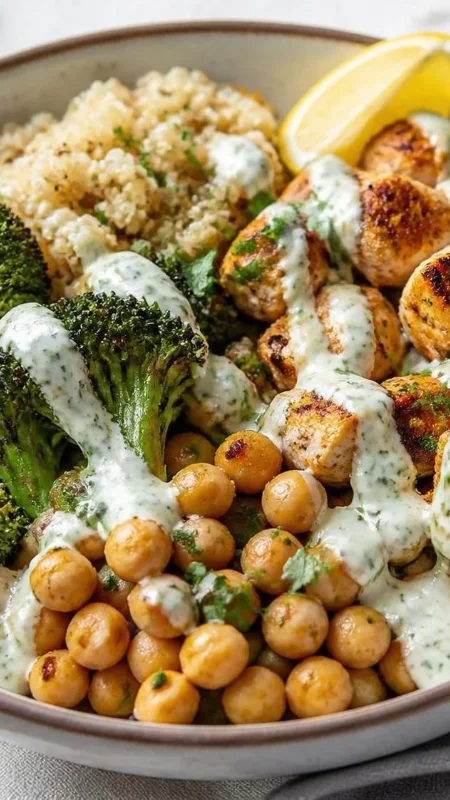
This balanced meal combines lean chicken, chickpeas, quinoa, vegetables, and a lemon-yogurt dressing.
It is suitable for a practical lunch or dinner and can be adapted with tofu for a meat-free version.
Recipe Overview
| Detail | Amount |
|---|---|
| Recipe name | Chicken, Chickpea, and Quinoa Bowls |
| Preparation time | 15 minutes |
| Cooking time | 25 minutes |
| Total time | 40 minutes |
| Servings | 4 |
| Difficulty | Easy |
| Main protein sources | Chicken, chickpeas, quinoa, Greek yogurt |
Ingredients
| Ingredient | Amount |
|---|---|
| Boneless, skinless chicken breast | 1 lb (454 g) |
| Dry quinoa | ¾ cup (about 128 g) |
| Water | 1½ cups |
| Canned chickpeas, drained and rinsed | 1 can (15 oz), approximately 1½ cups drained |
| Broccoli florets | 2 cups |
| Red bell pepper, sliced | 1 medium |
| Olive oil | 1 tablespoon |
| Garlic powder | 1 teaspoon |
| Smoked paprika | 1 teaspoon |
| Black pepper | ¼ teaspoon |
| Salt | ¼ teaspoon, optional |
| Plain nonfat Greek yogurt | ½ cup |
| Lemon juice | 2 tablespoons |
| Fresh parsley, chopped | 2 tablespoons |
| Water for thinning dressing | 1–2 tablespoons, as needed |
Step-by-Step Instructions
Step 1: Preheat the oven.
Preheat your oven to 425°F (220°C).
Line a large baking sheet with parchment paper or lightly oil it.
Step 2: Prepare the quinoa.
Rinse the quinoa under running water using a fine-mesh strainer.
Combine the quinoa with 1½ cups of water in a saucepan.
Bring to a boil, cover, reduce the heat, and simmer for approximately 15 minutes, or according to the package instructions.
Remove from the heat and let stand, covered, for five minutes.
Fluff with a fork.
Step 3: Prepare the chicken and vegetables.
Cut the chicken into evenly sized pieces, approximately 1 inch across.
Place the chicken, broccoli, and bell pepper on the baking sheet.
Drizzle with olive oil.
Sprinkle with garlic powder, smoked paprika, black pepper, and optional salt.
Toss to coat.
Keep the raw chicken separate from ready-to-eat ingredients and wash hands and utensils after handling it.
Step 4: Roast until cooked.
Spread the ingredients into an even layer.
Roast for approximately 18–25 minutes, turning the vegetables if needed.
Use a food thermometer to check the thickest chicken pieces.
Chicken must reach an internal temperature of 165°F (74°C).
Cooking time alone does not establish doneness.
Step 5: Prepare the dressing.
In a small bowl, combine Greek yogurt, lemon juice, and parsley.
Add one or two tablespoons of water to reach your preferred consistency.
Step 6: Warm the chickpeas.
Place the drained chickpeas in a microwave-safe bowl with a splash of water.
Cover loosely and heat until hot, stirring halfway through.
Alternatively, warm them in a saucepan.
Step 7: Assemble the bowls.
Divide the quinoa among four bowls.
Add chicken, chickpeas, broccoli, and bell pepper.
Spoon the yogurt dressing over each serving.
Serve immediately.
Estimated Nutrition Per Serving
| Nutrient | Approximate Amount |
|---|---|
| Calories | 510 kcal |
| Protein | 47 g |
| Carbohydrates | 50 g |
| Total fat | 13 g |
| Fiber | 10 g |
| Sodium | 400–650 mg |
These are preliminary estimates based on typical ingredient values and a four-serving yield. They have not been independently recalculated using specific USDA FoodData Central records. Actual values will vary with chickpea brand, drained weight, chicken moisture loss, yogurt, and added salt.
Recipe Variations
Vegetarian version: Replace chicken with extra-firm tofu. Protein and calorie totals will change.
Higher-fiber version: Add extra broccoli, spinach, or chopped cabbage.
Dairy-free version: Replace the yogurt dressing with lemon juice, herbs, and a small amount of olive oil.
Lower-sodium version: Choose no-salt-added chickpeas and omit the added salt.
Meal Prep and Storage
Refrigerate cooked ingredients within two hours of preparation.
If the surrounding temperature exceeds 90°F (32°C), refrigerate within one hour.
Use shallow, covered containers to cool food promptly.
Store at 40°F (4°C) or below.
Most cooked leftovers can be refrigerated for three to four days.
For best quality, store the yogurt dressing separately.
Reheat the chicken, quinoa, chickpeas, and vegetables until they reach 165°F (74°C).
Do not repeatedly leave cooked rice or other cooked grains at room temperature.
For longer storage, freeze the cooked components promptly. Fresh yogurt dressing is generally better prepared separately.
Source: FoodSafety.gov.
Simple Ways to Eat More Protein Every Day
You do not need a completely new diet to include more protein.
Small changes to familiar meals are often enough.
Breakfast Ideas
Try scrambled eggs with whole-grain toast and fruit.
Add plain Greek yogurt to a breakfast bowl with berries and oats.
Prepare overnight oats with milk or fortified soy milk.
For a savory plant-based breakfast, try tofu scramble with vegetables.
Lunch Ideas
Add chickpeas to a mixed vegetable salad.
Make a tuna sandwich with whole-grain bread.
Fill a wrap with chicken, hummus, and vegetables.
Use leftover tofu or tempeh in a rice bowl.
Dinner Ideas
Prepare salmon with roasted potatoes and broccoli.
Make bean chili with tomatoes, peppers, and spices.
Stir-fry chicken or tofu with vegetables.
Serve lentil pasta sauce over whole-grain pasta.
Protein-Rich Snacks
Convenient choices include hard-boiled eggs, yogurt, cottage cheese, edamame, roasted chickpeas, and a small serving of nuts.
Snacks are optional. Whether you need one depends on your appetite, meal schedule, and overall nutritional requirements.
Common Protein Mistakes to Avoid
Mistake 1: Assuming More Protein Is Always Better
Once protein needs are adequately met, consuming much more does not necessarily provide additional benefits.
Very high intakes can displace vegetables, fruit, whole grains, and other important foods.
Mistake 2: Ignoring Fiber
Many high-protein animal foods contain no dietary fiber.
Include vegetables, fruit, legumes, and whole grains to support a balanced diet.
Mistake 3: Relying Heavily on Processed Meats
Bacon, sausage, and certain deli meats provide protein but may also contain substantial sodium and saturated fat.
Choosing a variety of minimally processed protein sources is generally preferable.
Mistake 4: Assuming Plant Protein Is Inadequate
Beans, lentils, tofu, tempeh, and other plant foods can contribute meaningful protein.
Variety and adequate total intake are more important than combining specific foods at every meal.
Mistake 5: Using Protein Supplements Instead of Meals
Protein powders can be convenient, but they do not replace the broader nutritional value of balanced meals.
Most people can obtain enough protein from food.
Mistake 6: Ignoring Individual Medical Needs
People with chronic kidney disease, certain inherited metabolic conditions, or other medical concerns may require individualized protein recommendations.
A registered dietitian or qualified healthcare professional can help determine an appropriate intake.
Frequently Asked Questions About Good Protein Foods
What Are the Healthiest Protein Foods?
There is no single healthiest protein food for everyone.
Useful choices include fish, beans, lentils, tofu, eggs, plain yogurt, and lean poultry.
A varied selection generally offers broader nutritional benefits than relying on one protein source.
Are Eggs a Good Protein Source?
Yes.
One large egg contains approximately six grams of protein.
Eggs also provide nutrients such as choline and vitamin B12.
How frequently they fit into someone’s diet depends on the overall eating pattern and individual health considerations.
Can You Get Enough Protein Without Meat?
Yes.
Vegetarian and vegan diets can supply adequate protein through soy foods, beans, lentils, nuts, seeds, and grains.
People following vegan diets should pay particular attention to vitamin B12, which generally requires reliable fortified foods or supplementation.
What Are the Best High-Protein Foods for Weight Loss?
Lean poultry, fish, plain Greek yogurt, tofu, beans, and lentils are useful choices.
The best option depends on the rest of the meal, portion size, appetite, preferences, and overall dietary pattern.
No individual protein food supports weight loss.
How Much Protein Is Too Much?
There is no single universal upper intake limit that applies to all healthy adults.
However, consuming substantially more protein than needed may offer little additional benefit and can reduce dietary variety.
People with kidney disease or other relevant medical conditions should obtain individualized guidance.
Is Protein Powder Necessary for Muscle Growth?
No.
Adequate dietary protein combined with progressive resistance training can support muscle growth without supplements.
Protein powder may be useful for convenience, but it is not required.
What Is the Cheapest High-Protein Food?
Prices vary by location.
Dried lentils, dried beans, eggs, canned fish, and some soy products are often economical.
Compare the cost per serving and per gram of protein rather than assuming a particular food is always cheapest.
Final Takeaway
The best good protein foods are those that help you meet your needs while contributing to a varied, enjoyable eating pattern.
Lean poultry, fish, eggs, yogurt, tofu, lentils, beans, nuts, and seeds all have a place.
For most healthy adults, 0.8 grams of protein per kilogram of body weight daily is the established minimum planning reference, although needs may differ with age, activity, and medical circumstances.
Rather than focusing only on protein numbers, consider the nutrients each food provides, how it fits into your meals, and whether the eating pattern is sustainable.
Start with a few affordable protein staples, combine them with vegetables and whole grains, and build meals you enjoy.
Disclaimer: This article is for general educational purposes and is not medical or professional advice. Please consult a qualified healthcare professional before making changes to your diet, exercise, or health routine. See our Medical Disclaimer.