
Busy weekdays can make preparing a satisfying lunch feel like another task on an already crowded schedule. Between work, errands, and family responsibilities, it’s easy to rely on takeout or whatever happens to be available.
That’s where Sunday lunch bowl prep can make a difference.
By preparing a few grains, proteins, vegetables, and flavorful dressings ahead of time, you can create convenient lunches that require little effort during the week.
Lunch bowls are especially useful because they’re flexible. You can combine brown rice, quinoa, or couscous with chicken, beans, lentils, and colorful vegetables to create satisfying meals without following complicated recipes.
Table of Contents
The key is to prepare ingredients strategically rather than cooking five completely separate meals.
Below, you’ll find five healthy lunch bowls, a consolidated shopping list, step-by-step preparation instructions, estimated nutrition information, and practical food storage guidance.
You’ll also learn how to organize your Sunday cooking session so your lunches stay convenient, flavorful, and safe to eat.
Why Sunday Lunch Bowl Prep Makes Weekdays Easier
Preparing lunches ahead of time can help simplify your daily routine while making it easier to include a variety of nutritious ingredients.
Instead of deciding what to eat every afternoon, you’ll already have a meal prepared or ready to assemble.
Save Time During Busy Weekdays
A typical lunch bowl contains several components:
- A grain or other filling base.
- A source of protein.
- Vegetables.
- A sauce or dressing.
- Optional toppings for extra flavor and texture.
Preparing these ingredients together can reduce repeated cooking and cleanup.
For example, one batch of brown rice can serve as the foundation for two different lunch bowls.
Similarly, chicken cooked during the same session can be seasoned differently to create Mediterranean and Asian-inspired meals.
This approach makes weekly lunch prep bowls practical without requiring an entire day in the kitchen.
Build Balanced Lunches With Simple Ingredients
A well-planned lunch bowl can provide carbohydrates, protein, dietary fiber, and unsaturated fats.
Whole grains contribute carbohydrates and, depending on the grain, fiber and other nutrients.
Chicken, lentils, beans, and chickpeas provide protein.
Vegetables add fiber, vitamins, minerals, and variety.
Olive oil, seeds, and other plant-based ingredients can contribute unsaturated fats.
For general meal planning, USDA MyPlate encourages including vegetables, fruits, grains, protein foods, and dairy or fortified alternatives across meals.
Your lunch bowl doesn’t need to contain every food group to contribute to an overall balanced diet.
Reduce Food Waste Through Smart Planning
Meal preparation also helps you use ingredients more efficiently.
Instead of buying vegetables for five unrelated recipes, choose ingredients that work across several dishes.
Bell peppers, spinach, carrots, broccoli, and cucumbers can be used in different combinations.
Using shared ingredients can simplify shopping and reduce the chance that unused produce will spoil.
For additional inspiration, explore our healthy lunch ideas guide.
What You Need for Five Healthy Lunch Bowls
Successful grain bowl meal prep starts with choosing ingredients that are versatile and hold up reasonably well during storage.
Whole Grains and Filling Bases
Brown rice and quinoa are useful options because they pair well with many proteins and sauces.
Whole-wheat couscous is another convenient choice.
For variety, you can also use farro, barley, or other cooked grains.
Choose according to your preferences, dietary needs, cooking time, and budget.
Protein Sources
Protein helps make lunch bowls more substantial.
For this week’s recipes, we’ll use chicken breast, chickpeas, black beans, and lentils.
These ingredients provide different textures and flavors while keeping preparation straightforward.
If you prefer vegetarian meals, chicken can be replaced with tofu, tempeh, beans, or lentils.
Fresh and Roasted Vegetables
Combining raw and cooked vegetables creates variety.
Cucumbers and spinach add freshness, while roasted sweet potatoes and broccoli contribute different textures.
Choose vegetables you enjoy eating regularly rather than buying unfamiliar ingredients solely for meal prep.
Sauces and Flavor Boosters
Sauces can transform a simple combination of grains, protein, and vegetables.
Lemon juice, olive oil, herbs, salsa, and reduced-sodium teriyaki sauce offer several flavor options.
For the best texture, store dressings separately whenever possible.
Sunday Lunch Bowl Prep Shopping List
The following quantities provide ingredients for five individual lunch bowls.
Each recipe makes one serving.
| Ingredient | Quantity | Used For |
|---|---|---|
| Boneless, skinless chicken breast | 10 oz / 285 g raw | Bowls 1 and 4 |
| Dry quinoa | 1/4 cup | Bowl 1 |
| Dry brown rice | 1/2 cup | Bowls 2 and 4 |
| Dry whole-wheat couscous | 1/4 cup | Bowl 3 |
| Cooked lentils | 3/4 cup | Bowl 5 |
| Canned black beans, drained | 1/2 cup | Bowl 2 |
| Canned chickpeas, drained | 3/4 cup | Bowl 3 |
| Broccoli florets | 1 cup | Bowl 4 |
| Sweet potato | 1 medium | Bowl 5 |
| Bell pepper | 1 medium | Bowls 2 and 5 |
| Cucumber | 1 small | Bowls 1 and 3 |
| Cherry tomatoes | 1/2 cup | Bowl 1 |
| Baby spinach | 2 cups | Bowls 3 and 5 |
| Corn kernels | 1/4 cup | Bowl 2 |
| Red onion | 1/4 small | Bowls 1 and 3 |
| Avocado | 1/4 medium | Bowl 2 |
| Feta cheese | 1 oz / 28 g | Bowl 1 |
| Olive oil | 2 tablespoons | Several bowls |
| Lemons | 2 | Bowls 1 and 3 |
| Salsa | 2 tablespoons | Bowl 2 |
| Reduced-sodium teriyaki sauce | 1 tablespoon | Bowl 4 |
| Sesame seeds | 1 teaspoon | Bowl 4 |
| Pumpkin seeds | 1 tablespoon | Bowl 5 |
| Garlic powder | As needed | Seasoning |
| Dried oregano | As needed | Seasoning |
| Ground cumin | As needed | Seasoning |
| Black pepper | As needed | Seasoning |
Shopping note: The exact amount of cooked grain obtained from dry grain varies by product and cooking method. Measure the finished portions before assembling.
Keep pantry staples such as oil, spices, and sauces on hand to reduce weekly shopping.
5 Healthy Lunch Bowls to Prepare on Sunday
These five make-ahead lunch bowls use overlapping ingredients while offering different flavors.
The nutrition values are approximate calculations based on standard ingredient data and typical cooked yields. Actual values vary with brands, portion sizes, cooking methods, and substitutions.
1. Mediterranean Chicken and Quinoa Bowl
This Mediterranean-inspired bowl combines chicken, quinoa, fresh vegetables, feta cheese, and lemon dressing.
It’s colorful, satisfying, and easy to assemble.
Recipe Details
- Prep time: 10 minutes
- Cook time: 20 minutes
- Total time: 30 minutes
- Servings: 1
Ingredients
| Ingredient | Amount |
|---|---|
| Cooked chicken breast | 3 oz / 85 g |
| Cooked quinoa | 3/4 cup |
| Cherry tomatoes | 1/2 cup |
| Diced cucumber | 1/2 cup |
| Thinly sliced red onion | 2 tablespoons |
| Crumbled feta | 1 oz / 28 g |
| Olive oil | 1 teaspoon |
| Lemon juice | 1 tablespoon |
| Dried oregano | 1/4 teaspoon |
| Black pepper | To taste |
Instructions
- Cook the quinoa according to the package directions.
- Season the chicken with oregano and black pepper.
- Cook the chicken until its thickest part reaches an internal temperature of 165°F (74°C).
- Allow the cooked ingredients to cool promptly before refrigerated storage.
- Place the quinoa in a meal prep container.
- Add the sliced chicken, cucumber, tomatoes, and red onion.
- Sprinkle the feta over the vegetables.
- Mix the olive oil and lemon juice in a separate dressing container.
- Refrigerate promptly and add the dressing just before eating.
Estimated Nutrition Per Serving
| Nutrient | Approximate Amount |
|---|---|
| Calories | 520 kcal |
| Protein | 39 g |
| Carbohydrates | 40 g |
| Fat | 22 g |
| Fiber | 6 g |
Meal prep tip: Store cucumber and dressing separately if you prefer a firmer texture.
For longer storage, freeze the cooked chicken and quinoa separately from the fresh vegetables.
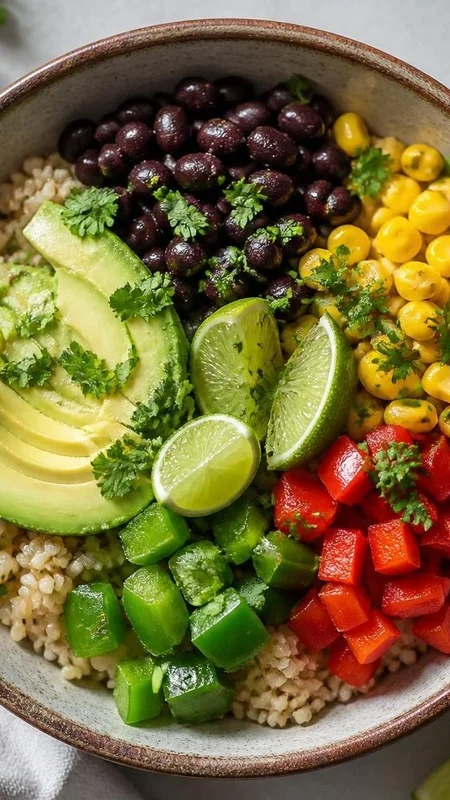
2. Southwest Black Bean and Brown Rice Bowl
This vegetarian bowl brings together brown rice, black beans, corn, peppers, salsa, and avocado.
The ingredients provide a combination of complex carbohydrates, plant protein, and fiber.
Recipe Details
- Prep time: 10 minutes
- Cook time: 35 minutes
- Total time: 45 minutes
- Servings: 1
Ingredients
| Ingredient | Amount |
|---|---|
| Cooked brown rice | 3/4 cup |
| Black beans, drained and rinsed | 1/2 cup |
| Corn kernels | 1/4 cup |
| Diced bell pepper | 1/2 cup |
| Avocado | 1/4 medium |
| Salsa | 2 tablespoons |
| Olive oil | 1 teaspoon |
| Ground cumin | 1/4 teaspoon |
| Lime or lemon juice | 1 teaspoon |
Instructions
- Cook the brown rice according to package directions.
- Drain and rinse the canned black beans.
- Dice the bell pepper.
- Combine the beans, corn, bell pepper, and cumin.
- Place the cooked rice in a meal prep container.
- Add the bean and vegetable mixture.
- Store the salsa separately.
- Add freshly cut avocado and citrus juice when serving.
Estimated Nutrition Per Serving
| Nutrient | Approximate Amount |
|---|---|
| Calories | 425 kcal |
| Protein | 13 g |
| Carbohydrates | 66 g |
| Fat | 13 g |
| Fiber | 15 g |
Meal prep tip: Avocado is best added shortly before eating because its color and texture can deteriorate after cutting.
For additional protein, consider adding cooked tofu or another serving of beans.
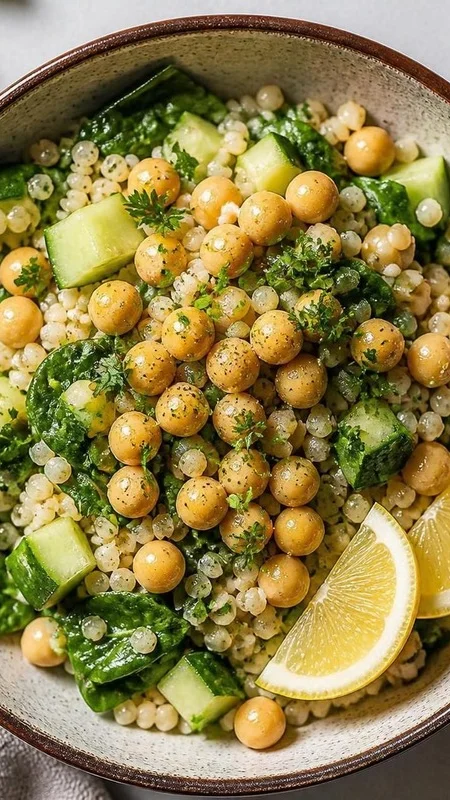
3. Lemon Herb Chickpea and Couscous Bowl
This refreshing vegetarian lunch combines couscous, chickpeas, spinach, cucumber, and lemon.
It’s particularly convenient because couscous cooks quickly.
Recipe Details
- Prep time: 10 minutes
- Cook time: 10 minutes
- Total time: 20 minutes
- Servings: 1
Ingredients
| Ingredient | Amount |
|---|---|
| Cooked whole-wheat couscous | 3/4 cup |
| Chickpeas, drained and rinsed | 3/4 cup |
| Baby spinach | 1 cup |
| Diced cucumber | 1/2 cup |
| Finely chopped red onion | 1 tablespoon |
| Olive oil | 2 teaspoons |
| Lemon juice | 1 tablespoon |
| Dried parsley | 1/2 teaspoon |
| Black pepper | To taste |
Instructions
- Prepare the couscous according to the package directions.
- Drain and rinse the chickpeas.
- Wash and thoroughly dry the spinach.
- Dice the cucumber and chop the red onion.
- Place the couscous in a meal prep container.
- Add the chickpeas and vegetables.
- Combine olive oil, lemon juice, parsley, and black pepper.
- Store the dressing separately until serving.
Estimated Nutrition Per Serving
| Nutrient | Approximate Amount |
|---|---|
| Calories | 465 kcal |
| Protein | 18 g |
| Carbohydrates | 69 g |
| Fat | 14 g |
| Fiber | 13 g |
Meal prep tip: Dry the spinach thoroughly before packing to reduce excess moisture.
If you prefer a gluten-free option, substitute quinoa or certified gluten-free grains for couscous.
4. Teriyaki Chicken and Broccoli Rice Bowl
This bowl combines tender chicken, brown rice, broccoli, and teriyaki sauce.
It’s a convenient option for anyone who prefers a warm lunch.
Recipe Details
- Prep time: 10 minutes
- Cook time: 25 minutes
- Total time: 35 minutes
- Servings: 1
Ingredients
| Ingredient | Amount |
|---|---|
| Cooked chicken breast | 3 oz / 85 g |
| Cooked brown rice | 3/4 cup |
| Broccoli florets | 1 cup |
| Reduced-sodium teriyaki sauce | 1 tablespoon |
| Olive oil | 1 teaspoon |
| Sesame seeds | 1 teaspoon |
| Garlic powder | 1/4 teaspoon |
| Black pepper | To taste |
Instructions
- Cook the brown rice according to the package directions.
- Season the chicken with garlic powder and black pepper.
- Cook the chicken until it reaches 165°F (74°C) internally.
- Steam the broccoli until tender-crisp.
- Place the rice in a meal prep container.
- Add the sliced chicken and broccoli.
- Store the teriyaki sauce separately.
- Sprinkle sesame seeds over the bowl before serving.
Estimated Nutrition Per Serving
| Nutrient | Approximate Amount |
|---|---|
| Calories | 430 kcal |
| Protein | 36 g |
| Carbohydrates | 47 g |
| Fat | 11 g |
| Fiber | 5 g |
Meal prep tip: This bowl freezes better than recipes containing raw cucumber or leafy greens.
Freeze the chicken, rice, and broccoli together in a freezer-safe container. Add the sauce after reheating if preferred.
5. Roasted Sweet Potato and Lentil Bowl
This plant-based bowl combines roasted sweet potato, lentils, spinach, bell pepper, and pumpkin seeds.
The combination provides fiber, plant protein, and a variety of textures.
Recipe Details
- Prep time: 10 minutes
- Cook time: 30 minutes
- Total time: 40 minutes
- Servings: 1
Ingredients
| Ingredient | Amount |
|---|---|
| Cooked lentils | 3/4 cup |
| Sweet potato, cubed | 1 medium |
| Baby spinach | 1 cup |
| Diced bell pepper | 1/2 cup |
| Olive oil | 2 teaspoons |
| Pumpkin seeds | 1 tablespoon |
| Lemon juice | 1 tablespoon |
| Ground cumin | 1/4 teaspoon |
| Black pepper | To taste |
Instructions
- Preheat the oven to 400°F (204°C).
- Wash and cube the sweet potato.
- Toss the cubes with olive oil, cumin, and black pepper.
- Spread them in a single layer on a baking sheet.
- Roast for approximately 25–30 minutes, turning halfway through, until tender.
- Prepare the lentils according to package directions, or use drained canned lentils.
- Place the lentils and roasted sweet potato in a meal prep container.
- Add the spinach and diced bell pepper.
- Pack the lemon juice separately.
- Sprinkle pumpkin seeds over the bowl immediately before eating.
Estimated Nutrition Per Serving
| Nutrient | Approximate Amount |
|---|---|
| Calories | 480 kcal |
| Protein | 20 g |
| Carbohydrates | 73 g |
| Fat | 14 g |
| Fiber | 20 g |
Meal prep tip: Keep the spinach separate from warm ingredients during assembly to prevent wilting.
This bowl works well with tahini dressing, although additional dressing will change its nutrition values.
How to Prepare All Five Lunch Bowls on Sunday
You don’t need to cook every recipe separately.
A coordinated preparation session can save time and reduce the number of dishes you need to wash.
Plan for approximately 75–90 minutes, depending on your kitchen equipment and cooking experience.
Step 1: Wash and Chop Vegetables
Begin by washing the vegetables under running water.
Cut the cucumbers, bell peppers, red onion, and sweet potato.
Separate vegetables intended for roasting from those that will be served raw.
Dry leafy greens thoroughly before refrigerating.
Step 2: Cook Grains and Proteins
Start the brown rice first because it generally requires more cooking time.
Prepare the quinoa and couscous according to their package directions.
Cook the chicken breasts together, then divide the cooked meat between the Mediterranean and teriyaki bowls.
Use a food thermometer to verify that the chicken reaches 165°F (74°C).
Avoid placing cooked chicken on plates or cutting boards that previously held raw chicken unless they have been properly cleaned.
Step 3: Roast and Steam Vegetables
While the grains cook, roast the sweet potato.
Steam the broccoli separately.
Cooking several components at once helps reduce the total preparation time.
Step 4: Prepare Dressings
Mix the lemon and olive oil dressings in small containers.
Portion the salsa and teriyaki sauce.
Label each dressing if necessary.
Keeping sauces separate helps protect the texture of grains and vegetables.
Step 5: Assemble and Store
Divide the cooked ingredients into individual containers.
Keep delicate vegetables separate from hot foods while cooling.
Place cooked foods into shallow containers and refrigerate promptly rather than leaving them on the counter to cool completely.
For food safety, refrigerate perishable foods within two hours of cooking, or within one hour when the surrounding temperature exceeds 90°F (32°C).
Important: Preparing five lunches on Sunday does not mean all five should remain refrigerated until Friday.
USDA and FoodSafety.gov generally recommend using refrigerated cooked leftovers within three to four days.
Freeze portions intended for later in the week.
How to Store Meal Prep Lunch Bowls Safely
Safe storage is an essential part of preparing lunches in advance.
Even nutritious ingredients can become unsafe when cooked, cooled, or stored incorrectly.
Refrigeration Guidelines
Keep the refrigerator at 40°F (4°C) or below.
Place prepared foods in covered, food-safe containers.
As a general rule, cooked leftovers should be consumed within three to four days when refrigerated properly.
For Sunday meal preparation, a practical schedule is:
| Meal | Recommended Storage |
|---|---|
| Monday lunch | Refrigerate |
| Tuesday lunch | Refrigerate |
| Wednesday lunch | Refrigerate |
| Thursday lunch | Freeze cooked components on Sunday |
| Friday lunch | Freeze cooked components on Sunday |
Freeze Thursday and Friday portions promptly after preparation rather than waiting until they have already spent several days in the refrigerator.
Fresh vegetables and dressings may need to be packed separately.
Freezing Lunch Bowls
Cooked chicken, lentils, beans, rice, quinoa, and roasted vegetables can generally be frozen.
However, ingredients such as cucumber, avocado, and leafy greens may become watery or lose their preferred texture after thawing.
For best results:
- Freeze cooked grains, proteins, and suitable vegetables.
- Use airtight, freezer-safe containers.
- Label containers with their preparation dates.
- Thaw frozen meals in the refrigerator.
- Add fresh toppings after reheating.
Frozen food kept continuously at 0°F (-18°C) remains safe, although quality can decline over time.
Reheating Prepared Meals
Reheat cooked leftovers to an internal temperature of 165°F (74°C).
Use a food thermometer when practical.
If reheating in a microwave, stir or rotate the food when possible to reduce cold spots.
Allow appropriate standing time and verify that the food is heated throughout.
Avoid reheating fresh spinach, cucumber, or other raw toppings if you want to preserve their texture.
Keeping Vegetables Fresh
Moisture is one of the main reasons prepared vegetables lose their appealing texture.
Dry washed vegetables thoroughly and store sauces separately.
For lunch bowls containing both warm and cold ingredients, consider packing them in different compartments.
This is especially helpful for Mediterranean and chickpea bowls.
For additional meal ideas, browse our lunch recipes collection.
How to Customize Your Weekly Lunch Prep Bowls
One advantage of lunch bowls is that you can adjust ingredients without changing the basic preparation system.
Start with a grain, starch, or vegetable base.
Add a protein source and a generous portion of vegetables.
Finish with a dressing, sauce, or topping that complements the other ingredients.
For More Protein
Increase the portion of chicken, lentils, beans, tofu, or another preferred protein.
Protein needs vary with body size, age, activity level, and individual circumstances.
There is no single protein target that every lunch must meet.
For More Fiber
Choose whole grains, beans, lentils, and vegetables.
Fiber contributes to digestive health, and many fiber-rich foods provide additional nutrients.
Increase fiber gradually if you’re not accustomed to eating large amounts.
For Vegetarian or Vegan Bowls
Replace chicken with tofu, tempeh, beans, or lentils.
Omit feta or use an appropriate plant-based alternative for vegan meals.
Check sauces for animal-derived ingredients if following a strict vegan diet.
For Gluten-Free Bowls
Use naturally gluten-free grains such as rice or quinoa.
Whole-wheat couscous contains gluten and should be replaced.
Some teriyaki sauces contain wheat, so choose a clearly labeled gluten-free product when necessary.
For Lower-Sodium Meals
Rinse canned beans and choose no-salt-added varieties when available.
Use herbs, lemon juice, garlic, and spices for flavor.
Compare labels when choosing sauces, because sodium levels can vary considerably.
For Different Energy Needs
Adjust serving sizes to your appetite and nutritional requirements.
Someone with higher energy needs may prefer additional grains, protein, or healthy fats.
Someone seeking a smaller lunch may prefer a reduced grain portion while retaining a variety of vegetables and adequate protein.
The goal is to create meals that fit your needs rather than follow rigid portion rules.
Frequently Asked Questions About Sunday Lunch Bowl Prep
Can You Prepare Lunch Bowls Five Days Ahead?
Yes, but storage matters.
Most cooked leftovers should be refrigerated for no longer than three to four days.
If you’re preparing lunches on Sunday for the entire workweek, freeze the cooked portions intended for Thursday and Friday.
Thaw them safely in the refrigerator before reheating.
Fresh toppings can be prepared separately closer to the day they’re needed.
What Are the Best Grains for Meal Prep?
Brown rice, quinoa, barley, farro, and couscous are useful options.
The best choice depends on your dietary needs, preferences, and available cooking time.
Brown rice and quinoa work particularly well in bowls that will be reheated.
Always follow safe cooling and refrigeration practices for cooked grains, including rice.
How Do You Prevent Soggy Lunch Bowls?
Store dressings separately.
Allow steam to dissipate during rapid, safe cooling before sealing containers.
Dry washed vegetables thoroughly.
Keep delicate greens separate from warm grains and roasted ingredients.
Add ingredients such as avocado shortly before eating.
Can These Recipes Be Made Vegetarian?
Yes.
Three of the five recipes are already vegetarian when made with suitable ingredients.
The chicken bowls can be adapted using tofu, tempeh, lentils, or additional beans.
Remember that substitutions may change the protein content and total calories.
Are Meal Prep Lunch Bowls Good for Weight Management?
Meal prep lunch bowls can support a consistent eating routine because portion sizes and ingredients can be planned ahead.
However, no particular lunch recipe guarantees weight loss.
Weight management depends on overall eating patterns, physical activity, health conditions, and other individual factors.
Choose portions that satisfy your hunger and support your personal nutritional needs.
How Long Does Sunday Lunch Bowl Prep Take?
Preparing five bowls using shared ingredients generally takes around 75–90 minutes.
The exact time depends on your cooking experience, equipment, and whether ingredients such as lentils are already cooked.
Using canned beans and lentils can reduce preparation time.
Can I Eat These Lunch Bowls Cold?
Some bowls work well cold, particularly the Mediterranean chicken bowl and chickpea couscous bowl.
Other recipes, including the teriyaki chicken bowl, may be more enjoyable reheated.
Cooked foods intended to be eaten cold must still be cooled, refrigerated, and transported safely.
Use an insulated lunch bag with sufficient ice packs when refrigeration is unavailable.
Final Thoughts
Sunday lunch bowl prep is a practical way to make weekday meals more convenient without relying on complicated recipes.
By preparing a few grains, proteins, and vegetables together, you can create five different lunches while reducing repetitive cooking.
The Mediterranean chicken bowl offers fresh flavors, the Southwest bean bowl provides a fiber-rich vegetarian option, and the chickpea couscous bowl is easy to assemble.
The teriyaki chicken bowl is ideal for a warm lunch, while the sweet potato and lentil bowl adds satisfying plant-based variety.
Remember to refrigerate prepared foods promptly, freeze portions intended for later in the week, and keep delicate toppings separate when possible.
With a little planning on Sunday, weekday lunches can become simpler, more varied, and easier to fit into your routine.
Disclaimer: This article is for general educational purposes and is not medical or professional advice. Please consult a qualified healthcare professional before making changes to your diet, exercise, or health routine. See our Medical Disclaimer.