
School mornings can feel like a race against the clock. Between getting dressed, packing school bags, and finding missing shoes, preparing breakfast can become another stressful task.
Fortunately, a nutritious breakfast doesn’t need to be complicated.
The best family breakfast ideas for school combine simple ingredients, practical preparation methods, and foods children already enjoy. With a little planning, you can serve satisfying breakfasts without spending much time in the kitchen.
Table of Contents
Whether your family prefers overnight oats, egg muffins, fruit-filled wraps, or breakfast burritos, there are plenty of ways to make mornings easier.
Below, you’ll find five easy breakfast recipes with ingredient measurements, preparation instructions, estimated nutrition information, and make-ahead tips.
You’ll also discover how to create a weekly breakfast routine that saves time while offering children a variety of nutritious foods.
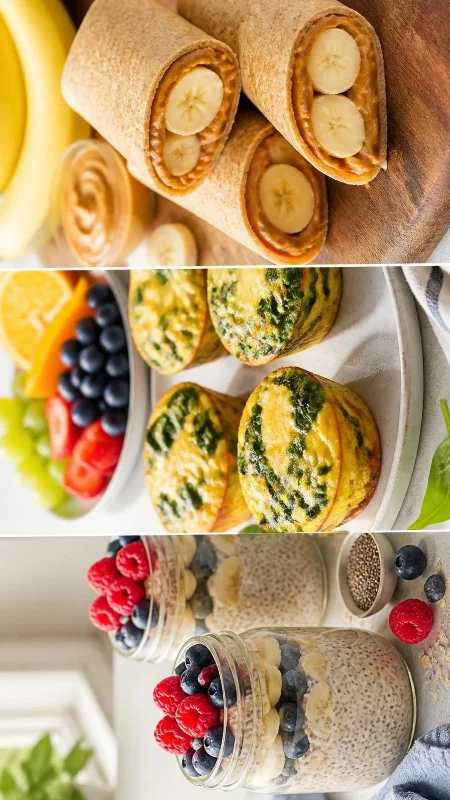
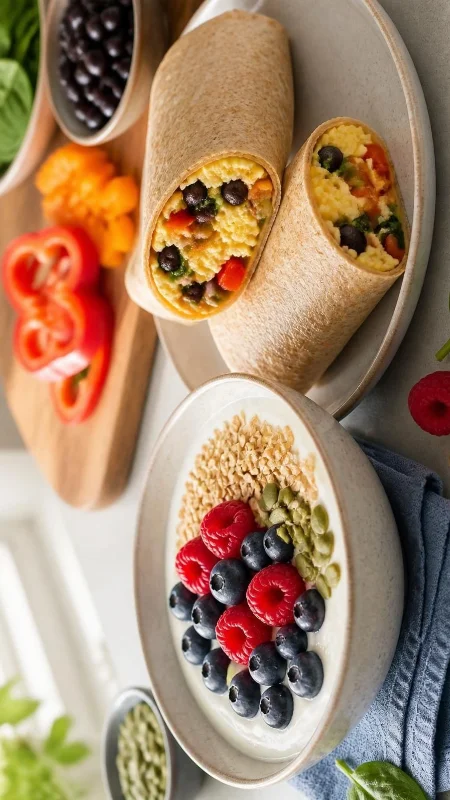
Why a Balanced Breakfast Matters on School Days
Breakfast is an opportunity for children to eat nutrient-rich foods after the overnight period without eating.
A balanced morning meal can contribute important nutrients, including protein, fiber, calcium, and vitamins.
Breakfast consumption has also been associated with some positive academic and cognitive outcomes in children, although research findings vary, and not every study establishes a direct cause-and-effect relationship.
More important than following a rigid breakfast formula is offering a variety of nutritious foods throughout the day.
What to Include in Breakfast for Kids Before School
A practical school-day breakfast often includes a combination of:
- Whole grains, such as oatmeal or whole-wheat bread.
- Protein-rich foods, including eggs, yogurt, beans, or nut butter.
- Fruits or vegetables for fiber and additional nutrients.
- Dairy or fortified alternatives that provide calcium.
For example, oatmeal topped with yogurt and strawberries offers several food groups in one bowl.
A whole-wheat breakfast wrap with eggs and vegetables is another convenient option.
According to the USDA’s MyPlate guidance, healthy eating patterns emphasize variety across food groups, including fruits, vegetables, grains, protein foods, and dairy or fortified alternatives.
Not every breakfast needs to contain every food group. Variety across meals and days matters.
Building a Breakfast With Lasting Satisfaction
Combining fiber-containing foods with protein and some dietary fat can help make breakfast more satisfying.
Instead of serving only a piece of fruit, consider pairing it with yogurt or whole-grain toast.
Similarly, whole-grain cereal can be served with milk and fruit.
These combinations are simple ways to make healthy breakfast for children more substantial without requiring complicated recipes.
For more ideas, explore our healthy breakfast recipes.
5 Easy Family Breakfast Ideas for School Mornings
These five recipes use familiar ingredients and can be adapted to different preferences.
Preparation times assume ingredients and equipment are ready. Cooking and cooling times are listed separately where relevant.
Nutrition values are approximate per serving and will vary with ingredient brands, portion sizes, and substitutions.
1. Banana and Berry Overnight Oats
Overnight oats are one of the easiest make ahead family breakfast options.
The ingredients are mixed the night before and refrigerated, allowing the oats to soften without cooking.
In the morning, breakfast is ready to serve.
Recipe details
| Detail | Information |
|---|---|
| Prep Time | 10 minutes |
| Cook Time | 0 minutes |
| Refrigeration | At least 4 hours |
| Servings | 4 |
| Difficulty | Easy |
| Best For | Make-ahead school mornings |
Ingredients
| Ingredient | Quantity |
|---|---|
| Old-fashioned rolled oats | 2 cups |
| Plain Greek yogurt, 2% fat | 1 cup |
| Milk, 2% fat | 2 cups |
| Banana, medium | 1, sliced |
| Mixed berries | 1 cup |
| Chia seeds | 2 tablespoons |
| Ground cinnamon | 1 teaspoon |
| Vanilla extract | 1 teaspoon |
Step-by-Step Instructions
- Combine the oats, milk, Greek yogurt, chia seeds, cinnamon, and vanilla in a large bowl.
- Stir until the ingredients are evenly distributed.
- Divide the mixture among four covered containers.
- Refrigerate for at least four hours, preferably overnight.
- Add sliced banana and berries shortly before serving.
For a thinner texture, stir in a little additional milk.
Estimated Nutrition Per Serving
| Nutrient | Approximate Amount |
|---|---|
| Calories | 340 kcal |
| Protein | 17 g |
| Carbohydrates | 49 g |
| Fat | 9 g |
| Fiber | 8 g |
Why families may like it: Overnight oats require no morning cooking, offer whole grains and fruit, and can be prepared in individual containers.
Storage: Refrigerate promptly at 40°F (4°C) or below. For best quality, use within 3 days. Add fresh banana just before eating.
Allergy note: Contains dairy. Use an appropriate fortified nondairy yogurt and milk alternative if needed, and check product labels.
2. Spinach and Cheese Egg Muffins
Egg muffins are convenient when families want a warm breakfast that can be prepared in advance.
They contain eggs, vegetables, and cheese in individual portions.
You can also change the vegetables depending on what is available.
Recipe details
| Detail | Information |
|---|---|
| Prep Time | 10 minutes |
| Cook Time | 20–25 minutes |
| Servings | 6 |
| Serving Size | 2 muffins |
| Difficulty | Easy |
| Best For | Batch cooking |
Ingredients
| Ingredient | Quantity |
|---|---|
| Large eggs | 8 |
| Milk, 2% fat | ¼ cup |
| Fresh spinach, chopped | 1 cup |
| Red bell pepper, finely diced | ½ cup |
| Shredded cheddar cheese | ½ cup |
| Olive oil | 1 teaspoon |
| Black pepper | ¼ teaspoon |
Step-by-Step Instructions
- Preheat the oven to 350°F (175°C).
- Lightly grease a 12-cup muffin tin with olive oil.
- Whisk the eggs, milk, and black pepper together.
- Divide the spinach and bell pepper evenly among the muffin cups.
- Sprinkle shredded cheese over the vegetables.
- Pour the egg mixture into each cup, filling approximately three-quarters full.
- Bake for 20–25 minutes, until the centers are set and the egg muffins reach 160°F (71°C).
- Allow to cool slightly before removing from the pan.
Serve two muffins with whole-grain toast and fresh fruit for a more complete breakfast.
Estimated Nutrition Per Serving
Two muffins, without toast or fruit:
| Nutrient | Approximate Amount |
|---|---|
| Calories | 170 kcal |
| Protein | 13 g |
| Carbohydrates | 3 g |
| Fat | 12 g |
| Fiber | 0.5 g |
Why families may like it: Egg muffins are easy to portion, reheatable, and suitable for adding vegetables.
Storage: Refrigerate within two hours of cooking and use within 3–4 days.
Reheat leftovers to 165°F (74°C).
Allergy note: Contains eggs and dairy.
3. Peanut Butter and Banana Breakfast Wraps
For families with only a few minutes available, these breakfast wraps offer a particularly quick option.
They require no cooking and use just four ingredients.
The combination of whole grains, banana, and peanut butter creates a convenient morning meal.
Recipe details
| Detail | Information |
|---|---|
| Prep Time | 5 minutes |
| Cook Time | 0 minutes |
| Servings | 4 |
| Difficulty | Very Easy |
| Best For | Busy mornings |
Ingredients
| Ingredient | Quantity |
|---|---|
| Medium whole-wheat tortillas | 4 |
| Natural peanut butter | 4 tablespoons |
| Medium bananas | 2 |
| Ground cinnamon | ½ teaspoon |
Step-by-Step Instructions
- Place the tortillas on a clean work surface.
- Spread one tablespoon of peanut butter over each tortilla.
- Peel the bananas and cut each one in half lengthwise.
- Divide the banana pieces evenly among the tortillas.
- Sprinkle lightly with cinnamon.
- Roll each tortilla tightly and slice in half.
Serve immediately.
For younger children, cut the wraps into smaller, manageable pieces as appropriate for their eating skills.
Estimated Nutrition Per Serving
| Nutrient | Approximate Amount |
|---|---|
| Calories | 260 kcal |
| Protein | 8 g |
| Carbohydrates | 37 g |
| Fat | 11 g |
| Fiber | 6 g |
Why families may like it: These wraps use inexpensive ingredients, require minimal cleanup, and are easy to customize.
Variation: Use sunflower seed butter instead of peanut butter when an appropriate nut-free option is needed.
Check all labels for allergens and cross-contact warnings.
For young children, spread nut or seed butter thinly rather than serving thick spoonfuls.
4. Greek Yogurt Breakfast Bowls
Greek yogurt bowls are a practical choice for mornings when cooking isn’t possible.
Children can help assemble their bowls by choosing fruit and toppings.
This recipe combines yogurt, oats, and berries for a quick breakfast.
Recipe details
| Detail | Information |
|---|---|
| Prep Time | 5 minutes |
| Cook Time | 0 minutes |
| Servings | 4 |
| Difficulty | Very Easy |
| Best For | No-cook breakfasts |
Ingredients
| Ingredient | Quantity |
|---|---|
| Plain Greek yogurt, 2% fat | 3 cups |
| Rolled oats | 1 cup |
| Strawberries, sliced | 1 cup |
| Blueberries | 1 cup |
| Pumpkin seeds, shelled | ¼ cup |
| Ground cinnamon | ½ teaspoon |
Step-by-Step Instructions
- Divide the Greek yogurt evenly among four bowls.
- Sprinkle ¼ cup of rolled oats over each portion.
- Add strawberries and blueberries.
- Top with one tablespoon of pumpkin seeds per bowl.
- Sprinkle lightly with cinnamon.
- Serve immediately.
Use rolled oats labeled ready to eat or substitute an appropriate unsweetened whole-grain cereal if preferred.
Estimated Nutrition Per Serving
| Nutrient | Approximate Amount |
|---|---|
| Calories | 300 kcal |
| Protein | 22 g |
| Carbohydrates | 35 g |
| Fat | 9 g |
| Fiber | 5 g |
Why families may like it: This breakfast requires no cooking, provides protein-rich yogurt, and is easy to adapt with seasonal fruit.
Variation: Replace berries with diced peaches, mango, or another preferred fruit.
For younger children, use toppings appropriate to their chewing abilities. Whole seeds may need to be omitted or replaced with a smooth seed butter.
Storage: Store yogurt and prepared toppings separately in the refrigerator. Assemble shortly before eating to maintain texture.
5. Freezer-Friendly Egg and Bean Breakfast Burritos
Breakfast burritos are helpful for families who prefer preparing several meals at once.
This version combines eggs, black beans, vegetables, and cheese in whole-wheat tortillas.
The burritos can be refrigerated or frozen for later use.
Recipe details
| Detail | Information |
|---|---|
| Prep Time | 15 minutes |
| Cook Time | 15 minutes |
| Total Time | 30 minutes |
| Servings | 6 |
| Difficulty | Easy |
| Best For | Freezer meal preparation |
Ingredients
| Ingredient | Quantity |
|---|---|
| Large whole-wheat tortillas | 6 |
| Large eggs | 6 |
| Cooked black beans, drained | 1½ cups |
| Red bell pepper, diced | 1 cup |
| Baby spinach, chopped | 1 cup |
| Shredded cheddar cheese | ¾ cup |
| Olive oil | 1 tablespoon |
| Ground cumin | ½ teaspoon |
Step-by-Step Instructions
- Heat the olive oil in a large nonstick skillet over medium heat.
- Add the bell pepper and cook for approximately three minutes.
- Stir in the spinach and cook until wilted.
- Add the drained black beans and cumin, stirring until heated through.
- Transfer the vegetable mixture to a bowl.
- Whisk the eggs and add them to the skillet.
- Cook while stirring until the eggs are fully set and reach 160°F (71°C).
- Divide the eggs, vegetables, beans, and cheese evenly among the six tortillas.
- Fold the sides inward and roll each tortilla into a burrito.
- Serve warm, or cool and package promptly for later storage.
Estimated Nutrition Per Serving
| Nutrient | Approximate Amount |
|---|---|
| Calories | 440 kcal |
| Protein | 24 g |
| Carbohydrates | 47 g |
| Fat | 18 g |
| Fiber | 10 g |
Why families may like it: Breakfast burritos combine several food groups in one portable meal and can be made in batches.
Freezer instructions: Cool the filling promptly, assemble the burritos, wrap individually, and freeze at 0°F (-18°C) or below.
For best quality, use within approximately 1–2 months.
Thaw in the refrigerator overnight or reheat from frozen using an appropriate microwave or oven method.
Reheat until the center reaches 165°F (74°C). Microwave heating may be uneven, so rotate or turn the burrito, allow standing time, and check the center with a food thermometer.
Allergy note: Contains eggs, dairy, and wheat.
How to Build a Make-Ahead Family Breakfast Routine
A successful breakfast routine doesn’t require preparing five different recipes every week.
Instead, choose two or three options that your family enjoys and rotate them.
This approach reduces shopping decisions, preparation time, and food waste.
Prepare Ingredients the Night Before
Even five minutes of evening preparation can make school mornings easier.
Useful tasks include washing fruit, portioning yogurt, preparing overnight oats, or setting out nonperishable ingredients.
For egg-based recipes, cook and refrigerate them properly rather than leaving ingredients or prepared food at room temperature overnight.
You can also prepare breakfast burritos on weekends and freeze individual portions.
Keep a Simple Breakfast Rotation
A predictable breakfast schedule can reduce morning decisions.
For example, overnight oats might appear every Monday, while egg muffins are reserved for Wednesdays.
Children can help choose between two available options.
For additional planning inspiration, visit our Family Meal Plans collection.
You can also explore the 7-Day Family Meal Plan Guide for ideas on organizing meals throughout the week.
Store and Reheat Breakfast Safely
Food safety matters when preparing meals ahead, particularly recipes containing eggs, dairy, cooked grains, or beans.
USDA and FoodSafety.gov guidance supports several important practices:
- Keep refrigerators at 40°F (4°C) or below.
- Keep freezers at 0°F (-18°C) or below.
- Refrigerate perishable foods within two hours, or within one hour when temperatures exceed 90°F (32°C).
- Cook egg dishes to 160°F (71°C).
- Reheat cooked leftovers to 165°F (74°C).
- Use refrigerated cooked leftovers within 3–4 days.
Use shallow containers to help hot foods cool more quickly in the refrigerator.
Avoid leaving cooked egg dishes or dairy-based breakfasts on the kitchen counter throughout the morning.
Five-Day School Breakfast Meal Plan
If you’re looking for school morning breakfast ideas that require minimal daily planning, try this simple rotation.
| Day | Breakfast | Morning Preparation |
|---|---|---|
| Monday | Banana and Berry Overnight Oats | Add fresh fruit |
| Tuesday | Peanut Butter and Banana Wraps | Assemble in 5 minutes |
| Wednesday | Spinach and Cheese Egg Muffins | Reheat and serve with fruit |
| Thursday | Greek Yogurt Breakfast Bowls | Assemble in 5 minutes |
| Friday | Egg and Bean Breakfast Burritos | Reheat until thoroughly hot |
This schedule provides variety in grains, fruits, vegetables, and protein sources.
It also combines no-cook breakfasts with meals that can be prepared ahead.
Adjust portion sizes and add side dishes according to each family member’s age, appetite, and nutritional needs.
Tips for Making Breakfast Easier With Kids
Children’s breakfast preferences can change, and some mornings are more rushed than others.
A flexible routine is usually more practical than expecting every breakfast to go exactly as planned.
Offer Simple Choices
Rather than asking children to choose from unlimited breakfast options, offer two realistic choices.
For example:
“Would you prefer overnight oats or yogurt with berries?”
This gives children some independence while keeping preparation manageable.
You can also invite school-age children to help with age-appropriate activities such as washing fruit, measuring oats, or assembling yogurt bowls.
Adult supervision remains important when using knives, ovens, or other kitchen equipment.
Adjust Portions to Appetite
The nutrition estimates in this article describe recipe portions, not specific calorie targets for children.
Children have different energy needs depending on age, growth, and activity.
A younger child may prefer half a breakfast wrap, while an older child may need a larger serving or additional food.
Offer suitable portions and allow children to respond to their hunger and fullness cues.
If a child regularly struggles to eat breakfast, a smaller morning meal may be more manageable.
Plan for Food Allergies
Common breakfast allergens include milk, eggs, peanuts, tree nuts, wheat, and soy.
If someone in your family has a diagnosed food allergy, use ingredients and preparation methods appropriate to their allergy management plan.
Potential substitutions include fortified nondairy yogurt, seed butter, or suitable gluten-free grains.
However, substitutions are not automatically nutritionally equivalent.
For example, some plant-based milks contain much less protein than cow’s milk.
Check nutrition labels and choose fortified products when appropriate.
For children with multiple food allergies, a registered dietitian can help identify suitable substitutions while maintaining nutritional variety.
Frequently Asked Questions
What Is a Good Quick Breakfast Before School?
A good quick breakfast can include whole-grain toast with peanut butter and banana, Greek yogurt with fruit, or overnight oats.
These options require little preparation and provide a combination of nutrients.
The best choice depends on the child’s preferences, appetite, allergies, and overall dietary needs.
What Can I Prepare the Night Before School?
Overnight oats, egg muffins, and breakfast burritos are convenient make-ahead options.
You can also wash fruit, portion yogurt, and prepare ingredients for breakfast wraps.
Keep perishable foods refrigerated until needed.
How Can I Add Protein to My Child’s Breakfast?
Eggs, Greek yogurt, milk, beans, tofu, nut butter, and seed butter are examples of protein-containing breakfast foods.
Try adding yogurt to oatmeal, serving eggs with whole-grain toast, or including beans in a breakfast burrito.
Protein needs vary by age and individual circumstances.
What if My Child Does Not Feel Hungry in the Morning?
Some children prefer smaller meals shortly after waking.
You might offer a small yogurt bowl, a piece of toast, or a modest portion of oatmeal.
Allowing enough time to wake up before breakfast may also help.
If permitted by the school, an appropriately packed breakfast or morning snack may be another option.
Persistent appetite changes, unexplained weight loss, growth concerns, or other symptoms should be discussed with a pediatric healthcare professional.
Final Thoughts
Finding practical family breakfast ideas for school doesn’t have to mean cooking something new every morning.
Simple recipes such as overnight oats, egg muffins, yogurt bowls, breakfast wraps, and freezer-friendly burritos can help families create more manageable routines.
The key is choosing foods that fit your schedule, provide nutritional variety, and appeal to the people eating them.
Start with two or three recipes your family enjoys, prepare what you can ahead of time, and adjust the routine as needed.
With a little planning, school-day breakfast can become one of the easier parts of the morning.