
There’s a certain kind of quiet satisfaction you only get from homemade rolls. You set a pan on the table, still warm, and suddenly the meal feels bigger than the food. People lean in. Someone reaches for “just one,” then comes back for another. And even if your day has been messy, loud, or rushed, a basket of fresh rolls makes it feel like you pulled everything together.
If you’ve ever thought, I love the idea of baking rolls, but I don’t want complicated, you’re in the right place. You’re about to get a clear, workable guide—plus easy roll recipes you can match to the moment: weeknight dinners, holidays, sandwiches, brunch, or last-minute “we need bread now.”
Table of Contents
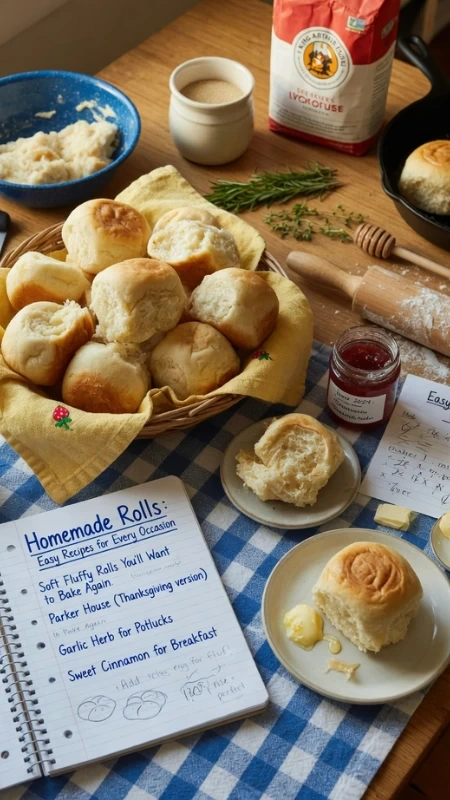
Why Homemade Rolls Are Worth It (Even When You’re Busy)
Homemade rolls aren’t only about being “from scratch.” They’re about control and comfort:
- You control the texture. Want cloud-soft dinner rolls? You can do that. Need sturdy sandwich rolls? You can do that too.
- You control the flavour. A little honey, more salt, garlic butter on top—small choices change everything.
- You get them fresh. Store-bought rolls have their place, but nothing competes with warm-from-the-oven softness.
- You can make them ahead. Most roll doughs are flexible once you learn a couple of timing tricks.
If you like practical, reliable guidance, lean on baking educators like King Arthur Baking for yeast and dough technique, and check USDA recommendations for safe storage and freezing. You don’t need to memorize baking science, but it helps to follow trusted basics.
Homemade Rolls 101: Ingredients and Tools You’ll Actually Use
Essential Ingredients for Rolls (And What Each One Does)
You’ll see the same cast of characters in most roll recipes:
- Flour:
- All-purpose flour gives you tender, classic rolls.
- Bread flour builds more structure (great for sandwich rolls).
- Yeast (or another leavening): Makes dough rise. Quick yeast is beginner-friendly.
- Liquid (milk or water):
- Milk usually means softer, richer rolls.
- Water often gives a chewier bite.
- Sugar or honey: Helps with browning and tenderness, and gives yeast a boost.
- Fat (butter or oil): Softens the crumb and adds flavor.
- Salt: Makes rolls taste like something (and keeps yeast in check).
- Eggs (optional): Adds richness and softness, especially in sweet or holiday rolls.
Tools That Make Roll Baking Easier (No Fancy Setup Required)
You don’t need a showroom kitchen. This is enough:
- Large mixing bowl (or a stand mixer, if you have one)
- Baking pan (9×13 for dinner rolls; sheet pan for sandwich rolls)
- Measuring cups/spoons (a kitchen scale is even better for consistent results)
- Clean towel or plastic wrap for rising
- Quick-read thermometer (optional but helpful)
The Core Method: How You Make Soft, Fluffy Rolls Every Time
Once you learn the basic rhythm, homemade rolls stop feeling intimidating.
“Understanding basic baking science, as detailed in King Arthur Baking’s Bread Guide, helps you master dough structure for perfectly soft rolls every time.”
Your Universal Roll-Making Workflow
- Mix the dough until it looks shaggy and cohesive.
- Knead until smooth and elastic (by hand or mixer).
- First rise (bulk fermentation): Let it double in size.
- Shape into even pieces (this is where a scale helps).
- Second rise (proof): Let shaped rolls puff up.
- Bake until golden and set.
- Finish with butter, honey butter, or your favorite topping.
Proofing and Timing: What You Should Look For
Forget the clock as your only guide. Use your eyes and hands:
- Dough is ready after the first rise when it’s roughly doubled and looks airy.
- Rolls are ready to bake when they’re puffy and spring back slowly when gently pressed.
- If your kitchen is cold, your dough will move slower. If it’s warm, it’ll move faster.
Tip: Yeast doesn’t like extreme heat. Very hot liquid can damage it. Many bakers aim for warm—not steaming—liquid.
Make-Ahead Options (So You Can Bake Rolls Without Stress)
You’ve got three practical paths:
- Over time fridge rise: Shape the rolls, cover, refrigerate, and bake the next day after they puff up at room temperature.
- Freeze shaped rolls: Freeze on a tray, then store in a bag. Thaw and proof before baking.
- Freeze baked rolls: Cool completely, freeze, then rewarm wrapped in foil.
For storage safety and best quality, follow general freezing guidance from the USDA: airtight wrapping prevents freezer burn and helps bread stay pleasant when reheated.
Easy Homemade Rolls Recipes for Every Occasion
Below you’ll find five roll recipes you can rotate through all year. Each one is designed to be doable—no pastry-chef energy required.
Classic Soft Dinner Rolls (Your Go-To Homemade Rolls)
These are the rolls you make when you want everyone to be happy. Soft, lightly sweet, and perfect with butter.
Ingredients (Dinner Rolls)
| Ingredient | Amount | Notes |
|---|---|---|
| All-purpose flour | 3 1/2 cups | Bread flour also works |
| Quick yeast | 2 1/4 tsp | 1 packet |
| Warm milk | 1 cup | Warm, not hot |
| Sugar | 3 tbsp | Helps browning |
| Salt | 1 1/2 tsp | Don’t skip |
| Butter (melted) | 4 tbsp | Plus more for brushing |
| Egg | 1 | Optional, adds richness |
How You Make Them (Simple Steps)
- Mix flour, yeast, sugar, and salt. Stir in milk, butter, and egg (if using).
- Knead until the dough looks smooth and elastic.
- Let it rise until doubled.
- Shape into 12–15 rolls and place in a greased 9×13 pan.
- Proof until puffy, then bake until golden.
- Brush with butter while warm.
Easy Variations You’ll Use Often
- Garlic-butter dinner rolls
- Herb rolls (rosemary + flaky salt)
- Cheddar dinner rolls (fold in shredded cheddar after the first rise)
Quick No-Yeast Rolls (When You Need Rolls Fast)
Sometimes you want rolls, but you don’t want to wait. These are leavened with baking powder, so they’re quick and dependable.
Ingredients (No-Yeast Rolls)
| Ingredient | Amount | Notes |
|---|---|---|
| All-purpose flour | 2 cups | Don’t pack the cup |
| Baking powder | 1 tbsp | Main lift |
| Salt | 1 tsp | Balances flavor |
| Sugar | 1 tbsp | Optional |
| Milk or buttermilk | 1 cup | Buttermilk adds tang |
| Butter (melted) | 3 tbsp | Keeps them tender |
How You Make Them
- Heat your oven and prep a pan.
- Mix dry ingredients in a bowl.
- Stir in milk and melted butter just until combined.
- Scoop or shape into rolls.
- Bake until lightly golden.
Good to know: No-yeast rolls won’t taste exactly like yeast-based homemade rolls. What you get instead is speed—perfect with soups, stews, and chili.
Buttery Pull-Apart Rolls (Holiday Rolls That Get Photographed)
If you want rolls that feel special—Thanksgiving, Christmas, birthdays—pull-apart rolls deliver. They’re soft, tall, and buttery in the best way.
Ingredients (Pull-Apart Rolls)
| Ingredient | Amount | Notes |
|---|---|---|
| Flour | 4 cups | All-purpose works well |
| Yeast | 2 1/4 tsp | Quick or active dry |
| Warm milk | 1 1/4 cups | Adds softness |
| Honey | 2 tbsp | Cozy flavor |
| Salt | 1 1/2 tsp | Essential |
| Butter | 6 tbsp | Use some for brushing layers |
How You Make Them
- Mix, knead, and let the dough rise.
- Divide into small pieces.
- Brush or dip pieces in butter, then arrange in a pan so they touch.
- Proof until puffy and bake until golden.
Serving Ideas
- Honey butter (simple, crowd-pleasing)
- Cranberry butter for holiday tables
- Flaky salt on top for a bakery finish
Homemade Sandwich Rolls (Soft Inside, Strong Enough to Hold a Filling)
You know the disappointment: a roll that collapses under a burger or turns gummy with sauce. Sandwich rolls should be soft, but they also need structure.
Ingredients (Sandwich Rolls)
| Ingredient | Amount | Notes |
|---|---|---|
| Bread flour | 3 1/2 cups | Better structure |
| Yeast | 2 1/4 tsp | |
| Warm water | 1 1/4 cups | Chewier than milk |
| Sugar | 1 tbsp | Helps browning |
| Salt | 2 tsp | Important for flavor |
| Oil or butter | 3 tbsp | Softens crumb |
| Egg wash | 1 egg + 1 tbsp water | Optional shine |
How You Make Them
- Mix and knead until smooth.
- Rise until doubled.
- Divide and shape into tight ovals or rounds.
- Proof until puffy. Add egg wash if you want glossy tops.
- Bake, then cool fully before slicing.
Topping Options
- Sesame seeds
- Poppy seeds
- “Everything” seasoning (use lightly so it doesn’t overpower the roll)
Sweet Breakfast Rolls (Brunch-Worthy and Make-Ahead Friendly)
These are for weekends, celebrations, and mornings when you want the kitchen to smell like you tried really hard—even if you didn’t.
Ingredients (Sweet Breakfast Rolls)
| Ingredient | Amount | Notes |
|---|---|---|
| Flour | 4 cups | |
| Yeast | 2 1/4 tsp | |
| Warm milk | 1 cup | |
| Sugar | 1/2 cup | Split between dough + filling |
| Butter | 6 tbsp | Softened |
| Cinnamon | 1–2 tbsp | Adjust to taste |
| Salt | 1 tsp | Keeps flavor balanced |
| Powdered sugar | 1–2 cups | For icing (optional) |
How You Make Them
- Make an enriched dough, let it rise, then roll it out.
- Spread butter, sprinkle cinnamon-sugar, roll up, and slice.
- Proof in a pan and bake.
- Finish with icing if you want the classic sweet top.
Make-Ahead Move (So Brunch Feels Easy)
Shape the rolls the night before, cover, refrigerate, and bake in the morning after they puff up.
Homemade Rolls Troubleshooting: Fix the Usual Problems Fast
Even experienced bakers have a pan that doesn’t turn out. Here’s how you diagnose roll issues without spiraling.
Why Did Your Rolls Turn Out Dense?
Common causes:
- Under-proofing: The dough didn’t rise enough before baking.
- Too much flour: Packing measuring cups can sneak in extra flour.
- Weak yeast: Expired yeast or liquid that was too hot.
- Cold dough: A chilly kitchen slows everything down.
What you can do next time:
- Let the dough rise until it’s clearly airy and expanded.
- If possible, weigh flour.
- Keep yeast away from direct contact with salt at the start.
- Give dough a warmer spot to rise (a turned-off oven with the light on works well).
Why Are Your Rolls Dry?
Likely reasons:
- Overbaking (even a few minutes can change the texture)
- Too much flour
- Storing uncovered
Quick fixes:
- Brush warm rolls with butter.
- Store airtight once fully cooled.
- Reheat wrapped in foil to soften.
Why Didn’t Your Rolls Rise at All?
Check:
- Was the yeast fresh?
- Was the liquid too hot?
- Was the dough left somewhere very cold?
If you want a deeper yeast temperature guide, King Arthur Baking and yeast manufacturers like Red Star share practical ranges and troubleshooting tips.
How to Store, Freeze, and Reheat Homemade Rolls (So They Stay Soft)
Best Storage Options
- Room temperature (airtight): Best for 1–2 days.
- Refrigerator: Usually dries rolls out faster (use only if you must).
- Freezer: Best for longer storage.
For freezing, follow common USDA-style guidance: cool completely, wrap airtight, and label with a date.
Reheating Rolls Without Making Them Tough
Use this simple method:
- Wrap rolls in foil.
- Warm in the oven at a low temperature until heated through.
- Brush with butter after reheating for a fresh-baked feel.
FAQ: Homemade Rolls (Answers You’ll Actually Use)
Can you make rolls ahead of time and bake them later?
Yes. You can shape your rolls, cover them, and refrigerate over time. The next day, let them sit at room temperature until puffy, then bake. You can also freeze shaped rolls, thaw, proof, and bake when you need them.
Why are your homemade rolls not fluffy?
Most often, your dough needed more time to rise, or you added too much flour. Fluffy rolls come from a soft dough, enough kneading to build structure, and proofing until the rolls look visibly inflated.
Can you use all-purpose flour for rolls instead of bread flour?
Absolutely. All-purpose flour makes tender homemade rolls and works well for dinner rolls and pull-apart rolls. Bread flour is helpful when you want sandwich rolls that hold up to fillings.
How do you keep rolls soft after baking?
Brush the tops with butter, avoid overbaking, and store cooled rolls in an airtight container or bag. For longer storage, freeze them and rewarm wrapped in foil.
What’s the best yeast for rolls?
Quick yeast is convenient because you can mix it right into dry ingredients. Active dry yeast works too; it may need to be dissolved first depending on the recipe. Either one can make great rolls if it’s fresh and handled gently.
Conclusion: Bake the Rolls That Match Your Life (Not Someone Else’s Schedule)
You don’t need a complicated routine to make homemade rolls that taste like you care—because you do. Start with classic dinner rolls for your everyday win, keep a no-yeast version in your back pocket for rushed nights, and pull out buttery pull-apart rolls when you want the table to feel like a celebration.
If you bake one of these rolls this week, come back and tell me: Which roll recipe did you choose, and what did you serve it with? Your comment helps other readers (and if you ran into a dough issue, share that too—I can help you troubleshoot).
Disclaimer: This article is for general educational purposes and is not medical or professional advice. Please consult a qualified healthcare professional before making changes to your diet, exercise, or health routine. See our Medical Disclaimer.