
Introduction: Take Control of Your Week—One Meal at a Time
It’s 6:15 p.m. You’re tired. Everyone’s hungry. You open the fridge hoping inspiration will magically appear between the milk carton and that half-used bag of spinach. It doesn’t. So you order takeout. Again.
Table of Contents
If that feels familiar, you’re not failing—you’re simply missing a plan.
Learning how to plan weekly meals changes more than what’s on your plate. It changes how your evenings feel. Instead of scrambling, you move with intention. Instead of overspending, you shop with purpose. Instead of wasting food, you use what you already have.
And the best part? You don’t need to be organized, creative, or even particularly good at cooking. You just need a simple system.
This beginner-friendly guide will walk you step by step through how to plan weekly meals in a way that’s realistic, flexible, and sustainable.
What Is Weekly Meal Planning and Why Does It Matter?
What Does It Mean to Plan Weekly Meals?
When you learn how to plan weekly meals, you’re simply deciding in advance:
- What you’ll eat for breakfast, lunch, and dinner
- What ingredients you need
- When you’ll cook (or reheat)
- How leftovers will be used
It’s not about rigid schedules. It’s about removing daily guesswork.
Why You Should Start Planning Your Weekly Meals
Here’s what happens when you don’t plan:
- You buy random groceries.
- You forget what’s in your fridge.
- Food expires before you use it.
- You rely on last-minute takeout.
According to the USDA, between 30–40% of the food supply in the U.S. goes to waste. A large portion of that waste happens at home.
When you know how to plan weekly meals, you:
- ✅ Save money
- ✅ Reduce food waste
- ✅ Eat more balanced meals
- ✅ Avoid last-minute stress
- ✅ Stick to health goals
You gain control over your week instead of reacting to it.
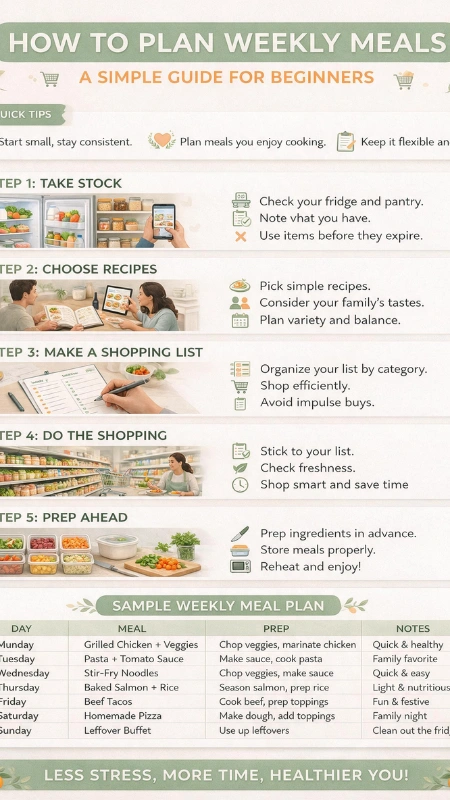
Step-by-Step Guide: How to Plan Weekly Meals for Beginners
Let’s break it down into simple, manageable steps.
Step 1: Check Your Weekly Schedule First
Before choosing recipes, look at your calendar.
Ask yourself:
- Which days will you get home late?
- Do you have appointments or activities?
- Are there nights when cooking isn’t realistic?
Plan accordingly:
- Busy nights → Quick meals (stir-fries, tacos, sheet pan dinners)
- Relaxed nights → Try something new
- One night → Leftovers or freezer meal
When you match meals to your schedule, your plan actually works.
Step 2: Take Inventory of What You Already Have
Open your:
- Refrigerator
- Freezer
- Pantry
Make a quick list of:
- Proteins (chicken, ground beef, beans, tofu)
- Grains (rice, pasta, quinoa)
- Vegetables
- Canned goods
Planning meals around ingredients you already own:
- Saves money
- Reduces waste
- Prevents overbuying
For example, if you already have rice and frozen vegetables, you’re halfway to a stir-fry.
Step 3: Choose Simple, Balanced Recipes
As a beginner, avoid complicated dishes.
Instead, follow this simple formula:
Protein + Vegetable + Grain
Examples:
- Grilled chicken + roasted broccoli + rice
- Ground turkey + peppers + tortillas
- Baked salmon + green beans + quinoa
Start small:
- Pick 3–4 dinners
- Repeat breakfasts
- Plan 1–2 lunch options
- Leave one flexible day
You don’t need seven completely different dinners.
Step 4: Create a Weekly Meal Plan Template
Keeping a visible plan helps you stay on track.
Here’s a simple example:
| Day | Breakfast | Lunch | Dinner |
|---|---|---|---|
| Monday | Oatmeal & Fruit | Chicken Salad | Stir-Fry & Rice |
| Tuesday | Yogurt & Nuts | Leftovers | Tacos |
| Wednesday | Smoothie | Turkey Sandwich | Baked Salmon & Veggies |
| Thursday | Oatmeal | Leftovers | Pasta Night |
| Friday | Eggs & Toast | Salad Bowl | Homemade Pizza |
You can:
- Print a weekly template
- Use a whiteboard
- Keep it in a notes app
- Use a meal planning app
Consistency matters more than the tool.
Step 5: Build a Smart Grocery List
Now that your meals are chosen, write your grocery list based only on what you need.
Organize it by category:
- Produce
- Meat & protein
- Dairy
- Pantry
- Frozen foods
This keeps you focused and reduces impulse buys.
Pro tip: Never shop while hungry. You’ll buy everything except what you planned.
Step 6: Prep in Advance (Even a Little Helps)
Meal prep doesn’t mean spending five hours in the kitchen.
Start small:
- Wash and chop vegetables
- Cook rice or pasta in advance
- Marinate protein
- Prepare one full meal for later in the week
Even 60–90 minutes of prep on Sunday can make weekday cooking effortless.
Beginner-Friendly Weekly Meal Ideas
Below are simple recipes you can rotate while learning how to plan weekly meals.
1. Chicken Stir-Fry
Ingredients
| Ingredient | Quantity |
|---|---|
| Chicken breast | 2 cups sliced |
| Mixed vegetables | 3 cups |
| Soy sauce | 3 tbsp |
| Garlic | 2 cloves |
| Cooked rice | 4 cups |
Why It Works
- Ready in 20 minutes
- Customizable
- Great for leftovers
2. Taco Night
Ingredients
| Ingredient | Quantity |
|---|---|
| Ground beef/turkey | 1 lb |
| Taco seasoning | 1 packet |
| Tortillas | 8 pieces |
| Lettuce & tomato | 2 cups |
| Shredded cheese | 1 cup |
how to plan weekly meals
Why It Works
- Family-friendly
- Flexible toppings
- Easy to repurpose leftovers into taco bowls
3. Baked Salmon & Vegetables
Ingredients
| Ingredient | Quantity |
|---|---|
| Salmon fillets | 4 pieces |
| Broccoli | 2 cups |
| Olive oil | 2 tbsp |
| Lemon | 1 whole |
| Salt & pepper | To taste |
Why It Works
- One-pan meal
- Nutritious
- Minimal cleanup
Common Mistakes When Learning How to Plan Weekly Meals
Even with good intentions, beginners often:
- Plan overly complicated meals
- Try seven new recipes at once
- Forget to plan for leftovers
- Ignore their real schedule
- Buy too many ingredients
Keep it simple.
Repetition is your friend. You don’t need variety every single night.
How to Plan Weekly Meals on a Budget
Meal planning is one of the easiest ways to reduce food expenses.
Here’s how you stretch your budget:
1. Plan Around Sales
Check weekly store ads before finalizing meals.
2. Buy Seasonal Produce
Seasonal fruits and vegetables cost less and taste better.
3. Use Frozen Vegetables
They’re:
- Affordable
- Nutritious
- Long-lasting
4. Cook in Bulk
Make larger portions and use leftovers creatively.
For example:
- Roast chicken → Chicken salad → Chicken soup
Many households save over $1,000 per year simply by reducing waste and limiting takeout.
Helpful Tools to Make Weekly Meal Planning Easier
You don’t have to do this manually.
Consider:
- Meal planning apps (Mealime, Plan to Eat)
- Grocery list apps
- Shared family calendars
- Printable weekly planners
Find what fits your lifestyle. The simpler it is, the more likely you’ll stick with it.
FAQ: How to Plan Weekly Meals
How do you start if you’ve never planned weekly meals before?
Start small. Choose three simple dinners, create a grocery list, and plan for leftovers. You don’t need a perfect system to begin learning how to plan weekly meals.
How long does it take to plan weekly meals?
Once you build the habit, it takes about 30–45 minutes per week. Over time, you’ll reuse favorite meals, making the process even faster.
Is learning how to plan weekly meals worth it for one person?
Absolutely. Meal planning helps you avoid food waste, reduce spending, and simplify cooking—even if you live alone.
How do you stay consistent with weekly meal planning?
- Pick one planning day each week
- Keep recipes simple
- Reuse meal templates
- Don’t aim for perfection
Consistency beats complexity every time.
Make Weekly Meal Planning a Habit That Works for You
You don’t need gourmet skills. You don’t need color-coded spreadsheets. You don’t need a perfectly organized kitchen.
You just need a plan.
When you learn how to plan weekly meals, you:
- Spend less money
- Waste less food
- Feel less stress
- Eat more intentionally
Start this week.
Pick three dinners. Check your fridge. Write a list. Shop with purpose.
Then notice how your evenings feel different—calmer, smoother, more controlled.
If you’re ready to stop guessing and start planning, grab a notebook right now and map out your next seven days. Your future self will thank you.
And if you found this guide helpful, share it with someone who’s tired of the daily “what’s for dinner?” struggle.