
Planning meals ahead of time can make healthy eating easier, especially when your schedule is busy.
Instead of deciding what to eat several times a day, a structured weekly menu gives you a starting point for preparing balanced meals with familiar ingredients.
This 7 day weight loss meal plan includes seven days of breakfasts, lunches, dinners, and snacks featuring vegetables, whole grains, fruit, legumes, and protein-rich foods.
The meals are designed to provide variety and help make eating routines more manageable.
Rather than emphasizing extreme restrictions, the plan focuses on practical portions, satisfying ingredients, and repeatable preparation habits.
Table of Contents
The example menu provides approximately 1,800 calories per day on average.
However, this is an illustrative amount, not a universal weight-loss target. Some adults need substantially more energy, while others have different requirements.
Your appropriate calorie intake depends on several factors, including age, body size, activity level, and health circumstances.
Below, you’ll find a complete weekly menu, estimated calories, a grocery shopping list, three easy recipes, and guidance for adjusting the plan to your needs.
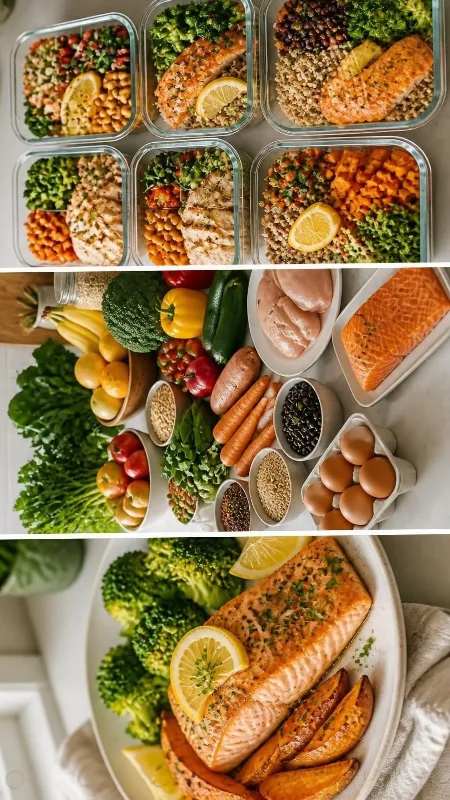
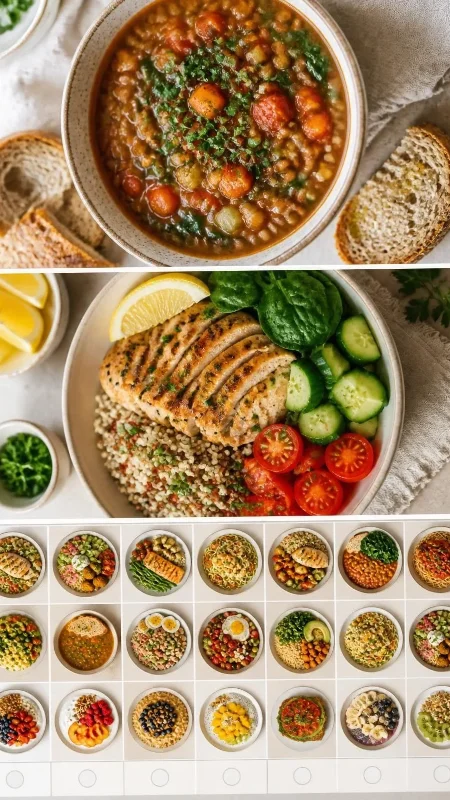
How This 7-Day Weight Loss Meal Plan Works
A useful meal plan should make everyday eating more convenient without requiring rigid food rules.
This plan uses a combination of protein sources, fiber-rich foods, and unsaturated fats.
Calories and Individual Energy Needs
Weight management is influenced by energy intake and expenditure over time.
However, a single calorie target does not suit everyone.
The National Institutes of Health provides a Body Weight Planner that can help adults estimate individualized energy needs.
This article uses approximately 1,800 calories per day as an example.
It should not be interpreted as a recommended intake for every reader.
Protein, Fiber, and Meal Satisfaction
Protein-rich foods include chicken, fish, eggs, yogurt, beans, and lentils.
Fiber-rich foods include vegetables, fruit, legumes, and whole grains.
Combining these foods can help create substantial meals.
Dietary fat also contributes flavor and energy.
Olive oil, nuts, seeds, and avocado provide sources of unsaturated fats.
Flexible Portions Instead of Strict Rules
You can adjust the menu according to your needs.
For example, someone requiring more energy might increase portions of grains, protein foods, or healthy fats.
Someone with different dietary needs may prefer alternative ingredients.
Persistent hunger, fatigue, or difficulty concentrating can indicate that a plan is not meeting your needs.
For broader information about healthy weight management, explore our weight loss hub.
Complete 7-Day Weight Loss Meal Plan
The following menu provides a practical starting point for planning balanced meals.
Calorie values are approximate and depend on ingredient brands, quantities, cooking methods, and serving sizes.
Day 1: Mediterranean-Inspired Meals
| Meal | Food | Estimated Calories |
|---|---|---|
| Breakfast | Greek yogurt with oats, berries, and walnuts | 400 |
| Lunch | Mediterranean chicken and quinoa bowl | 500 |
| Dinner | Baked salmon with sweet potato and broccoli | 600 |
| Snack | Apple with peanut butter | 250 |
| Daily Total | 1,750 |
This day combines seafood, whole grains, vegetables, and fruit.
The Mediterranean chicken bowl can be prepared ahead for convenience.
Day 2: Protein and Whole Grains
| Meal | Food | Estimated Calories |
|---|---|---|
| Breakfast | Two eggs, whole-grain toast, and orange | 420 |
| Lunch | Turkey and avocado whole-grain wrap | 500 |
| Dinner | Chicken stir-fry with brown rice and vegetables | 620 |
| Snack | Plain Greek yogurt with berries | 200 |
| Daily Total | 1,740 |
This menu includes protein foods at each main meal.
Use vegetables you already have to simplify preparation.
Day 3: Plant-Based Lunch Options
| Meal | Food | Estimated Calories |
|---|---|---|
| Breakfast | Overnight oats with banana and chia seeds | 430 |
| Lunch | Lentil and vegetable soup with whole-grain bread | 500 |
| Dinner | Baked chicken with quinoa and roasted carrots | 650 |
| Snack | Pear and a small handful of almonds | 220 |
| Daily Total | 1,800 |
Lentils contribute protein and dietary fiber.
Preparing soup in advance can save time during the week.
Day 4: Simple Meal Prep Favorites
| Meal | Food | Estimated Calories |
|---|---|---|
| Breakfast | Greek yogurt with banana and oats | 400 |
| Lunch | Chickpea and brown rice bowl with vegetables | 520 |
| Dinner | Baked salmon with potatoes and green beans | 650 |
| Snack | Apple with walnuts | 230 |
| Daily Total | 1,800 |
Canned chickpeas and cooked brown rice make lunch easy to assemble.
Day 5: Balanced Comfort Foods
| Meal | Food | Estimated Calories |
|---|---|---|
| Breakfast | Scrambled eggs with whole-grain toast | 420 |
| Lunch | Chicken and vegetable quinoa bowl | 520 |
| Dinner | Whole-wheat pasta with turkey tomato sauce | 650 |
| Snack | Plain yogurt with fruit | 200 |
| Daily Total | 1,790 |
Whole-wheat pasta can fit into a balanced eating plan.
Choose portions based on your needs rather than avoiding pasta entirely.
Day 6: Flexible Weekend Meals
| Meal | Food | Estimated Calories |
|---|---|---|
| Breakfast | Oatmeal with berries and peanut butter | 450 |
| Lunch | Tuna and white bean salad with whole-grain bread | 520 |
| Dinner | Chicken and roasted vegetable grain bowl | 650 |
| Snack | Orange and almonds | 220 |
| Daily Total | 1,840 |
The weekend menu allows room for flexible preparation.
You can swap meals with other days.
Day 7: Easy Meals Using Leftovers
| Meal | Food | Estimated Calories |
|---|---|---|
| Breakfast | Greek yogurt with fruit, oats, and seeds | 420 |
| Lunch | Lentil soup with whole-grain toast | 500 |
| Dinner | Baked fish with brown rice and vegetables | 650 |
| Snack | Banana with peanut butter | 250 |
| Daily Total | 1,820 |
Using leftovers can reduce cooking time and food waste.
Only use leftovers that have been stored safely.
Weekly Calorie Overview
| Day | Estimated Total |
|---|---|
| Monday | 1,750 |
| Tuesday | 1,740 |
| Wednesday | 1,800 |
| Thursday | 1,800 |
| Friday | 1,790 |
| Saturday | 1,840 |
| Sunday | 1,820 |
| Daily Average | 1,791 calories |
These estimates describe the example menu, not an individualized weight-loss prescription.
The listed meal descriptions are not sufficiently standardized to guarantee these totals. Exact recipes and weighed portions would be needed for a validated daily nutrient analysis.
Weekly Weight Loss Meal Plan Grocery List
This consolidated list covers the main ingredients used across the example menu.
Quantities are approximate for one adult and should be adjusted based on appetite, household size, and package sizes.
Grocery Shopping List
| Category | Ingredient | Suggested Quantity |
|---|---|---|
| Vegetables | Broccoli | 2 heads |
| Vegetables | Carrots | 1 lb |
| Vegetables | Bell peppers | 3 |
| Vegetables | Spinach | 1 large bag |
| Vegetables | Green beans | 1 lb |
| Vegetables | Mixed vegetables | 1 frozen bag |
| Vegetables | Sweet potatoes | 2 |
| Vegetables | Potatoes | 2 medium |
| Fruit | Apples | 3 |
| Fruit | Bananas | 4 |
| Fruit | Oranges | 3 |
| Fruit | Pears | 2 |
| Fruit | Berries | 2 cups |
| Protein | Chicken breast | Approximately 1.5 lb |
| Protein | Salmon or other fish | Approximately 1 lb |
| Protein | Lean ground turkey | 1/2 lb |
| Protein | Sliced turkey | 4 oz |
| Protein | Canned tuna | 1 can |
| Protein | Eggs | 6 |
| Legumes | Lentils | 1 lb dry or equivalent cooked |
| Legumes | Chickpeas | 1 can |
| Legumes | White beans | 1 can |
| Dairy | Plain Greek yogurt | 1 large container |
| Whole grains | Rolled oats | 1 container |
| Whole grains | Quinoa | 1 cup dry |
| Whole grains | Brown rice | 1 cup dry |
| Whole grains | Whole-wheat pasta | 1 small package |
| Whole grains | Whole-grain bread | 1 loaf |
| Whole grains | Whole-grain wraps | 1 package |
| Healthy fats | Olive oil | As needed |
| Healthy fats | Walnuts or almonds | 1 small bag |
| Healthy fats | Peanut butter | 1 small jar |
| Other | Chia seeds | Small package |
| Other | Canned tomatoes | 1–2 cans |
| Other | Herbs and spices | As needed |
This list provides a shopping starting point rather than exact quantities for a fully standardized 1,800-calorie menu.
For more planning examples, explore our weekly meal plans.
3 Easy Recipes From the Meal Plan
These recipes use ingredients from the shopping list and can be prepared with basic kitchen equipment.
1. Mediterranean Chicken and Quinoa Bowl
This lunch combines lean chicken, quinoa, vegetables, and olive oil dressing.
Recipe Details
| Detail | Information |
|---|---|
| Prep Time | 15 minutes |
| Cook Time | 20 minutes |
| Total Time | 35 minutes |
| Servings | 2 |
Ingredients
| Ingredient | Amount |
|---|---|
| Boneless, skinless chicken breast | 8 oz / 225 g raw |
| Dry quinoa | 1/2 cup |
| Cherry tomatoes | 1 cup |
| Cucumber | 1/2 cup diced |
| Baby spinach | 2 cups |
| Olive oil | 1 tablespoon |
| Lemon juice | 2 tablespoons |
| Dried oregano | 1/2 teaspoon |
| Black pepper | To taste |
Instructions
- Cook the quinoa according to package directions.
- Season the chicken with oregano and pepper.
- Cook the chicken until it reaches an internal temperature of 165°F (74°C).
- Allow cooked ingredients to cool promptly if preparing for refrigerated storage.
- Divide quinoa between two bowls.
- Add sliced chicken, tomatoes, cucumber, and spinach.
- Mix olive oil and lemon juice.
- Drizzle dressing over the bowls before serving.
Estimated Nutrition Per Serving
| Nutrient | Amount |
|---|---|
| Calories | 410 kcal |
| Protein | 35 g |
| Carbohydrates | 36 g |
| Fat | 13 g |
| Fiber | 5 g |
The Day 1 lunch allowance of 500 calories assumes additional food or a larger portion than this base recipe.
2. Lentil and Vegetable Soup
This plant-based soup contains lentils, vegetables, and warming spices.
Recipe Details
| Detail | Information |
|---|---|
| Prep Time | 15 minutes |
| Cook Time | 30 minutes |
| Total Time | 45 minutes |
| Servings | 4 |
Ingredients
| Ingredient | Amount |
|---|---|
| Dry brown or green lentils | 1 cup |
| Carrots | 2 medium |
| Onion | 1 medium |
| Celery | 2 stalks |
| Canned diced tomatoes | 1 cup |
| Low-sodium vegetable broth | 4 cups |
| Olive oil | 1 tablespoon |
| Ground cumin | 1 teaspoon |
| Black pepper | To taste |
Instructions
- Rinse the lentils and check for small stones or debris.
- Dice the carrots, onion, and celery.
- Heat olive oil in a large saucepan.
- Add the vegetables and cook for approximately five minutes.
- Stir in the lentils, tomatoes, broth, and cumin.
- Bring to a boil.
- Reduce the heat and simmer for approximately 25–30 minutes, or until the lentils are tender.
- Season with black pepper.
- Serve warm.
Estimated Nutrition Per Serving
| Nutrient | Amount |
|---|---|
| Calories | 240 kcal |
| Protein | 13 g |
| Carbohydrates | 36 g |
| Fat | 4 g |
| Fiber | 12 g |
For a more substantial lunch, serve with whole-grain bread and another appropriate accompaniment.
3. Baked Salmon With Sweet Potato and Broccoli
This dinner combines fish, vegetables, and a starchy vegetable.
Recipe Details
| Detail | Information |
|---|---|
| Prep Time | 10 minutes |
| Cook Time | 30 minutes |
| Total Time | 40 minutes |
| Servings | 2 |
Ingredients
| Ingredient | Amount |
|---|---|
| Salmon fillets | 2, approximately 4 oz each |
| Sweet potato | 1 large |
| Broccoli florets | 2 cups |
| Olive oil | 1 tablespoon |
| Lemon juice | 1 tablespoon |
| Garlic powder | 1/2 teaspoon |
| Black pepper | To taste |
Instructions
- Preheat the oven to 400°F (204°C).
- Wash and cube the sweet potato.
- Toss the sweet potato with half the olive oil.
- Spread on a baking sheet and roast for approximately 15 minutes.
- Add broccoli and the salmon fillets to the baking sheet.
- Drizzle with the remaining oil and lemon juice.
- Sprinkle with garlic powder and pepper.
- Continue cooking until the sweet potato is tender and the salmon reaches 145°F (63°C) internally.
- Divide into two servings.
Estimated Nutrition Per Serving
| Nutrient | Amount |
|---|---|
| Calories | 470 kcal |
| Protein | 30 g |
| Carbohydrates | 32 g |
| Fat | 25 g |
| Fiber | 6 g |
The Day 1 dinner allowance assumes additional food or larger portions.
How to Prepare Your Weekly Meals Efficiently
Meal preparation can reduce weekday cooking time.
However, preparing seven days of cooked food on Sunday requires careful storage planning.
Sunday Preparation Plan
Start by washing produce and organizing ingredients.
Cook the quinoa and brown rice.
Prepare the lentil soup.
Cook chicken intended for early-week meals.
Portion nuts and other shelf-stable snacks.
Keep dressings separate from vegetables.
Food Storage Schedule
| Meal Timing | Recommended Storage |
|---|---|
| Monday | Refrigerate |
| Tuesday | Refrigerate |
| Wednesday | Refrigerate |
| Thursday | Freeze suitable cooked portions |
| Friday | Freeze suitable cooked portions |
| Saturday | Freeze suitable cooked portions or prepare fresh |
| Sunday | Prepare fresh or use safely frozen portions |
Cooked leftovers generally should be consumed within three to four days when refrigerated properly.
Freeze portions intended for later in the week soon after preparation.
Avoid leaving cooked food on the counter for extended cooling.
Use shallow containers and refrigerate promptly.
How to Adjust the Plan for Your Calorie Needs
The example menu averages approximately 1,800 calories per day, but your needs may be different.
If You Need More Energy
Consider adding:
- Larger portions of whole grains.
- Additional protein foods.
- Fruit or yogurt snacks.
- Nuts, seeds, or olive oil.
- An additional balanced snack.
If You Need Different Portions
Adjust meal quantities based on your energy needs, hunger, and health circumstances.
Avoid making large calorie reductions without appropriate guidance.
If You Prefer Vegetarian Meals
Replace chicken, turkey, and fish with tofu, tempeh, beans, lentils, or other suitable protein foods.
Remember that substitutions change calories and nutrients.
If You Don’t Want to Count Calories
You can use the plan as a meal-structure guide rather than tracking every calorie.
Focus on variety, regular meals, protein sources, vegetables, whole grains, and appropriate portions.
Food Safety and Meal Storage Guidelines
Safe preparation is particularly important when cooking food ahead of time.
Cooking Temperatures
USDA recommends the following minimum internal temperatures:
| Food | Minimum Internal Temperature |
|---|---|
| Chicken and other poultry | 165°F / 74°C |
| Fish | 145°F / 63°C |
| Ground turkey | 165°F / 74°C |
| Reheated leftovers | 165°F / 74°C |
Use a food thermometer rather than relying only on appearance.
Refrigeration
Keep the refrigerator at 40°F (4°C) or below.
Refrigerate perishable foods within two hours of preparation.
If ambient temperatures exceed 90°F (32°C), refrigerate within one hour.
Freezing
Freeze prepared meals at 0°F (-18°C) or below.
Use freezer-safe containers.
Label portions with preparation dates.
Thaw frozen meals in the refrigerator or another USDA-approved safe method.
Common Weight Loss Meal Planning Mistakes
Following a Calorie Target That Is Too Low
Eating too little can leave you hungry and make a plan difficult to sustain.
Your appropriate energy intake depends on individual factors.
Avoiding Entire Food Groups
Whole grains, fruit, and other carbohydrate-containing foods can fit into balanced eating patterns.
Ignoring Protein and Fiber
Meals containing protein and fiber-rich foods can help support satisfaction.
Expecting Rapid Results
Body weight can fluctuate because of hydration, digestion, and other factors.
Seven days is too short to judge long-term progress reliably.
Preparing Too Much Food Without Freezing
Cooked foods cannot safely remain refrigerated indefinitely.
Freeze appropriate portions for later use.
Treating the Plan as a Strict Rulebook
A useful meal plan should accommodate personal preferences, hunger, and real-life schedules.
Frequently Asked Questions
How Much Weight Can You Lose in Seven Days?
There is no reliable amount of weight loss that every person should expect in one week.
Changes on the scale may reflect water, glycogen, digestive contents, and body fat.
Sustainable weight management is better evaluated over longer periods.
Is an 1,800-Calorie Meal Plan Right for Everyone?
No.
Some adults require substantially more or less energy.
Pregnancy, breastfeeding, age, physical activity, body size, and medical circumstances affect calorie needs.
Use individualized guidance rather than assuming this example is appropriate for you.
Can I Follow This Plan Without Counting Calories?
Yes.
You can use the menu for meal inspiration without tracking every calorie.
Choose portions based on your needs and preferences.
What If I’m Still Hungry?
Persistent hunger may indicate that meals are too small or that the plan doesn’t meet your energy needs.
Consider adding appropriate portions of protein-rich foods, whole grains, vegetables, or other satisfying foods.
Avoid treating hunger as something you must ignore.
Can I Make the Meal Plan Vegetarian?
Yes.
Replace meat and fish with suitable plant-based protein sources.
Pay attention to nutrients such as protein, iron, vitamin B12, and omega-3 fats when planning a vegetarian diet.
Can I Repeat This Meal Plan Every Week?
You can reuse the structure, but rotating foods improves variety.
Choose different vegetables, fruits, grains, and protein sources.
A repetitive menu may also become less enjoyable over time.
Does This Meal Plan Guarantee Fat Loss?
No.
Weight loss depends on overall energy balance and individual circumstances.
A weekly menu can support planning, but it cannot guarantee a specific outcome.
Final Thoughts
A practical 7 day weight loss meal plan can help simplify shopping, cooking, and meal decisions.
This example emphasizes vegetables, fruit, whole grains, legumes, protein-rich foods, and unsaturated fats.
It also includes flexible portions and practical meal preparation strategies rather than extreme restrictions.
The most useful meal plan is one that provides enough food, fits your schedule, and can be adjusted to your individual needs.
Use this seven-day menu as a starting point, not a rigid prescription.
For additional options, explore our weight loss meal plans collection.
Disclaimer: This article is for general educational purposes and is not medical or professional advice. Please consult a qualified healthcare professional before making changes to your diet, exercise, or health routine. See our Medical Disclaimer.