
Eating salad every day can be a simple way to add more vegetables, fiber, vitamins, and minerals to your meals. Whether you enjoy a fresh Mediterranean bowl, a crunchy cabbage salad, or a filling salad with beans and whole grains, the right combination of ingredients can make this everyday meal both nutritious and satisfying.
However, a healthy salad does not have to contain expensive ingredients or follow strict dietary rules. The goal is to choose a variety of vegetables, include a source of protein when making a main meal, and add enough healthy fats and carbohydrates to suit your needs.
Table of Contents
In this guide, you will learn about the potential benefits of eating salad every day, how to build a balanced salad, three easy recipes to try at home, and practical ways to save time and money.
Eating Salad Every day
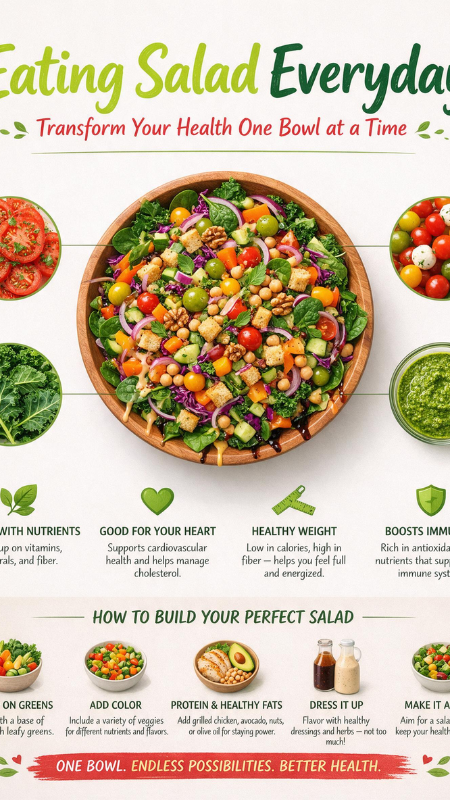
What Happens When You Eat Salad Every Day?
The effects of eating salad regularly depend on the ingredients you choose and the rest of your diet. Adding more vegetables to your meals can help you improve your overall eating pattern, but one food alone cannot support better health or specific results.
1. You May Increase Your Fiber Intake
Many vegetables, including leafy greens, carrots, cabbage, and broccoli, provide dietary fiber. Beans, chickpeas, seeds, and some whole grains can add even more.
Fiber supports normal digestion and can help prevent constipation when consumed with enough fluids. Increasing fiber gradually may be more comfortable for people who are not used to eating many vegetables.
If you want to learn more about choosing nutritious meals, explore our healthy recipes for more ideas.
2. You Can Get a Wider Variety of Nutrients
Different vegetables contain different combinations of vitamins, minerals, and plant compounds.
For example, spinach provides folate and vitamin K, carrots contain beta-carotene, and tomatoes provide vitamin C and lycopene. Eating a variety of colors throughout the week helps you obtain a broader range of nutrients.
According to the Harvard T.H. Chan School of Public Health, a healthy eating pattern includes a variety of vegetables, fruits, whole grains, healthy fats, and protein sources.
Remember that no single vegetable provides every nutrient your body needs. Variety matters more than choosing one supposedly perfect ingredient.
3. A Balanced Salad Can Help You Feel Satisfied
A bowl containing only a few lettuce leaves may not be enough to satisfy your hunger as a main meal.
Adding protein-rich foods such as eggs, chicken, tofu, lentils, or chickpeas can make a salad more filling. Healthy fats from olive oil, nuts, seeds, or avocado add flavor and help make the meal more satisfying.
Beans, quinoa, potatoes, or whole grains can provide carbohydrates and additional fiber.
The combination you choose should reflect your appetite, activity level, and dietary preferences.
4. Eating More Vegetables Can Support Heart Health
Vegetables contain fiber, potassium, folate, and other nutrients that contribute to a healthy dietary pattern.
Research summarized by Harvard’s Nutrition Source links higher fruit and vegetable intake with a lower risk of cardiovascular disease.
A salad is one practical way to include more vegetables in your diet. However, its overall nutritional value also depends on the dressing, toppings, portion size, and foods you eat throughout the day.
5. Vegetables Can Contribute to Healthy Weight Management
Many non-starchy vegetables contain plenty of water and relatively few calories. Including them in meals may help you feel satisfied while making room for a variety of nutritious foods.
For weight management, consider how the entire meal fits into your usual eating pattern rather than relying on salad alone.
Cheese, nuts, avocado, croutons, and dressings can all fit into a balanced salad. Their portions simply affect the meal’s total energy content.
You do not need to eat only salads or replace every meal with vegetables to maintain a healthy weight.
6. A Varied Salad Can Support Skin and Eye Health
Vegetables provide nutrients involved in normal body functions, including the maintenance of healthy skin and vision.
Carrots and spinach contain carotenoids, while bell peppers and tomatoes provide vitamin C. Leafy greens also contain lutein and zeaxanthin, plant compounds associated with eye health.
Eating salad does not support clearer skin or prevent age-related eye conditions. These benefits depend on your overall diet, health, lifestyle, and other factors.
How to Build a Balanced Salad
A good salad combines ingredients that provide different flavors, textures, and nutrients. You can use the following simple formula as a starting point.
Step 1: Choose Your Greens
Start with one or more of these options:
- Romaine lettuce for a crisp texture.
- Spinach for a mild flavor.
- Kale for a hearty base.
- Arugula for a peppery taste.
- Shredded cabbage for extra crunch.
You do not need to avoid iceberg lettuce. Although its nutrient profile differs from darker leafy greens, it can still contribute water and some nutrients to your meal.
Step 2: Add Colorful Vegetables
Choose two or more vegetables based on what is available and affordable.
Good options include:
- Tomatoes and red bell peppers.
- Carrots and sweet peppers.
- Cucumbers and radishes.
- Red cabbage and beets.
- Broccoli and sliced onions.
Fresh, frozen, or suitable canned vegetables can all contribute to a balanced eating pattern. You do not need to buy every ingredient at once.
Step 3: Include Protein
Protein can help turn a simple side salad into a satisfying main meal.
Try one of these ingredients:
- Cooked chicken or turkey.
- Hard-boiled eggs.
- Chickpeas, lentils, or black beans.
- Tofu or edamame.
- Tuna or salmon.
Choose the amount that suits your appetite and the rest of your meal. Plant-based options can provide protein along with fiber.
Step 4: Add Healthy Fats
A little fat can improve flavor and help your body absorb fat-soluble vitamins from vegetables.
Consider adding olive oil, avocado, walnuts, almonds, pumpkin seeds, or sunflower seeds.
You do not need to eliminate fat to make a healthy salad. Instead, choose ingredients you enjoy and adjust the amount to suit your preferences and nutritional needs.
Step 5: Consider Adding Carbohydrates
If your salad is your main meal, you may want to include a source of carbohydrates.
Try cooked quinoa, brown rice, whole-grain bread, potatoes, corn, or beans. These ingredients can add texture, energy, and variety.
A balanced meal does not need to follow one exact formula. Adjust your ingredients to make a meal that satisfies you.
Step 6: Make a Simple Dressing
Homemade dressing can be quick, affordable, and easy to customize.
Basic Lemon and Olive Oil Dressing
Ingredients:
- 2 tablespoons olive oil.
- 1 tablespoon fresh lemon juice.
- 1 teaspoon mustard, if desired.
- A little black pepper.
- A small pinch of salt, if desired.
Instructions:
- Add all the ingredients to a small jar.
- Close the lid and shake until combined.
- Taste and adjust the lemon juice or seasoning.
- Drizzle over your salad just before serving.
You can also use plain yogurt, vinegar, herbs, or spices to create different flavors. Store homemade dressing in the refrigerator and follow safe food-storage practices for its ingredients.
3 Easy Salad Recipes to Try at Home
These recipes are flexible, so you can replace ingredients according to your budget and what you already have in your kitchen.
1. Mediterranean Chickpea Salad
This colorful salad combines vegetables, chickpeas, olives, and a simple lemon dressing.
Ingredients
- 2 cups chopped romaine lettuce or mixed greens.
- 1/2 cup cooked or canned chickpeas, drained and rinsed.
- 1/2 cup chopped tomatoes.
- 1/2 cup diced cucumber.
- 2 tablespoons sliced red onion.
- 2 tablespoons crumbled feta cheese, optional.
- 5–8 olives, optional.
- 1 tablespoon olive oil.
- 1 tablespoon lemon juice.
- Dried oregano and black pepper to taste.
Instructions
- Wash and prepare the vegetables.
- Place the greens, chickpeas, tomatoes, cucumber, and onion in a bowl.
- Add the feta and olives if using them.
- Mix the olive oil, lemon juice, oregano, and black pepper.
- Pour the dressing over the salad and toss gently.
Why try it?
Chickpeas contribute plant-based protein and fiber, while the vegetables provide color and texture. This salad works as a light lunch or as a side dish with another meal.
2. Crunchy Chicken and Cabbage Salad
This recipe is useful when you have leftover cooked chicken and want a quick meal.
Ingredients
- 2 cups shredded cabbage.
- 1 small carrot, grated.
- 1/2 red bell pepper, thinly sliced.
- 3–4 ounces cooked chicken, sliced.
- 1 tablespoon chopped peanuts or sesame seeds, optional.
- 1 tablespoon rice vinegar.
- 1 teaspoon sesame oil.
- 1 teaspoon low-sodium soy sauce.
- A little grated fresh ginger, optional.
Instructions
- Add the cabbage, carrot, and bell pepper to a large bowl.
- Arrange the cooked chicken on top.
- Mix the vinegar, sesame oil, soy sauce, and ginger in a small bowl.
- Toss the salad with the dressing.
- Sprinkle with peanuts or sesame seeds before serving.
Why try it?
Cabbage and carrots add crunch, while chicken provides protein. If you prefer a plant-based meal, replace the chicken with edamame or tofu.
3. Southwest Black Bean and Quinoa Salad
This filling salad combines beans, grains, and vegetables for a colorful lunch.
Ingredients
- 2 cups chopped romaine lettuce.
- 1/2 cup cooked quinoa, cooled.
- 1/2 cup black beans, drained and rinsed.
- 1/3 cup corn.
- 1/2 cup chopped tomatoes.
- 1/4 avocado, sliced, optional.
- 1 tablespoon chopped cilantro, optional.
- 1 tablespoon lime juice.
- 1 teaspoon olive oil.
- A pinch of ground cumin.
Instructions
- Place the lettuce in a large bowl.
- Add the quinoa, black beans, corn, and tomatoes.
- Top with avocado and cilantro if desired.
- Mix the lime juice, olive oil, and cumin.
- Pour the dressing over the salad and toss gently.
Why try it?
Black beans and quinoa provide a combination of protein and carbohydrates, while vegetables contribute fiber and other nutrients. You can serve this salad on its own or alongside another dish.
For more simple meal inspiration, visit our guide to easy healthy meals for busy days.
Common Mistakes to Avoid When Eating Salad Every Day
Using Too Little Variety
Eating the same ingredients every day can become boring and limit the range of foods in your diet.
Rotate your greens, vegetables, protein sources, and dressings. You can also use seasonal produce to keep costs manageable.
Making Every Salad Too Small
A small side salad may not provide enough food for a main meal.
If you feel hungry soon afterward, consider adding beans, eggs, chicken, tofu, whole grains, or another ingredient that makes the meal more substantial.
Assuming Every Salad Is Automatically Healthy
A salad can contain a wide range of ingredients, and its nutritional profile varies accordingly.
Large amounts of creamy dressing, fried toppings, or salty processed ingredients can increase the meal’s calorie or sodium content. These foods do not have to be forbidden; focus on the overall combination and portions.
Avoiding All Fat
Removing every source of fat can make a salad less satisfying and reduce the absorption of fat-soluble vitamins.
Include an appropriate amount of olive oil, nuts, seeds, or avocado according to your preferences.
Believing Salad Can Replace Every Other Food
Salad is a useful part of a varied diet, not a complete replacement for every food group.
Continue eating a range of vegetables, fruits, protein foods, whole grains, and other foods that meet your nutritional needs.
How to Make Eating Salad Every Day Easier and More Affordable
You do not need expensive ingredients or complicated meal preparation to make salads regularly.
Plan a few combinations. Choose two or three salads you enjoy and alternate between them during the week.
Use affordable protein. Eggs, beans, lentils, chickpeas, and leftover cooked chicken can all be useful choices.
Prepare ingredients in advance. Wash and cut vegetables, cook grains, and prepare protein portions ahead of time. Store ingredients in clean, covered containers in the refrigerator.
Keep dressings simple. Lemon juice, vinegar, olive oil, mustard, and dried herbs can create different flavors without requiring many specialty products.
Use leftovers. Add suitable leftover vegetables, grains, beans, or cooked protein to your salad instead of throwing them away.
Follow food-safety practices. Wash your hands and fresh produce under running water before preparation. Do not wash produce with soap or detergent. Keep perishable ingredients refrigerated, and store raw meat separately from foods that will be eaten without cooking. The U.S. Food and Drug Administration’s produce safety guide provides additional advice.
Frequently Asked Questions
Is eating salad every day good for you?
It can be a helpful way to eat more vegetables and obtain fiber, vitamins, and minerals. The benefits depend on the ingredients and your overall eating pattern. You do not have to eat salad daily to maintain a balanced diet.
Can eating salad every day help with weight loss?
It may help if a balanced salad replaces a meal that contains more calories, but weight loss is not expected. Portion sizes, dressings, toppings, activity, and your overall food intake all matter.
Should I eat salad before or after a meal?
There is no single best time for everyone. You can eat salad before a meal, alongside it, or as the main dish. Choose the timing that fits your appetite and routine.
Is iceberg lettuce healthy?
Yes. Iceberg lettuce contains water and some nutrients. Darker leafy greens often provide more of certain vitamins and minerals per serving, but iceberg lettuce can still be part of a varied salad.
Can I prepare salad ahead of time?
Yes. Prepare and store ingredients separately when possible, especially dressing and ingredients that release a lot of moisture. Refrigerate cut vegetables and other perishable ingredients promptly, and follow safe storage guidance.
Do I need protein in every salad?
Not necessarily. A side salad does not always need a separate protein source. However, if salad is your main meal, including beans, eggs, tofu, chicken, fish, or another protein food can help make it more satisfying.
Can I eat salad if raw vegetables upset my stomach?
Some people find raw vegetables uncomfortable to digest. Try smaller portions, different vegetables, or lightly cooked vegetables instead. If digestive symptoms persist or are severe, seek advice from a qualified healthcare professional.
Final Thoughts
Eating salad every day can be a practical habit for adding more vegetables and variety to your diet. The most useful salads are not necessarily the most expensive or complicated. They are the ones you enjoy, can prepare consistently, and can adapt to your nutritional needs.
Start with leafy greens, add a few colorful vegetables, include protein when you need a filling meal, and finish with a dressing you enjoy. Try the three recipes in this guide and adjust them with ingredients already available in your kitchen.
There is no need to expect dramatic changes within a few days. Focus instead on building a varied, sustainable eating pattern that works for you.
Ready to try a new combination? Choose one recipe above and prepare it this week. Small, realistic changes can help make nutritious meals a regular part of everyday life.
Disclaimer: This article is for general educational purposes and is not medical or professional advice. Please consult a qualified healthcare professional before making changes to your diet, exercise, or health routine. See our Medical Disclaimer.