
Understanding nutrition facts is one of the most practical skills you can develop for healthier eating. Whether you’re comparing breakfast cereals, checking calories in a restaurant meal, or preparing dinner at home, nutrition information helps you understand what you’re eating.
However, food labels can sometimes feel confusing.
What does serving size actually mean? How much sodium is too much? Should you focus on calories, carbohydrates, protein, or vitamins?
The good news is that you don’t need advanced nutrition knowledge to use food labels effectively.
Table of Contents
By learning a few basic principles, you can compare products, understand portion sizes, and choose foods that fit your nutritional needs.
This guide explains how to read nutrition facts labels, compares the nutritional value of common foods, and includes a healthy recipe that demonstrates how to estimate calories and nutrients in homemade meals.
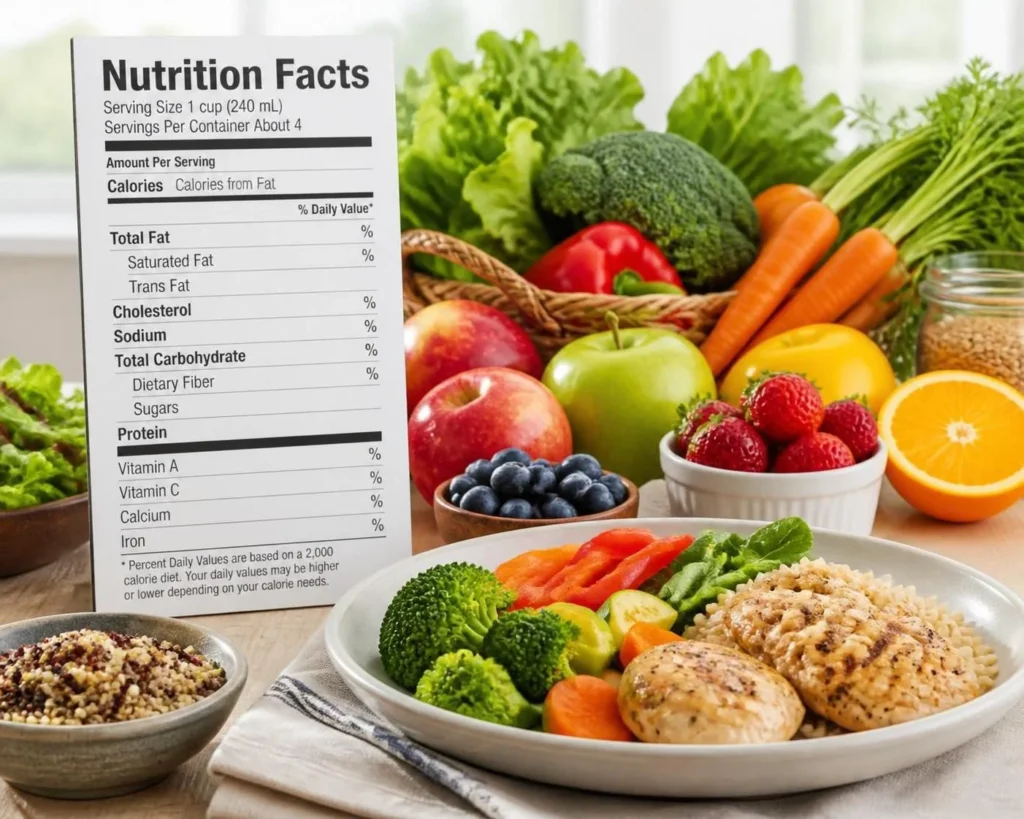
What Are Nutrition Facts?
Nutrition facts describe the energy and nutrients provided by a food or beverage.
In the United States, most packaged foods carry a standardized Nutrition Facts label regulated by the Food and Drug Administration (FDA).
These labels help consumers understand how a particular food contributes to their overall dietary intake.
A typical Nutrition Facts label includes:
- Serving size and servings per container.
- Calories per serving.
- Total fat, saturated fat, and trans fat.
- Cholesterol and sodium.
- Total carbohydrates, dietary fiber, and sugars.
- Added sugars.
- Protein.
- Vitamin D, calcium, iron, and potassium.
Some products also list additional vitamins and minerals.
Why Nutrition Facts Matter
Nutrition facts help you compare foods using consistent information.
For example, two breakfast cereals might contain similar calories but very different amounts of fiber and added sugar.
Likewise, two canned soups might provide comparable protein while containing substantially different amounts of sodium.
Reading the label helps you recognize these differences.
However, nutrition labels don’t tell the entire story.
Fresh fruits, vegetables, legumes, whole grains, and other minimally processed foods can provide valuable nutrients even when they don’t come with a printed label.
The goal isn’t to judge foods using a single number. It’s to understand how different foods contribute to your overall eating pattern.
How to Read Nutrition Facts Labels
Learning how to read nutrition facts becomes easier when you follow the same sequence each time.
Step 1: Check the Serving Size
Start at the top of the label.
The serving size tells you the quantity of food used to calculate the listed nutritional values.
For example, imagine a package of crackers lists:
| Label Information | Amount |
|---|---|
| Serving size | 10 crackers |
| Servings per container | 3 |
| Calories per serving | 150 |
| Total fat per serving | 6 g |
| Sodium per serving | 200 mg |
If you eat the entire package, you consume three servings.
Your totals would be:
- Calories: 450
- Total fat: 18 g
- Sodium: 600 mg
This is why serving size is one of the most important details on a nutrition label.
Important: A labeled serving size isn’t necessarily the amount you should eat. It generally reflects how much people typically consume, not a personalized dietary recommendation.
Step 2: Understand Calories
Calories measure the energy food provides.
Your body uses energy for essential functions, including breathing, circulation, movement, and maintaining body temperature.
The calories you need depend on several factors:
- Age.
- Sex.
- Body size.
- Physical activity.
- Health circumstances.
A 2,000-calorie daily diet is commonly used as a reference on U.S. nutrition labels.
However, it isn’t the appropriate calorie target for everyone.
For example, a person with higher energy requirements may need substantially more food than someone with lower energy requirements.
Instead of automatically treating calories as good or bad, consider how they fit into your overall nutritional needs.
Step 3: Review Macronutrients
Macronutrients are nutrients the body requires in relatively large amounts.
The three main macronutrients are carbohydrates, protein, and fat.
Carbohydrates
Carbohydrates provide energy and are found in foods such as:
- Fruits.
- Vegetables.
- Beans.
- Milk and yogurt.
- Bread.
- Rice.
- Pasta.
Carbohydrate-containing foods vary considerably in nutritional quality.
For example, lentils provide carbohydrates along with fiber, protein, and minerals.
Sugary drinks provide carbohydrates but typically contain little fiber or protein.
When reading labels, look beyond total carbohydrates and consider fiber and added sugars.
Protein
Protein supports tissue maintenance, muscle function, and many processes throughout the body.
Common protein sources include:
- Fish.
- Poultry.
- Eggs.
- Beans.
- Lentils.
- Tofu.
- Dairy products.
- Nuts and seeds.
Protein needs vary depending on age, body size, activity, and health status.
The FDA’s Daily Value for protein is 50 grams for adults and children ages four and older.
That value is a general labeling reference rather than an individualized target.
Dietary Fat
Fat supports cell function, nutrient absorption, and numerous biological processes.
However, different types of fat have different nutritional implications.
Unsaturated fats are found in foods such as:
- Avocados.
- Olive oil.
- Nuts.
- Seeds.
- Fatty fish.
Saturated fats are found in foods including butter, cheese, fatty meats, and some tropical oils.
The Dietary Guidelines for Americans recommend limiting saturated fat intake.
Nutrition labels make it easier to compare saturated fat amounts between similar products.
Step 4: Check Vitamins and Minerals
Vitamins and minerals support many essential body functions.
Four nutrients must generally appear on U.S. Nutrition Facts labels:
| Nutrient | Main Functions | Common Food Sources |
|---|---|---|
| Vitamin D | Supports calcium absorption and bone health | Fortified milk, fatty fish |
| Calcium | Supports bones, teeth, and muscle function | Dairy, fortified plant beverages |
| Iron | Helps transport oxygen in the blood | Meat, beans, fortified cereals |
| Potassium | Supports fluid balance, muscles, and nerves | Potatoes, beans, bananas |
These nutrients are especially useful to review because many people don’t consume recommended amounts of some of them.
For reliable nutrient information, consult the NIH Office of Dietary Supplements.
Step 5: Understand Percent Daily Value
The Percent Daily Value (%DV) shows how much a nutrient in one serving contributes to a standard daily dietary reference amount.
The FDA provides a simple interpretation:
- 5% DV or less is considered low.
- 20% DV or more is considered high.
For example, a food providing 25% DV of calcium is considered high in calcium.
A product containing 3% DV of sodium is considered low in sodium.
Generally, look for more dietary fiber, vitamin D, calcium, iron, and potassium when those nutrients are relevant to your needs.
For nutrients such as saturated fat, sodium, and added sugars, lower amounts are often preferable.
These rules aren’t universal. Individual needs differ, particularly for people with medical conditions requiring specialized diets.
Understanding the Nutritional Value of Foods
The nutritional value of foods depends on their overall nutrient composition, not simply their calorie content.
Below are examples of popular foods that people frequently research.
Values are approximate and based on typical USDA food composition data. Actual amounts vary with variety, preparation, and portion size.
Banana Nutrition Facts
Bananas provide carbohydrates, potassium, and dietary fiber.
Approximate nutrition for one medium banana (118 g):
| Nutrient | Amount |
|---|---|
| Calories | 105 |
| Carbohydrates | 27 g |
| Protein | 1.3 g |
| Total fat | 0.4 g |
| Fiber | 3.1 g |
| Potassium | 422 mg |
Bananas are convenient snacks and can be combined with yogurt, nuts, or other protein-containing foods.
They also work well in oatmeal and smoothies.
Although bananas contain naturally occurring sugars, they also provide fiber and other nutrients.
Their nutritional impact should be considered in the context of the overall meal and dietary pattern.
Avocado Nutrition Facts
Avocados are notable for their unsaturated fat content.
Approximate nutrition for 100 g of raw avocado:
| Nutrient | Amount |
|---|---|
| Calories | 160 |
| Total fat | 14.7 g |
| Carbohydrates | 8.5 g |
| Fiber | 6.7 g |
| Protein | 2 g |
| Potassium | 485 mg |
Avocados contain more calories per gram than many vegetables because of their fat content.
However, calorie density alone doesn’t determine whether a food is nutritious.
Avocados can contribute fiber, potassium, and unsaturated fats to a balanced diet.
Try adding sliced avocado to salads, grain bowls, sandwiches, or whole-grain toast.
Can of Tuna Nutrition Facts
Canned tuna is a convenient source of protein.
Its nutritional composition depends on the species, packing liquid, added salt, and drained weight.
For example, a typical 85 g drained portion of canned light tuna packed in water may provide approximately:
| Nutrient | Amount |
|---|---|
| Calories | 100 |
| Protein | 22 g |
| Total fat | 1 g |
| Carbohydrates | 0 g |
These are rounded illustrative values, not universal nutrition facts for every can.
Some products contain substantially more sodium than others.
Tuna packed in oil may also contain more calories and fat, depending on how thoroughly it’s drained.
Mercury consideration: Tuna species differ in mercury content. FDA and EPA guidance generally classifies canned light tuna as a lower-mercury choice than albacore tuna.
Pregnant or breastfeeding individuals and people preparing fish for young children should follow current FDA/EPA fish consumption recommendations.
Can of Corn Nutrition Facts
Canned corn provides carbohydrates, some fiber, and several micronutrients.
For approximately 100 g of drained canned sweet corn:
| Nutrient | Approximate Amount |
|---|---|
| Calories | 75 |
| Carbohydrates | 16 g |
| Protein | 2.5 g |
| Fat | 1 g |
| Fiber | 2 g |
Values vary by product and preparation.
When comparing canned corn products, pay particular attention to sodium.
No-salt-added varieties can be useful for people trying to reduce sodium intake.
Draining and rinsing canned vegetables may also reduce some of the sodium, although the amount removed varies.
How to Compare Nutrition Facts on Packaged Foods
Comparing two similar products is one of the most useful applications of nutrition labeling.
Imagine choosing between two breakfast cereals.
| Nutrient | Cereal A | Cereal B |
|---|---|---|
| Calories | 150 | 160 |
| Fiber | 2 g | 6 g |
| Added sugar | 12 g | 3 g |
| Protein | 3 g | 5 g |
| Sodium | 180 mg | 120 mg |
These hypothetical examples assume comparable serving weights.
Both cereals provide similar calories.
However, Cereal B contains more fiber and protein, less added sugar, and less sodium.
That combination may make it a more useful choice for someone prioritizing those nutrients.
Watch for Added Sugars
The Nutrition Facts label distinguishes total sugars from added sugars.
Total sugars include sugars naturally present in foods, such as the lactose in milk.
Added sugars include sugars added during processing or preparation.
The FDA Daily Value for added sugars is 50 grams on a 2,000-calorie reference diet.
This doesn’t mean everyone should aim to consume 50 grams.
It’s a reference value used for labeling.
Compare Sodium
Sodium is another important nutrient to review.
The FDA Daily Value for sodium is 2,300 mg.
Packaged soups, sauces, processed meats, snack foods, and restaurant meals can contain substantial amounts.
Comparing labels may help you identify lower-sodium alternatives without dramatically changing what you eat.
Restaurant Nutrition Facts: What to Look For
Restaurant meals can differ considerably in calories, sodium, protein, and saturated fat.
Many large restaurant chains provide nutritional information online.
This makes it possible to review a meal before ordering.
Chick-fil-A Nutrition Facts
People searching for Chick-fil-A nutrition facts often want to compare sandwiches, nuggets, salads, and side dishes.
The most useful information depends on your dietary goals.
For example:
Someone prioritizing protein may compare protein content across different entrées.
Someone managing sodium intake may focus on sodium levels in sandwiches, sauces, and sides.
Someone monitoring overall energy intake may compare calories between meal combinations.
Remember that sauces, dressings, beverages, and side dishes can substantially change a meal’s total nutritional values.
For current product information, consult Chick-fil-A’s official website.
Comparing Other Restaurant Meals
The same principles apply when ordering at restaurants such as Chipotle.
Rice, beans, protein choices, cheese, sour cream, and sauces all affect the final nutritional breakdown.
For an example of how different restaurant ingredients influence meal choices, read our guide to the healthiest Chipotle order.
Restaurant nutrition information is useful, but actual portions and preparation may vary.
How to Calculate Calories and Nutrition in Homemade Meals
Packaged foods usually provide nutrition labels.
Homemade meals require a slightly different approach.
To calculate the nutritional value of a recipe, determine the amounts of each ingredient and add their nutritional contributions together.
Using a Meal Calorie Calculator
A meal calorie calculator typically uses food composition data to estimate calories and nutrients.
The USDA’s FoodData Central is a useful source of food composition information.
For a more accurate estimate:
- Weigh or measure ingredients.
- Choose database entries matching the foods used.
- Include cooking oils, sauces, and toppings.
- Calculate the total nutrition for the recipe.
- Divide by the number of servings.
For example, suppose a homemade meal contains:
| Ingredient | Estimated Calories |
|---|---|
| Chicken breast | 330 |
| Brown rice | 430 |
| Broccoli | 70 |
| Olive oil | 120 |
| Total | 950 |
If the recipe produces two equal servings:
950 ÷ 2 = 475 calories per serving.
This example is illustrative. Actual values depend on ingredient weights, whether foods are measured raw or cooked, and the amounts used.
Cooking can change food weight because of water loss or absorption.
For that reason, it’s important to use consistent measurements and appropriate database entries.
Healthy Recipe: High-Protein Chicken and Vegetable Rice Bowls
These chicken and vegetable rice bowls provide a practical example of how several nutritious ingredients contribute to a complete meal.
The recipe combines lean protein, whole grains, vegetables, and unsaturated fat.
It’s suitable for meal preparation and can be customized with different vegetables or seasonings.
Recipe Overview
| Recipe Detail | Information |
|---|---|
| Recipe name | High-Protein Chicken and Vegetable Rice Bowls |
| Preparation time | 15 minutes |
| Cooking time | 30 minutes |
| Total time | 45 minutes |
| Servings | 4 |
| Difficulty | Easy |
| Cooking method | Stovetop |
| Cuisine | American-inspired |
| Meal type | Lunch or dinner |
Ingredients
| Ingredient | Quantity | Purpose |
|---|---|---|
| Boneless, skinless chicken breast | 1 lb (454 g), raw | Lean protein |
| Brown rice, dry | 1 cup (about 185 g) | Whole grains and carbohydrates |
| Broccoli florets | 2 cups (about 180 g) | Fiber and micronutrients |
| Red bell pepper | 1 medium (about 150 g) | Vitamin C and flavor |
| Olive oil | 1 tablespoon (15 mL) | Unsaturated fat |
| Garlic | 2 cloves, minced | Flavor |
| Lemon juice | 2 tablespoons | Flavor |
| Paprika | 1 teaspoon | Seasoning |
| Black pepper | ¼ teaspoon | Seasoning |
| Salt | ¼ teaspoon | Seasoning |
Ingredient weights are approximate. Use a kitchen scale for more precise nutritional calculations.
Step-by-Step Instructions
Step 1: Cook the Brown Rice
Rinse the rice if desired.
Cook one cup of dry brown rice according to the package instructions.
Brown rice typically requires around 25–45 minutes, depending on the variety.
Choose a quick-cooking variety if you want to keep the total recipe time close to 45 minutes.
Once cooked, fluff with a fork and set aside.
Step 2: Prepare the Chicken
Cut the chicken breast into evenly sized pieces.
Place the chicken in a bowl.
Add the paprika, black pepper, salt, and minced garlic.
Mix until the pieces are evenly coated.
Wash your hands after handling raw chicken.
Avoid washing raw poultry, as splashing water can spread bacteria around the kitchen.
Step 3: Cook the Chicken
Heat approximately half the olive oil in a large skillet over medium heat.
Add the seasoned chicken.
Cook, turning occasionally, until the pieces are cooked through.
Use a food thermometer to confirm that the chicken reaches an internal temperature of 165°F (74°C).
Cooking time varies depending on the size and thickness of the pieces.
Color alone isn’t a reliable indication of safety.
Step 4: Cook the Vegetables
Heat the remaining olive oil in a separate skillet or use the same skillet after removing the cooked chicken.
Add the broccoli and sliced bell pepper.
Cook for approximately 5–7 minutes, stirring occasionally.
Add a small splash of water if necessary to help the broccoli soften.
The vegetables should become tender while retaining some texture.
Step 5: Add Lemon Juice
Return the chicken to the skillet if necessary.
Add the lemon juice and toss everything together.
Heat briefly until the ingredients are evenly combined.
Step 6: Assemble the Bowls
Divide the cooked brown rice evenly among four bowls.
Add equal portions of chicken and vegetables.
Serve immediately.
For more flavor, consider adding fresh parsley, additional lemon juice, or a small amount of chili flakes.
Estimated Nutrition Facts Per Serving
The following estimates assume the recipe makes four equal servings.
| Nutrient | Estimated Amount |
|---|---|
| Calories | 410 kcal |
| Protein | 32 g |
| Carbohydrates | 43 g |
| Total fat | 11 g |
| Saturated fat | 2 g |
| Dietary fiber | 4 g |
| Total sugars | 3 g |
| Sodium | 230 mg |
Important: These values are provisional estimates, not laboratory-tested or independently calculated results.
Actual nutritional values depend on ingredient brands, exact weights, cooking yield, and portion size.
Before publishing these figures as definitive recipe nutrition facts, calculate the complete recipe using USDA FoodData Central or a validated recipe nutrition analysis tool.
Why This Recipe Is Nutritionally Balanced
The meal includes several food groups.
Chicken provides protein that contributes to muscle maintenance and tissue repair.
Brown rice supplies carbohydrates and some fiber.
Broccoli and bell peppers contribute vitamins, minerals, and plant compounds.
Olive oil provides mostly unsaturated fat.
The combination can be adapted to different dietary preferences.
For example, you can substitute cooked tofu for chicken to create a plant-based variation, although this changes the nutritional values.
Healthy Variations
For additional fiber, replace part of the brown rice with cooked lentils.
For more vegetables, add spinach, zucchini, or carrots.
For a different protein source, use salmon, tofu, or beans.
If you’re managing carbohydrate intake, consider adjusting the rice portion and adding more non-starchy vegetables.
People with diabetes may benefit from considering carbohydrate portions, fiber, and overall meal composition.
For additional food ideas, explore our article on foods diabetics should eat.
Food Safety and Storage
Food safety is especially important when preparing meals in advance.
According to USDA and FoodSafety.gov recommendations:
- Cook chicken to a minimum internal temperature of 165°F (74°C).
- Refrigerate perishable leftovers within two hours of cooking.
- Refrigerate within one hour when the surrounding temperature exceeds 90°F (32°C).
- Store leftovers in shallow, covered containers.
- Keep the refrigerator at 40°F (4°C) or below.
- Consume refrigerated cooked leftovers within three to four days.
- Reheat leftovers to 165°F (74°C).
Cooked rice also requires careful handling because it can support the growth of Bacillus cereus when improperly cooled or stored.
Divide cooked rice into shallow containers and refrigerate promptly.
For longer storage, freeze individual portions.
For additional guidance, visit FoodSafety.gov.
Common Nutrition Facts Mistakes to Avoid
Even people who regularly read food labels can overlook important details.
Mistake 1: Ignoring Serving Size
A package may appear low in calories until you realize it contains multiple servings.
Always compare the amount you actually eat with the serving size listed.
Mistake 2: Focusing Only on Calories
Calories are useful, but they don’t fully describe nutritional quality.
A food’s protein, fiber, fat composition, vitamins, and minerals also matter.
Mistake 3: Assuming All Sugars Are Added Sugars
Fruit and unsweetened dairy products contain naturally occurring sugars.
Check the “Added Sugars” line rather than assuming total sugar represents added sugar.
Mistake 4: Overlooking Sodium
A product may be low in fat or calories but high in sodium.
Review several nutrients instead of relying on one marketing claim.
Mistake 5: Comparing Different Serving Sizes
Two similar products may use different serving sizes.
For a fair comparison, consider nutritional values per 100 grams or adjust the values to equivalent portions.
Mistake 6: Treating Percent Daily Value as Personalized Advice
Daily Values are general reference amounts.
Individual nutritional requirements vary.
For medical conditions requiring specialized nutrition management, seek individualized guidance from a qualified healthcare professional or registered dietitian.
Frequently Asked Questions About Nutrition Facts
What Are the Most Important Nutrition Facts to Check?
Start with serving size and calories.
Then review nutrients relevant to your needs, such as dietary fiber, protein, saturated fat, sodium, and added sugars.
The most useful information depends on your overall dietary pattern and health goals.
How Accurate Are Nutrition Facts Labels?
Nutrition labels are regulated, but the listed values are not always identical to the exact nutritional content of every individual serving.
Natural variation, manufacturing differences, rounding rules, and permitted regulatory tolerances can affect labeled values.
Use labels as reliable general guides rather than exact measurements of every bite.
Are Calories More Important Than Nutrients?
Both matter.
Calories describe energy content, while nutrients help explain what a food provides nutritionally.
A healthy eating pattern considers overall energy needs alongside nutrient adequacy and dietary quality.
How Can I Calculate Nutrition Facts for Homemade Meals?
Measure your ingredients and look up their nutritional values using a reliable database such as USDA FoodData Central.
Add the nutritional totals for the full recipe.
Then divide by the number of servings.
Remember to include cooking oils, sauces, dressings, and toppings.
Do Fresh Fruits and Vegetables Have Nutrition Labels?
Most whole, unprocessed fruits and vegetables sold individually don’t require the same packaged-food Nutrition Facts label.
You can find their nutritional values through USDA FoodData Central and other reliable nutrition databases.
What Does 20% Daily Value Mean?
A food containing 20% DV of a nutrient provides one-fifth of the standard daily reference amount for that nutrient in the listed serving.
The FDA considers 20% DV or more high.
Whether that is beneficial depends on the nutrient.
Can Nutrition Facts Help With Weight Management?
Yes.
Nutrition labels can help you understand portions, energy intake, and nutrient composition.
However, weight management involves many factors, including overall dietary patterns, physical activity, sleep, health conditions, and individual circumstances.
Food labels are tools for making informed decisions, not a complete weight-management strategy.
Final Thoughts
Understanding nutrition facts can make everyday food decisions easier.
Start by checking serving sizes, then review calories and the nutrients most relevant to your needs.
Compare similar products using equivalent portions, pay attention to added sugars and sodium, and consider the overall nutritional value of foods.
When preparing homemade meals, reliable ingredient measurements and food composition databases can help you estimate nutritional values.
Most importantly, remember that healthy eating isn’t determined by a single nutrient or food label.
A varied, balanced eating pattern built around nutritious foods is more useful than focusing on one number.
For more information about healthy eating and dietary nutrients, explore the Nutrition section at HealthyEating.Foundation.
Disclaimer: This article is for general educational purposes and is not medical or professional advice. Please consult a qualified healthcare professional before making changes to your diet, exercise, or health routine. See our Medical Disclaimer.