
Introduction: You Deserve to Feel Confident About Your Food Choices
If you’re living with diabetes, food can feel complicated. One minute you’re hungry, the next you’re wondering whether that meal will send your blood sugar soaring. Maybe you’ve been told to “watch your carbs” or “eat healthier,” but no one explained what that actually looks like on your plate.
Table of Contents
Here’s the truth: you don’t need a restrictive, joyless diet. You need clarity. When you understand the foods diabetics should eat, you gain control—not just over your glucose levels, but over your energy, mood, and long-term health.
Let’s break it down in a way that makes sense for your real life.
Why Choosing the Right Foods Matters for Diabetics
Every time you eat, your body turns carbohydrates into glucose. If you have diabetes, your body either doesn’t make enough insulin or doesn’t use it efficiently. That means glucose builds up in your bloodstream instead of entering your cells for energy.
The result?
- Blood sugar spikes
- Energy crashes
- Increased risk of heart disease, nerve damage, and kidney problems
According to the CDC, more than 37 million Americans live with diabetes, and nutrition plays a central role in managing it. Research consistently shows that dietary changes can significantly improve A1C levels and insulin sensitivity.
Understanding the Key Nutrients
To choose the right foods, you need to know how these nutrients affect you:
- Carbohydrates: Raise blood sugar. Quality and quantity matter.
- Fiber: Slows digestion and helps prevent glucose spikes.
- Protein: Stabilizes blood sugar and keeps you full longer.
- Healthy fats: Improve heart health and insulin sensitivity.
Glycemic Index (GI) and Glycemic Load (GL)
The Glycemic Index ranks foods by how quickly they raise blood sugar. Low-GI foods digest slowly, helping you avoid sharp spikes.
Examples:
- High GI: White bread, sugary drinks
- Low GI: Lentils, oats, most vegetables
Choosing low- to moderate-GI foods is one of the smartest strategies for diabetes management.
Best Foods Diabetics Should Eat for Stable Blood Sugar
Let’s get practical. What should actually go in your grocery cart?
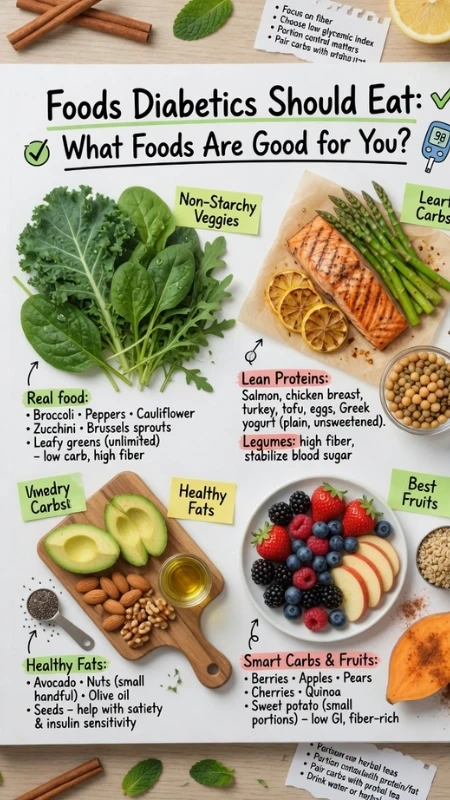
1. Non-Starchy Vegetables: Your Blood Sugar Allies
If you’re unsure where to start, start here.
Non-starchy vegetables are low in carbohydrates and high in fiber, vitamins, and antioxidants. They fill your plate without overwhelming your glucose levels.
Excellent Choices:
- Spinach
- Broccoli
- Cauliflower
- Zucchini
- Bell peppers
- Green beans
- Cucumber
The American Diabetes Association recommends filling half your plate with non-starchy vegetables.
Why They Work:
- Minimal impact on blood sugar
- High fiber slows digestion
- Rich in nutrients that reduce inflammation
You can roast them, steam them, toss them in salads, or blend them into soups. The more variety you include, the better.
2. Lean Proteins for Blood Sugar Control
Protein doesn’t spike your blood sugar like carbohydrates do. Instead, it helps you feel satisfied and slows carbohydrate absorption.
Top Lean Protein Sources:
- Skinless chicken breast
- Turkey
- Eggs
- Tofu
- Lentils
- Salmon
- Plain Greek yogurt
Research published in clinical nutrition journals shows that adding protein to meals reduces post-meal glucose spikes.
How to Use Protein Strategically:
- Pair fruit with nuts or yogurt
- Add grilled chicken to salads
- Include eggs at breakfast
When you center your meals around protein, you stabilize your energy throughout the day.
3. Whole Grains (Yes, You Can Eat Carbs)
You don’t have to eliminate carbohydrates. You just need better ones.
Whole grains contain fiber, which slows glucose absorption and improves digestion.
Better Grain Options:
- Quinoa
- Brown rice
- Steel-cut oats
- Barley
- 100% whole wheat bread
Portion Tip:
Keep servings moderate—about ½ cup cooked grains per meal.
Refined grains like white rice and white bread digest quickly and can spike your blood sugar. Swapping them for whole grains makes a noticeable difference.
4. Healthy Fats That Protect Your Heart
Heart disease risk is higher when you have diabetes. That’s why healthy fats matter.
Smart Fat Choices:
- Avocados
- Olive oil
- Almonds
- Walnuts
- Chia seeds
- Flaxseeds
- Fatty fish (salmon, sardines)
Trusted Resources for Diabetes-Friendly Eating
For additional guidance on healthy food choices and meal planning, consult these trusted health organizations:
- American Diabetes Association: Food & Nutrition
- Centers for Disease Control and Prevention: Healthy Eating
- CDC: Diabetes Meal Planning
These resources provide further information about balanced meals, carbohydrate choices, portion sizes, and managing blood sugar levels.
Healthy fats:
- Reduce inflammation
- Improve cholesterol levels
- Enhance insulin sensitivity
Add olive oil to salads or snack on a handful of almonds instead of chips.
5. Low-Glycemic Fruits You Can Enjoy
Fruit often gets a bad reputation, but you don’t need to avoid it entirely.
Best Fruits for Diabetics:
- Berries
- Apples
- Pears
- Cherries
- Grapefruit
Smart Fruit Habits:
- Eat whole fruit, not juice
- Pair with protein or fat
- Watch portion sizes
For example, apple slices with almond butter make a balanced snack.
foods diabetics should eat
Foods Diabetics Should Limit or Avoid
Knowing what to limit is just as important as knowing what to include.
High-Sugar Foods
- Soda
- Candy
- Sweetened cereals
- Pastries
These cause rapid glucose spikes.
Refined Carbohydrates
- White bread
- White rice
- Regular pasta
They lack fiber and digest quickly.
Processed and Fried Foods
- Fast food
- Packaged snacks
- Processed meats
These increase inflammation and heart risk.
Quick Comparison
| Better Choice | Limit or Avoid |
|---|---|
| Brown rice | White rice |
| Sparkling water | Soda |
| Grilled chicken | Fried chicken |
| Fresh fruit | Fruit juice |
Small swaps add up over time.
“Examples of suitable meals.”
You don’t need a rigid plan. Use this as inspiration.
| Meal | Example | Why It Works |
|---|---|---|
| Breakfast | Greek yogurt + berries + chia seeds | Protein + fiber |
| Lunch | Grilled chicken salad + olive oil | Low carb, balanced |
| Dinner | Baked salmon + quinoa + broccoli | Omega-3 + whole grains |
| Snack | Apple + almonds | Balanced carbs |
Rotate similar combinations throughout the week to avoid boredom.
Easy Diabetes-Friendly Recipes
Recipe 1: Balanced Breakfast Bowl
Ingredients
| Ingredient | Quantity | Benefit |
|---|---|---|
| Plain Greek yogurt | 1 cup | High protein |
| Blueberries | ½ cup | Low GI fruit |
| Chia seeds | 1 tbsp | Fiber + omega-3 |
| Cinnamon | ½ tsp | May support glucose control |
Instructions
- Add yogurt to a bowl.
- Top with blueberries and chia seeds.
- Sprinkle cinnamon.
Quick, satisfying, and blood sugar-friendly.
Recipe 2: Grilled Salmon Power Plate
Ingredients
| Ingredient | Quantity | Benefit |
|---|---|---|
| Salmon fillet | 4 oz | Omega-3 fats |
| Quinoa | ½ cup cooked | High-fiber grain |
| Steamed broccoli | 1 cup | Low-carb vegetable |
| Olive oil | 1 tbsp | Healthy fat |
Instructions
- Grill salmon until flaky.
- Cook quinoa according to package instructions.
- Steam broccoli and drizzle with olive oil.
This meal balances protein, fiber, and healthy fats beautifully.
The Diabetes Plate Method: A Simple Visual Strategy
When in doubt, visualize your plate.
How to Build It:
- ½ plate non-starchy vegetables
- ¼ plate lean protein
- ¼ plate whole grains or starchy vegetables
- Add healthy fats in moderation
This method simplifies meal planning and supports portion control.
Practical Tips for Long-Term Success
Managing diabetes is about consistency, not perfection.
Daily Strategies:
- Read nutrition labels carefully
- Keep healthy snacks available
- Drink plenty of water
- Plan meals ahead
- Monitor portion sizes
- Limit added sugars to less than 10% of daily calories
Even modest weight loss—5–7% of body weight—can significantly improve insulin sensitivity.
Frequently Asked Questions About Foods Diabetics Should Eat
What are the best foods diabetics should eat daily?
Focus on non-starchy vegetables, lean proteins, whole grains, healthy fats, and low-glycemic fruits. These help stabilize blood sugar and improve overall health.
Can you eat fruit if you’re choosing foods diabetics should eat?
Yes. Whole fruits like berries and apples fit into a balanced plan. Just watch portions and avoid fruit juices.
Are carbohydrates completely off-limits?
Not at all. Choose complex carbs with fiber and control portions instead of eliminating them.
How often should you eat?
Meal timing depends on your individual needs, diabetes medications, activity level, and blood glucose patterns. Some people benefit from regular meal times, but eating every 3–4 hours is not necessary for everyone. Ask your healthcare professional or registered dietitian for guidance tailored to you.
Trusted Sources for Diabetes-Friendly Eating
Managing diabetes through food choices is different for each person. These reliable health resources explain how to plan balanced meals, understand carbohydrates, and make informed food choices.
- CDC: Diabetes Meal Planning — Learn about balanced meals, portion sizes, and the diabetes plate method.
- CDC: Carb Counting — Understand carbohydrate portions and how carbohydrates affect blood glucose.
- American Diabetes Association: Eating Well and Managing Diabetes — Explore practical guidance for building balanced meals.
Important: These recommendations are general educational information, not a personalized treatment plan. Your carbohydrate needs and meal schedule may depend on your medications, activity level, and other health conditions. Consult your healthcare professional or registered dietitian for advice tailored to your needs.
Conclusion: Small Choices, Powerful Results
You don’t need extreme diets or confusing rules. You need steady, informed decisions. When you focus on the right foods diabetics should eat, you create stability in your blood sugar, confidence in your meals, and protection for your future health.
Start small. Replace white rice with quinoa. Add an extra serving of vegetables tonight. Swap soda for sparkling water.
Your next meal is another opportunity to take control.
Take Action Today
If this guide helped you, don’t stop here.
- Share it with someone managing diabetes.
- Bookmark it for your next grocery trip.
- Try one recipe this week.
And most importantly, commit to one positive food change today. Your body will thank you tomorrow.
Disclaimer: This article is for general educational purposes and is not medical or professional advice. Please consult a qualified healthcare professional before making changes to your diet, exercise, or health routine. See our Medical Disclaimer.