
You’ve been making changes to your eating habits, staying active, and watching your weight gradually decrease. Then, suddenly, the number on the scale stops moving.
Days pass. Sometimes weeks.
It can feel confusing, especially when your routine seems unchanged.
A weight loss plateau is a period when body weight remains relatively stable after an earlier period of weight loss. Plateaus are common, and several biological and behavioral factors may contribute to them.
As your body becomes lighter, it generally requires less energy to maintain itself and perform everyday activities. Appetite, activity levels, and energy expenditure can also change.
But a stable scale reading does not always mean fat loss has stopped.
Temporary changes in body water, digestion, and other factors can hide progress.
Table of Contents
Before making drastic changes to your diet or workout routine, it helps to understand what may be happening.
This guide explains why weight loss stalls, how to evaluate your progress, and which realistic adjustments may support long-term weight management.
You’ll also find a balanced, protein-rich recipe that can make meal preparation easier.
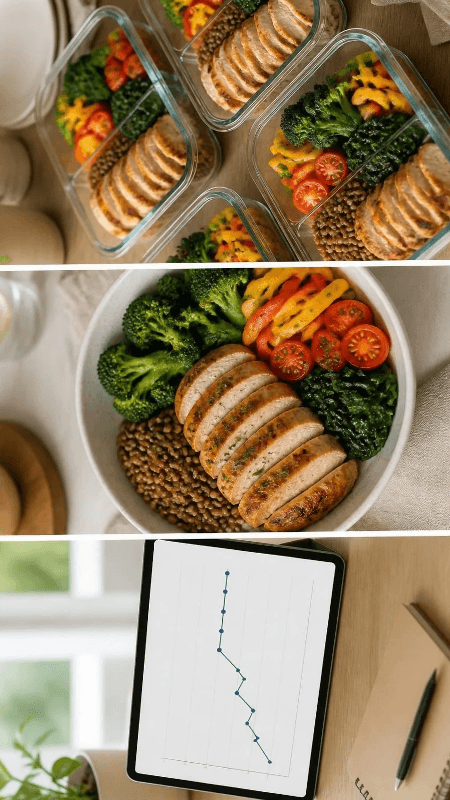
What Is a Weight Loss Plateau?
A weight loss plateau occurs when your weight remains relatively stable despite continuing efforts to lose weight.
It can happen after weeks or months of progress.
According to the National Institutes of Health (NIH), body weight regulation involves complex interactions between food intake, energy expenditure, appetite, and physiological adaptations.
Weight loss is therefore rarely a perfectly straight line.
A True Plateau vs. Normal Weight Fluctuations
Your weight can change from day to day for reasons unrelated to body fat.
Common influences include:
- Water retention.
- Sodium intake.
- Carbohydrate intake and glycogen storage.
- Hormonal changes.
- Constipation.
- Recent exercise.
- The amount of food and fluid in your digestive system.
For example, eating a salty restaurant meal may temporarily increase water retention.
Starting a new strength-training routine can also cause short-term fluid changes associated with muscle recovery.
These changes can temporarily mask fat loss.
A few days without a lower scale reading is not enough to establish a true plateau.
Why the Scale Does Not Tell the Whole Story
Body weight reflects fat mass, muscle, water, bone, and other tissues.
Someone beginning resistance training may improve strength or body composition without seeing dramatic changes on the scale.
For this reason, tracking weight loss progress can involve more than daily weigh-ins.
Changes in strength, endurance, clothing fit, and sustainable eating habits may provide useful additional information.
Why Weight Loss Stalls: 8 Common Reasons
Understanding the possible causes of a plateau helps you decide whether any changes are needed.
1. Your Body Needs Less Energy After Weight Loss
A smaller body generally requires less energy to maintain its basic functions and move through daily activities.
For example, walking the same distance may use less energy after someone has lost weight.
This means an eating pattern that initially supported weight loss may eventually support weight maintenance.
However, your energy requirements depend on many factors, including body composition, activity, age, and health.
A plateau does not automatically mean you should reduce your food intake.
2. Metabolic Adaptation Can Affect Energy Expenditure
During weight loss, the body may undergo physiological changes that influence energy use.
One process, sometimes called adaptive thermogenesis, involves reductions in energy expenditure beyond what would be predicted solely from changes in body size and composition.
Appetite-related changes may also make weight management more challenging.
These adaptations vary among individuals.
They do not mean that your metabolism is permanently damaged or that further weight loss is impossible.
Rather, they help explain why maintaining a lower weight can require ongoing adjustments and support.
3. Water Retention Can Hide Changes
Water fluctuations are among the most overlooked weight loss stall reasons.
Your body stores carbohydrates partly as glycogen, which is associated with water.
Changes in carbohydrate intake, sodium, hormones, and exercise can therefore affect body weight.
For some people, menstrual-cycle-related fluid changes can also produce noticeable fluctuations.
If your weight has remained stable for only several days, continuing your usual routine may be more useful than immediately changing it.
4. Food Portions and Eating Habits May Have Changed
Eating patterns can gradually shift without obvious changes.
Portions may become larger, snacks more frequent, or cooking oils and sauces more generous.
Restaurant meals may also contain more energy than expected.
This does not mean you need to weigh or measure every food indefinitely.
However, temporarily reviewing your usual meals can help you identify patterns.
Focus on learning rather than judging individual food choices.
5. Daily Movement May Have Decreased
Exercise sessions are only one component of physical activity.
Walking, household chores, standing, and other everyday movements contribute to total energy expenditure.
Some people naturally move less when they are tired, dieting, or recovering from demanding exercise.
As a result, increased planned exercise does not always produce an equivalent increase in total daily energy expenditure.
Consider your activity across the entire day rather than focusing only on workouts.
6. Your Workout Routine May Need Adjustment
Regular exercise supports cardiovascular fitness, strength, mood, and physical function.
However, repeating the same activity does not guarantee continued weight loss.
Fitness improvements may make certain workouts feel easier, while changes in body size can affect energy expenditure.
If appropriate, you might gradually increase walking duration, add resistance exercises, or try a different enjoyable activity.
Avoid assuming that every plateau requires harder workouts.
Adequate recovery remains important.
7. Sleep and Stress May Be Affecting Your Habits
Sleep and stress can influence appetite, food preferences, activity, and decision-making.
Insufficient sleep may make it harder to maintain regular eating and exercise routines.
Stress can also affect eating behavior and sleep quality.
These factors do not explain every plateau, and improving sleep does not guarantee renewed weight loss.
Nevertheless, healthy sleep and stress-management habits support overall well-being.
Most adults should aim for approximately 7–9 hours of sleep per night.
8. Medications or Health Conditions May Play a Role
Certain medications can affect appetite, fluid balance, or body weight.
Medical conditions may also influence weight regulation.
Examples include some endocrine disorders and conditions affecting fluid retention.
If weight changes seem unexplained, or you have symptoms such as unusual fatigue, swelling, or significant changes in appetite, consult a healthcare professional.
Do not stop or adjust prescribed medication solely because of a weight loss plateau.
What to Check Before Trying to Break a Weight Loss Plateau
Before attempting to restart weight loss, review the information you already have.
A methodical approach can help you avoid unnecessary restrictions.
Review Your Weight Trend
Look at changes over several weeks rather than individual days.
If weighing yourself is appropriate and comfortable, consider using consistent conditions, such as the same scale and similar time of day.
Weekly averages may help reveal trends hidden by daily fluctuations.
There is no universally accepted number of days that defines a plateau.
If your weight has been stable for several weeks, it may be worth reviewing your routine.
Reassess Your Eating Pattern
Consider whether your meals are satisfying and nutritionally balanced.
Ask yourself:
- Am I eating regular meals?
- Do my meals include protein and fiber?
- Have portion sizes changed?
- Am I frequently hungry?
- Have my usual snacks or drinks changed?
Avoid immediately cutting calories.
If you have already been eating very little, further restriction may increase health risks.
A registered dietitian can help assess whether your intake is appropriate.
For structured ideas, explore our weight loss meal plans.
Evaluate Your Physical Activity
Review your weekly activity and everyday movement.
The U.S. Physical Activity Guidelines recommend that most adults aim for at least 150 minutes of moderate-intensity aerobic activity each week.
They also recommend muscle-strengthening activities on at least two days.
If you are not meeting these recommendations, gradual progress may be a reasonable goal.
If you already exercise regularly, consider whether recovery, enjoyment, or consistency needs attention.
Consider Sleep, Stress, and Recovery
Ask whether your sleep schedule has changed or whether you are experiencing unusual stress.
You may benefit from a consistent bedtime, relaxing activities, and adequate recovery between demanding workouts.
For more practical routines, see our healthy lifestyle habits guide.
7 Practical Weight Loss Plateau Tips
If your weight trend has remained stable and weight loss remains an appropriate health goal, the following strategies may help you evaluate your next steps.
1. Avoid Drastic Calorie Cuts
Severely restricting food intake can increase hunger, fatigue, and the risk of inadequate nutrition.
It can also make an eating pattern difficult to sustain.
Instead, review your current intake and consider small, appropriate adjustments with professional guidance when needed.
Some people may be better served by maintaining their current weight while strengthening healthy routines.
2. Include Protein-Rich Foods
Protein supports the maintenance of body tissues and contributes to meal satisfaction.
Useful sources include poultry, fish, eggs, dairy products, tofu, beans, and lentils.
Including protein across meals may be more practical than relying on a single large serving.
Protein needs vary, particularly with age, physical activity, and medical conditions.
People with certain kidney conditions may need individualized advice.
3. Eat More Fiber-Rich Foods
Fiber contributes to digestive health and can help make meals satisfying.
Vegetables, fruits, whole grains, beans, and lentils are useful sources.
For example, combining chicken with lentils and vegetables provides both protein and fiber.
Increase fiber gradually if your current intake is low, and drink adequate fluids.
4. Maintain Regular Physical Activity
Consistent activity supports health even when the scale remains unchanged.
Walking, swimming, cycling, and dancing are all options.
Choose activities that fit your schedule and physical abilities.
Increasing activity gradually is generally more manageable than making sudden, intense changes.
5. Include Strength Training
Resistance training helps maintain muscle strength during weight management.
Exercises can include bodyweight movements, resistance bands, free weights, or machines.
Strength training may also help preserve lean mass during weight loss.
However, it does not guarantee that a plateau will end.
For beginners, learning proper technique and allowing recovery time are important.
6. Plan Satisfying Meals
Meal planning can reduce decision fatigue and make balanced food choices more convenient.
Try preparing a few reliable meals rather than following an overly rigid schedule.
A combination of lean protein, fiber-rich carbohydrates, vegetables, and unsaturated fats can provide a practical starting point.
The chicken and lentil bowl below is one example.
7. Monitor Progress Without Obsessing Over the Scale
Tracking weight loss progress can help identify patterns, but it should not become a source of constant stress.
Consider recording weekly activity, sleep habits, meal preparation, and other meaningful behaviors.
If frequent weighing increases anxiety or encourages restrictive eating, use alternative measures or seek professional guidance.
The purpose of tracking is to support informed decisions, not to judge yourself.
High-Protein Chicken and Lentil Bowl Recipe
This chicken and lentil bowl is designed as a convenient, balanced meal.
It combines chicken breast, lentils, vegetables, and olive oil.
The recipe provides protein and fiber, which may help make meals satisfying.
It is not a special treatment for a weight loss plateau, but it can fit into a nutritious eating pattern.
Recipe Overview
| Detail | Information |
|---|---|
| Recipe Name | High-Protein Chicken and Lentil Bowl |
| Prep Time | 15 minutes |
| Cook Time | 25 minutes |
| Total Time | 40 minutes |
| Servings | 4 |
| Course | Lunch or Dinner |
| Cuisine | Mediterranean-inspired |
| Cooking Method | Stovetop |
| Difficulty | Easy |
| Meal Prep Friendly | Yes |
Ingredients
| Ingredient | Quantity |
|---|---|
| Boneless, skinless chicken breast | 1 lb (454 g) |
| Cooked lentils, drained | 2 cups |
| Broccoli florets | 2 cups |
| Red bell pepper | 1 medium, sliced |
| Baby spinach | 2 cups |
| Cherry tomatoes | 1 cup, halved |
| Olive oil | 2 tablespoons |
| Fresh lemon juice | 2 tablespoons |
| Garlic | 2 cloves, minced |
| Dried oregano | 1 teaspoon |
| Smoked paprika | ½ teaspoon |
| Salt | ¼ teaspoon, or to taste |
| Black pepper | ¼ teaspoon |
| Fresh parsley | Optional |
Ingredient note: Use previously cooked lentils or canned lentils that have been drained and rinsed. Cooking dry lentils from scratch requires additional time.
Step-by-Step Instructions
Step 1: Prepare the Ingredients
Wash the vegetables under running water.
Slice the bell pepper and halve the cherry tomatoes.
Drain and rinse canned lentils if using.
Keep raw chicken separate from vegetables and other ready-to-eat foods.
Step 2: Season the Chicken
Pat the chicken dry with paper towels.
Season both sides with oregano, smoked paprika, salt, and black pepper.
Step 3: Cook the Chicken
Heat 1 tablespoon of olive oil in a large skillet over medium heat.
Add the chicken.
Cook for approximately 6–8 minutes per side, depending on thickness.
Use a food thermometer to confirm the thickest portion reaches 165°F (74°C).
Transfer the chicken to a clean plate and let it rest briefly before slicing.
Step 4: Cook the Vegetables
Heat the remaining tablespoon of olive oil in a separate skillet.
Add broccoli and bell pepper.
Cook for approximately 5–7 minutes, stirring occasionally.
Add garlic and cook for another 30 seconds.
Stir in the spinach and allow it to wilt.
Step 5: Warm the Lentils
Add the cooked lentils to the vegetable skillet.
Stir gently and heat until thoroughly hot.
Add a splash of water if necessary to prevent sticking.
Step 6: Assemble the Bowls
Divide the lentil and vegetable mixture evenly among four bowls.
Top with sliced chicken and cherry tomatoes.
Drizzle each serving with lemon juice.
Garnish with parsley if desired.
Serve warm.
Estimated Nutrition Per Serving
These approximate values assume four equal servings.
| Nutrient | Estimated Amount |
|---|---|
| Calories | 390 kcal |
| Protein | 39 g |
| Carbohydrates | 33 g |
| Fiber | 11 g |
| Total Fat | 11 g |
| Saturated Fat | 2 g |
| Sodium | 300 mg |
Actual nutrition depends on ingredient brands, cooked lentil weights, chicken composition, and the amount of salt used.
Editorial verification required: These are preliminary recipe estimates. Recalculate using USDA FoodData Central or validated nutrition software before publication.
Why This Recipe Can Support Balanced Eating
Chicken breast provides protein, while lentils contribute protein, carbohydrates, and fiber.
Broccoli, spinach, peppers, and tomatoes add vegetable variety.
Olive oil provides primarily unsaturated fat.
The combination creates a balanced meal without relying on extreme restrictions.
Serving sizes can be adjusted to individual energy and nutritional needs.
Food Safety and Meal Prep
According to FoodSafety.gov, chicken must reach a minimum safe internal temperature of 165°F (74°C).
Do not rely on color alone to determine whether chicken is fully cooked.
Refrigerate cooked food within two hours, or within one hour when temperatures exceed 90°F (32°C).
Store leftovers in covered, shallow containers at 40°F (4°C) or below.
Properly refrigerated cooked chicken and lentil bowls should generally be eaten within 3–4 days.
For longer storage, freeze portions in suitable containers.
Reheat leftovers to 165°F (74°C).
How Long Does a Weight Loss Plateau Last?
There is no fixed duration for a weight loss plateau.
Some periods of apparent stalled progress last only several days because of temporary water changes.
Other plateaus may continue for weeks or longer.
The duration depends on factors such as energy intake, physical activity, body composition, medications, and individual biology.
A plateau is not always a problem that needs to be corrected.
For some people, maintaining a lower weight represents meaningful progress.
If further weight loss is medically appropriate, reviewing your habits and seeking individualized guidance may help determine whether adjustments are needed.
Avoid setting an arbitrary deadline for the scale to change.
When to Seek Professional Help
A healthcare professional or registered dietitian can help when weight changes are difficult to explain or your current approach feels unsustainable.
Professional guidance is especially useful if you:
- Have symptoms such as unusual fatigue, persistent swelling, or unexplained weight changes.
- Take medications that may affect body weight.
- Have diabetes, kidney disease, or another condition affecting nutritional needs.
- Experience frequent dizziness, weakness, or excessive hunger.
- Feel compelled to restrict food severely or exercise excessively.
- Have a current or previous eating disorder.
If you are pregnant, breastfeeding, under 18, or managing a complex medical condition, general weight loss advice may not be appropriate.
Individualized care is the safest approach.
Frequently Asked Questions
Is a Weight Loss Plateau Normal?
Yes. Periods of stable weight are common during weight management.
Changes in energy requirements, appetite, water balance, and daily behaviors can all contribute.
A plateau does not automatically indicate that you are doing something wrong.
Why Am I Not Losing Weight Even Though I’m Eating Less?
Several explanations are possible.
Your energy requirements may have decreased, your food intake may differ from estimates, or temporary water retention may be masking changes.
Medication and medical factors can also contribute.
If you are already eating very little, do not automatically restrict further.
Should I Eat Fewer Calories to Break a Weight Loss Plateau?
Not necessarily.
First review your weight trend, nutritional intake, activity, sleep, and relevant health factors.
Additional calorie restriction may be unnecessary or inappropriate.
A qualified dietitian can help determine whether any dietary adjustment makes sense.
Can Strength Training Help With a Weight Loss Plateau?
Strength training supports muscle strength and may help preserve lean mass during weight loss.
It can improve physical fitness and body composition.
However, it does not guarantee renewed weight loss.
Can Drinking More Water Break a Plateau?
Adequate hydration is important for health.
Water may also be a useful alternative to sugar-sweetened drinks.
However, drinking additional water does not directly guarantee fat loss or resolve a plateau.
What Is the Best Way to Track Weight Loss Progress?
If weighing is appropriate for you, consistent measurements over several weeks can be more informative than isolated daily readings.
Strength, physical activity, eating habits, and other health indicators can provide additional context.
Choose tracking methods that support your well-being.
Final Thoughts
A weight loss plateau can be frustrating, but it does not necessarily mean your efforts have stopped producing benefits.
Body weight responds to complex interactions between energy needs, appetite, movement, hydration, and health.
Before changing everything, review your longer-term weight trend and daily habits.
Balanced nutrition, regular physical activity, adequate sleep, and realistic expectations remain useful whether or not the scale is moving.
If additional weight loss is appropriate for you, small, informed adjustments may be more sustainable than extreme restrictions.
For more practical guidance, explore our weight loss resources.
The goal is not simply to make the scale move again. It is to develop an approach that supports your health over time.
Disclaimer: This article is for general educational purposes and is not medical or professional advice. Please consult a qualified healthcare professional before making changes to your diet, exercise, or health routine. See our Medical Disclaimer.