Have you ever stood in your kitchen, holding a grocery list, wondering if you’re really giving your child everything they need to thrive? Between school pressure, sports practice, screen time, and fast-food cravings, ensuring healthy nutrition for teens and young children can feel like an uphill battle.
Table of Contents
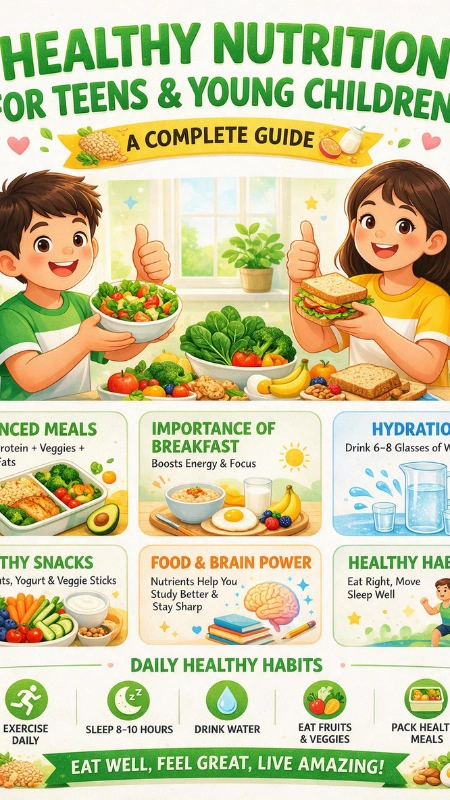
But here’s something important: what your child eats today shapes how they think, feel, grow, and perform tomorrow. From stronger bones to sharper focus in class, proper nutrition plays a bigger role than most parents realize. The good news? You don’t need perfection. You need balance, consistency, and practical strategies that fit your real life.
This complete guide will walk you through everything you need to know about healthy nutrition for teens and young children, so you can confidently fuel their growth and protect their long-term health.
Why Healthy Nutrition for Teens and Young Children Matters
During childhood and adolescence, the body grows at a pace it will never repeat again. Puberty alone brings dramatic changes—hormonal shifts, bone development, muscle growth, and brain maturation.
When your teen eats well, you support:
- ✅ Healthy growth spurts
- ✅ Strong immune function
- ✅ Better mood stability
- ✅ Improved academic performance
- ✅ Lower risk of obesity and type 2 diabetes
- ✅ Reduced risk of heart disease later in life
According to global health data, childhood obesity rates have significantly increased over the past decades. Much of that trend is tied to high sugar intake, processed foods, and low physical activity. By focusing on healthy nutrition for teens, you actively reduce those risks and build lifelong habits.
And here’s something many parents overlook: nutrition directly affects mental health. Low iron levels can contribute to fatigue and poor concentration. Omega‑3 deficiencies may affect mood regulation. What your child eats can influence how they feel emotionally.
Essential Nutrients for Healthy Nutrition for Teens
Teens aren’t just “big kids.” Their bodies require higher levels of specific nutrients to support rapid development.
1. Protein – The Foundation of Growth
Protein builds muscles, repairs tissues, and supports hormones.
Best sources:
- Lean chicken and turkey
- Eggs
- Greek yogurt
- Beans and lentils
- Tofu
- Fish
If your teen is active in sports, protein becomes even more important. You don’t need protein powders in most cases—whole food sources are usually enough.
2. Calcium & Vitamin D – Building Strong Bones
Did you know that most bone mass is built during adolescence? If your teen doesn’t get enough calcium now, they can’t “make it up” later.
Calcium-rich foods:
- Milk and yogurt
- Fortified plant-based milk
- Cheese
- Leafy greens
- Almonds
Vitamin D helps absorb calcium. Safe sun exposure and fortified foods help meet daily needs.
3. Iron – Energy and Brain Function
Iron deficiency is common, especially in teenage girls.
Iron-rich foods:
- Lean red meat
- Spinach
- Lentils
- Pumpkin seeds
- Fortified cereals
If your teen often feels tired, pale, or struggles with focus, it may be worth discussing iron levels with a healthcare provider.
4. Healthy Fats – Brain-Boosting Nutrients
Your child’s brain continues developing into their mid‑20s. Healthy fats support that growth.
Include:
- Avocados
- Walnuts
- Chia seeds
- Salmon
- Olive oil
Avoid replacing fats entirely—just choose smarter ones.
5. Fiber – Digestive and Weight Support
Fiber helps digestion and keeps your teen full longer, reducing overeating.
Fiber-rich options:
- Oats
- Whole-grain bread
- Apples
- Berries
- Beans
- Broccoli
Healthy Nutrition for Young Children (Ages 2–12)
If you build strong habits early, your child carries them into adolescence.
“To support proper growth and developmental milestones, following dietary guidance from the American Academy of Pediatrics ensures kids receive the right balance of essential vitamins and minerals.”
The Balanced Plate Formula
You can simplify meals using this approach:
- 🥦 ½ plate fruits and vegetables
- 🍚 ¼ whole grains
- 🍗 ¼ lean protein
- 🥛 Dairy or calcium source on the side
This visual method makes meal planning less stressful and more practical.
Portion Size Guidelines
Young children don’t need adult-sized servings. A simple rule:
- Protein: About the size of their palm
- Grains: About one cupped hand
- Vegetables: One to two handfuls
Let your child listen to their hunger cues rather than forcing them to “clean the plate.”
Healthy Snack Ideas for Kids
Instead of packaged snacks loaded with sugar, try:
- Apple slices with peanut butter
- Greek yogurt with berries
- Cheese and whole-grain crackers
- Banana with almond butter
- Homemade trail mix
Snacks should include protein + fiber to maintain steady energy.
Healthy Nutrition for Teens: Meeting Increased Energy Needs
Teenagers often feel hungry all the time—and for good reason.
During growth spurts, calorie needs rise significantly. Active teen boys may require 2,400–3,000 calories daily, while active teen girls may need 2,000–2,400 calories, depending on activity level.
The goal isn’t just more food. It’s better food.
Smart School Lunch Planning
If your teen buys lunch daily, you lose some control. Packing meals ensures balance.
A balanced lunch includes:
- Protein (chicken, eggs, hummus, tuna)
- Whole grain (brown rice, whole-grain wrap)
- Fruit
- Vegetable
- Healthy snack
Example:
- Turkey and avocado wrap
- Carrot sticks
- Apple
- Greek yogurt
Hydration Matters
Sugary drinks are one of the biggest threats to healthy nutrition for teens.
Encourage:
- Water
- Infused water with fruit
- Milk
- Unsweetened herbal teas
Limit:
- Soda
- Energy drinks
- Sports drinks (unless needed for intense training)
Foods to Limit for Better Teen and Child Nutrition
You don’t need to ban foods entirely. Restriction can backfire. Instead, focus on moderation.
Reduce:
- Sugary beverages
- Deep-fried foods
- Processed snacks
- Excess salt
- Highly refined carbohydrates
The American Heart Association recommends limiting added sugar to about 25 grams per day for children. Many teens exceed that in a single soda.
7-Day Sample Meal Structure for Healthy Nutrition for Teens
Instead of strict meal plans, use a flexible template.
Daily Structure Example
Breakfast:
Scrambled eggs + whole-grain toast + fruit
Snack:
Greek yogurt + berries
Lunch:
Grilled chicken bowl with brown rice and vegetables
Snack:
Apple + peanut butter
Dinner:
Salmon + roasted vegetables + quinoa
You can rotate proteins and vegetables to keep meals interesting.
Easy & Healthy Recipes for Teens and Kids
1. Power Breakfast Smoothie
Ingredients
| Ingredient | Quantity | Nutritional Benefit |
|---|---|---|
| Banana | 1 medium | Potassium & fiber |
| Greek yogurt | 1 cup | Protein & calcium |
| Spinach | ½ cup | Iron |
| Almond milk | 1 cup | Vitamin D |
| Chia seeds | 1 tbsp | Omega‑3 |
Blend and serve. Perfect for rushed mornings.
2. Balanced Chicken & Veggie Bowl
Ingredients
| Ingredient | Quantity | Nutritional Benefit |
|---|---|---|
| Grilled chicken | 100g | Lean protein |
| Brown rice | 1 cup | Fiber |
| Steamed broccoli | 1 cup | Vitamin C |
| Carrots | ½ cup | Beta carotene |
| Olive oil | 1 tbsp | Healthy fats |
Assemble in a bowl and drizzle with olive oil.
3. No-Bake Energy Bites
Ingredients
| Ingredient | Quantity | Nutritional Benefit |
|---|---|---|
| Oats | 1 cup | Whole grains |
| Peanut butter | ½ cup | Protein |
| Honey | 2 tbsp | Natural sweetener |
| Dark chocolate chips | 2 tbsp | Antioxidants |
| Flaxseed | 1 tbsp | Omega‑3 |
Mix, roll into balls, refrigerate for 30 minutes.
Encouraging Healthy Eating Habits at Home
Nutrition isn’t just about nutrients. It’s about environment.
Lead by Example
If your teen sees you drinking soda daily while telling them to drink water, the message won’t stick.
Model balanced eating.
Make Food Interactive
Let your child:
- Choose vegetables at the store
- Help cook dinner
- Pick healthy lunch combinations
Involvement increases willingness to try new foods.
Avoid Food Battles
Forcing vegetables creates resistance. Instead:
- Offer variety
- Keep introducing new foods
- Stay neutral about treats
Your role is to provide healthy options. Your child’s role is to decide how much to eat.
Common Nutritional Challenges in Teens
Skipping Breakfast
Leads to low energy and poor focus.
Dieting and Body Image Issues
Extreme dieting can disrupt growth and hormones.
Emotional Eating
Stress and academic pressure can lead to overeating.
Vegetarian or Vegan Teens
Plan carefully to ensure:
- Adequate protein
- Iron
- Vitamin B12
- Omega‑3
Consult a professional if needed.
FAQ: Healthy Nutrition for Teens and Young Children
What is healthy nutrition for teens and why is it important?
Healthy nutrition for teens provides the protein, vitamins, minerals, and energy needed for growth, brain development, and hormone balance during adolescence.
How many meals should teens eat daily for healthy nutrition?
Most teens benefit from three balanced meals plus one or two nutritious snacks.
What are the best foods for healthy nutrition for teens during exams?
Whole grains, eggs, nuts, berries, and omega‑3 rich fish support focus and memory.
Are supplements necessary for healthy nutrition for teens?
Not always. However, vitamin D, iron, or B12 may be recommended if deficiencies exist.
How can you improve healthy nutrition for teens who are picky eaters?
Introduce foods gradually, involve them in cooking, and avoid pressure-based tactics.
Conclusion: You Shape Their Future One Meal at a Time
Healthy nutrition for teens and young children isn’t about expensive superfoods or strict diets. It’s about consistent, balanced choices that nourish growth, protect mental health, and reduce long-term disease risk.
You don’t need to change everything over time.
Start with:
- Adding one vegetable to dinner
- Replacing soda with water
- Preparing one home-cooked meal daily
Small improvements create lasting impact.
If you’re ready to take control of your family’s nutrition, start planning this week’s meals today. Share this guide with another parent who needs support—and begin building healthier habits together.
Your child’s future health begins in your kitchen.
Disclaimer: This article is for general educational purposes and is not medical or professional advice. Please consult a qualified healthcare professional before making changes to your diet, exercise, or health routine. See our Medical Disclaimer.