Busy weeks can make healthy eating feel harder than it needs to be. You may skip breakfast, buy an expensive lunch, or reach dinner without a clear idea of what to cook.
Meal preparation offers a practical solution. By cooking a few ingredients in advance, you can build balanced meals, reduce last-minute decisions, and make better use of your grocery budget.
Table of Contents
The key is to keep your plan simple. You do not need to prepare every meal for seven days or spend an entire Sunday in the kitchen. Start with a few recipes that store well, reheat easily, and use ingredients you already enjoy.
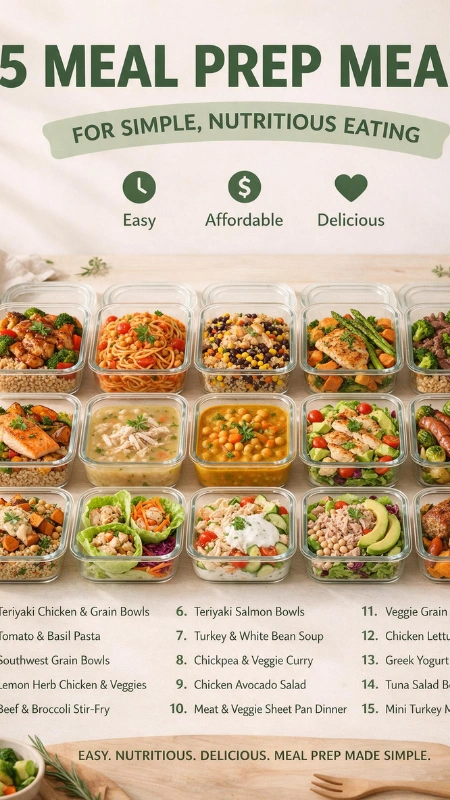
In this guide, you will find 15 healthy meal prep meals, ingredient suggestions, preparation tips, a five-day lunch plan, and practical food storage advice.
Best Meal Prep Meals
What Makes a Good Meal Prep Meal?
Not every recipe works equally well when prepared ahead of time. Some foods lose their texture quickly, while others taste just as good or even better after their flavors have had time to develop.
When choosing meals to prepare in advance, look for these qualities.
1. Ingredients That Hold Their Texture
Roasted vegetables, cooked grains, beans, lentils, and many baked proteins work well in prepared meals. Keep delicate greens, crunchy toppings, and fresh garnishes separate until serving.
2. A Balance of Protein, Carbohydrates, and Vegetables
A practical meal can include:
- Protein: chicken, fish, eggs, tofu, beans, lentils, or lean turkey.
- Carbohydrates: brown rice, quinoa, oats, potatoes, or whole-grain bread.
- Vegetables: broccoli, carrots, spinach, peppers, zucchini, or seasonal produce.
- Healthy fats: olive oil, nuts, seeds, avocado, or a suitable dressing.
You can adjust portions and ingredients to suit your appetite, preferences, and nutritional needs.
3. Simple Ingredients That Work in Multiple Recipes
Buying ingredients that can be used in several meals helps reduce food waste. For example, cooked chicken can become a rice bowl, a wrap, or a salad topping.
4. Convenient Storage and Reheating
Choose recipes that fit your available containers and refrigerator space. Meals with sauces may be easier to store when the sauce is kept separately.
15 Healthy Meal Prep Meals to Try
These ideas include breakfasts, lunches, dinners, and plant-based options. Most can be adapted to different budgets, dietary preferences, and ingredient availability.
1. Chicken, Brown Rice, and Roasted Vegetables
This classic combination is a useful starting point for anyone new to meal preparation.
Ingredients for approximately four servings:
- 4 small boneless chicken breasts
- 1 cup dry brown rice
- 2 cups broccoli florets
- 2 carrots, sliced
- 1–2 tablespoons olive oil
- Garlic, paprika, black pepper, and a little salt
- Lemon juice, to taste
How to prepare it:
- Cook the brown rice according to the package instructions.
- Season the chicken with garlic, paprika, pepper, and a little olive oil.
- Arrange the broccoli and carrots on a baking tray and roast until tender.
- Cook the chicken until its thickest part reaches 165°F (74°C).
- Divide the rice, chicken, and vegetables among four containers.
Meal prep tip: Change the seasoning each week. Lemon and herbs, mild curry spices, or paprika and cumin can give the same basic ingredients a different flavor.
2. Turkey and Quinoa Bowls
Quinoa bowls offer a convenient combination of protein, grains, and vegetables.
Ingredients for approximately four servings:
- 1 pound lean ground turkey
- 1 cup dry quinoa
- 2 cups spinach
- 1 cup cherry tomatoes, halved
- 1 small cucumber, chopped
- Lemon juice and olive oil
- Black pepper, garlic, and dried herbs
How to prepare it:
- Rinse the quinoa if the package instructions recommend it, then cook it.
- Brown the turkey in a skillet with garlic and your preferred seasonings.
- Allow the cooked ingredients to cool slightly.
- Divide the quinoa and turkey into containers.
- Add the vegetables and store any dressing separately.
Meal prep tip: Add fresh cucumber and dressing just before eating if you prefer a crisp texture.
3. Baked Salmon with Sweet Potatoes and Asparagus
This meal combines fish with vegetables and a filling carbohydrate source.
Ingredients for four servings:
- 4 salmon fillets
- 2 medium sweet potatoes, cubed
- 1 bunch asparagus, trimmed
- 1 tablespoon olive oil
- Lemon wedges
- Black pepper, garlic, and dried herbs
How to prepare it:
- Heat the oven and prepare a baking tray.
- Toss the sweet potatoes with olive oil and seasoning, then roast until nearly tender.
- Add the asparagus and salmon, allowing each ingredient to cook appropriately.
- Cook the salmon to an internal temperature of 145°F (63°C).
- Divide into containers and refrigerate promptly.
Meal prep tip: Fish is often best prepared for the first few days of your plan. Freeze portions you will not use within the recommended refrigerator storage period.
4. Chickpea and Spinach Curry
This plant-based curry is filling, versatile, and convenient for batch cooking.
Ingredients for four servings:
- 2 cans chickpeas, drained and rinsed
- 1 can chopped tomatoes
- 1 can light coconut milk, if desired
- 1 onion, chopped
- 2 cups spinach
- Curry powder, garlic, and ginger
- Cooked brown rice for serving
How to prepare it:
- Soften the onion in a saucepan with a little oil.
- Add garlic, ginger, and curry powder.
- Stir in the tomatoes, chickpeas, and coconut milk.
- Simmer until the flavors combine and the sauce thickens.
- Add the spinach near the end and serve with rice.
Meal prep tip: This curry can be portioned and frozen. Store rice separately if you prefer to control portions or preserve its texture.
5. Egg and Vegetable Breakfast Muffins
These small baked egg portions make breakfast easier on busy mornings.
Ingredients for approximately six portions:
- 8 eggs
- 1 cup chopped bell peppers
- 1 cup chopped spinach
- ¼ cup grated cheese, optional
- Black pepper and dried herbs
- A little oil for the muffin pan
How to prepare it:
- Heat the oven and lightly grease a muffin pan.
- Beat the eggs with the seasonings.
- Divide the vegetables among the muffin cups.
- Pour in the egg mixture and add cheese if desired.
- Bake until the eggs are fully set.
Meal prep tip: Refrigerate the cooked muffins promptly. Freeze portions you will not eat within three to four days, and reheat thoroughly before serving.
6. Beef and Broccoli Stir-Fry
A homemade stir-fry can provide a satisfying alternative to restaurant takeout.
Ingredients:
- Thinly sliced lean beef
- Broccoli florets
- Cooked brown rice
- Garlic and fresh ginger
- Reduced-sodium soy sauce or a suitable alternative
- A little oil and water or broth
How to prepare it:
Cook the beef in a hot skillet, set it aside, and cook the broccoli until tender-crisp. Add the garlic, ginger, and sauce, then return the beef to the pan. Serve with cooked rice.
Meal prep tip: Keep the sauce moderate so the vegetables do not become overly soft during storage.
7. Shrimp and Cauliflower Rice Bowls
This option works well when you want a lighter meal with plenty of vegetables.
Ingredients:
- Peeled shrimp
- Riced cauliflower
- Bell peppers
- Frozen peas, optional
- Garlic, lemon juice, and black pepper
- Olive oil
How to prepare it:
Sauté the vegetables until tender, cook the shrimp until opaque and fully cooked, and season with garlic and lemon. Divide the mixture into containers.
Meal prep tip: Shrimp is delicate, so avoid overcooking it. Refrigerate promptly and use it within the recommended storage period.
8. Greek-Inspired Chicken Wraps
These wraps are convenient for lunches, picnics, or meals on the go.
Ingredients:
- Cooked chicken, sliced
- Whole-wheat wraps
- Chopped cucumber and tomatoes
- Lettuce
- Plain yogurt, lemon juice, and dried herbs
- Feta cheese, optional
How to prepare it:
Mix the yogurt with lemon and herbs to make a simple dressing. Store the chicken, vegetables, dressing, and wraps separately.
Meal prep tip: Assemble the wrap shortly before eating to prevent the bread from becoming soggy.
9. Lentil and Vegetable Soup
Lentil soup is an affordable option that can be prepared in a large batch.
Ingredients:
- 1 cup dry lentils, rinsed
- 1 onion, chopped
- 2 carrots, chopped
- 2 celery stalks, chopped
- Chopped tomatoes
- Vegetable broth or water
- Cumin, black pepper, and garlic
How to prepare it:
Cook the onion, carrots, and celery in a pot. Add the lentils, tomatoes, broth, and seasonings. Simmer until the lentils are tender, adding more liquid if needed.
Meal prep tip: Divide the soup into shallow containers so it cools more quickly, then refrigerate or freeze promptly.
10. Overnight Oats with Fruit
Overnight oats are a simple breakfast that requires little preparation in the morning.
Ingredients for one serving:
- ½ cup rolled oats
- ½ cup milk or an unsweetened fortified alternative
- ¼ cup plain yogurt, optional
- Chopped fruit or berries
- Cinnamon
- Chia seeds or nuts, optional
How to prepare it:
Combine the oats, milk, and yogurt in a covered container. Refrigerate over time, then add fruit and other toppings before eating.
Meal prep tip: Prepare a few individual portions at a time and keep them refrigerated. Add crunchy toppings just before serving.
11. Chicken Burrito Bowls
Burrito bowls make it easy to use the same ingredients in different combinations.
Ingredients:
- Cooked chicken
- Brown rice
- Black beans, rinsed and drained
- Corn
- Chopped tomatoes
- Bell peppers
- Lime juice and cumin
How to prepare it:
Cook the rice and chicken, warm the beans and corn, and prepare the vegetables. Divide the ingredients into containers and season with lime and cumin.
Meal prep tip: Keep salsa, avocado, and other fresh toppings separate until serving.
12. Tofu and Vegetable Stir-Fry
This is a flexible vegetarian meal that works with a wide range of vegetables.
Ingredients:
- Firm tofu, pressed and cubed
- Broccoli
- Bell peppers
- Carrots
- Cooked brown rice or noodles
- Garlic, ginger, and a suitable stir-fry sauce
How to prepare it:
Pat the tofu dry and cook it in a skillet until lightly golden. Add the vegetables and stir-fry until tender-crisp. Toss with the sauce and serve with rice or noodles.
Meal prep tip: Store the sauce separately if you want the tofu to retain more of its texture.
13. Zucchini and Whole-Wheat Pasta
Pasta can be part of a balanced meal when paired with vegetables and a suitable protein source.
Ingredients:
- Whole-wheat pasta
- Zucchini, sliced
- Cherry tomatoes
- Garlic
- Olive oil
- Grated Parmesan, optional
- White beans or cooked chicken, optional
How to prepare it:
Cook the pasta according to the package instructions. Sauté the zucchini and tomatoes with garlic, then combine with the pasta and your chosen protein.
Meal prep tip: Store a little extra sauce separately if the pasta tends to absorb liquid during refrigeration.
14. Mason Jar Chickpea Salads
Layered salads offer a convenient way to prepare lunches without heating them.
Ingredients:
- Cooked chickpeas
- Chopped cucumber
- Cherry tomatoes
- Grated carrots
- Feta cheese, optional
- Leafy greens
- Lemon and olive oil dressing
How to prepare it:
Place the dressing at the bottom of a clean jar, followed by chickpeas and firmer vegetables. Add the greens at the top and seal the container.
Meal prep tip: Keep the jar refrigerated and mix the salad just before eating. If you prefer, use a regular airtight container instead.
15. Slow Cooker Bean and Turkey Chili
Chili is a practical option for batch cooking because it can be portioned and frozen.
Ingredients:
- Lean ground turkey, browned
- Kidney beans or black beans
- Chopped tomatoes
- Onion and bell pepper
- Chili powder, cumin, and garlic
- Water or low-sodium broth as needed
How to prepare it:
Brown the turkey first. Add it to a slow cooker with the beans, tomatoes, vegetables, and seasonings. Cook according to the appliance instructions until the ingredients are thoroughly cooked and the flavors have combined.
Meal prep tip: Portion the chili into individual containers. Serve with rice, a baked potato, or a side salad for variety.
How to Prepare Meals Efficiently
You do not need to cook 15 different recipes every week. Choose two or three that share ingredients, then prepare them in a planned session.
Step 1: Choose Two Protein Sources
Select options that suit your preferences and budget, such as chicken and beans, turkey and tofu, or fish and lentils.
Step 2: Choose Two Carbohydrate Sources
Cook a suitable grain or prepare potatoes. Rice, quinoa, oats, and potatoes can be used in different meals throughout the week.
Step 3: Prepare Three or Four Vegetables
Choose vegetables that can be roasted, steamed, or eaten raw. Frozen vegetables can also be useful when fresh produce is expensive or unavailable.
Step 4: Cook Ingredients in a Logical Order
Start with foods that take the longest to cook, such as grains or roasted vegetables. Prepare other ingredients while they cook, and assemble the containers after the food has cooled enough for safe handling.
Step 5: Make Each Meal Easy to Identify
Label containers with the meal name and preparation date. Keep sauces and delicate toppings separate when appropriate.
For more help organizing your schedule, read our guide to how to plan weekly meals.
You can also find more family-friendly ideas in our guide to weekly menu ideas for cooking.
How to Store Meal Prep Safely
Good storage is just as important as choosing the right recipes. Even well-prepared meals can become unsafe if they remain at room temperature for too long.
Refrigerator Guidelines
- Keep your refrigerator at 40°F (4°C) or below.
- Refrigerate perishable food within two hours of cooking, or within one hour when the temperature is above 90°F (32°C).
- Use shallow containers to help food cool quickly.
- Eat refrigerated cooked leftovers within three to four days.
- Reheat leftovers to 165°F (74°C), checking the temperature with a food thermometer where appropriate.
- Follow any shorter storage instructions provided for a specific ingredient or product.
For more information, consult the USDA’s guide to leftovers and food safety.
Freezer Guidelines
Freezing is useful when you have prepared more food than you can eat within a few days.
- Freeze extra portions promptly rather than waiting until the end of the refrigerator storage period.
- Use freezer-safe containers or bags.
- Label each portion with its name and freezing date.
- Leave room for expansion when storing soups and sauces.
- Thaw food safely in the refrigerator, in cold water using appropriate precautions, or in the microwave.
- Reheat food thoroughly after thawing.
Frozen food generally remains safe while continuously frozen, although its quality can decline over time. For best results, follow the USDA’s storage guidance for the type of food you are freezing.
Common Meal Prep Mistakes
Preparing Too Many Recipes at Once
Cooking an entirely different dish for every meal can make preparation expensive and tiring.
A better approach: Start with two or three recipes and reuse ingredients in different ways.
Forgetting Seasoning and Flavor
Plain food can become repetitive after a few days.
A better approach: Use lemon juice, garlic, herbs, spices, and separate sauces to vary the flavor without changing every recipe.
Mixing Ingredients That Become Soggy
Dressings, crunchy toppings, and delicate greens may lose their texture during storage.
A better approach: Store them separately and combine them just before eating.
Preparing More Food Than You Can Safely Store
Large batches can create unnecessary waste if you cannot eat or freeze them in time.
A better approach: Estimate how many meals you actually need, refrigerate the portions you will eat soon, and freeze the rest promptly.
Ignoring Variety
Eating the same meal every day can become boring.
A better approach: Rotate proteins, vegetables, grains, and seasonings. You can keep the same basic recipe while changing the flavor profile.
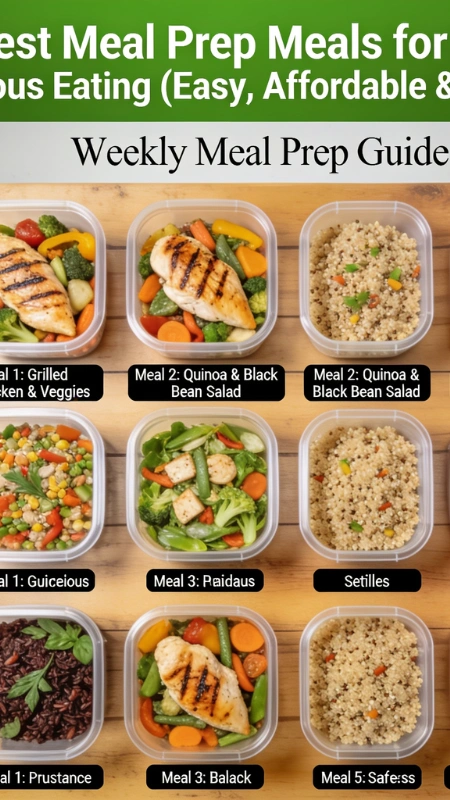
A Simple Five-Day Meal Prep Plan
Here is an example of how to combine a few of the recipes in this guide. Adjust the portions and ingredients to suit your household.
| Day | Lunch | Dinner |
|---|---|---|
| Monday | Chicken, brown rice, and vegetables | Chickpea and spinach curry |
| Tuesday | Chicken burrito bowl | Salmon with sweet potatoes |
| Wednesday | Greek-inspired chicken wrap | Beef and broccoli stir-fry |
| Thursday | Lentil and vegetable soup | Tofu and vegetable stir-fry |
| Friday | Mason jar chickpea salad | Turkey and bean chili |
This is a flexible example, not a strict dietary prescription. You can substitute ingredients, use leftovers, or prepare fewer meals if you prefer to cook fresh food during the week.
For additional quick meal inspiration, visit our guide to easy healthy meals for busy days.
Frequently Asked Questions
What are the best meal prep meals for busy weekdays?
Meals that are easy to portion and store are good choices. Examples include chicken and rice bowls, lentil soup, chickpea curry, turkey chili, overnight oats, and tofu stir-fry. Choose recipes you enjoy and can prepare with ingredients that fit your budget.
How long do prepared meals last in the refrigerator?
Many cooked leftovers can be refrigerated for three to four days when stored promptly at 40°F (4°C) or below. Some foods may have different recommendations, so follow relevant food-safety guidance. Freeze portions that you will not eat within the recommended period.
Can meal prep meals be frozen?
Yes. Soups, chili, curries, cooked grains, and many cooked proteins freeze well. Use freezer-safe containers, label the portions, and thaw and reheat them safely. Fresh salads and some vegetables may change texture after freezing.
How many meals should I prepare at once?
Start with enough food for two or three days, then adjust according to your schedule, storage space, and preferences. Preparing a smaller amount can make it easier to keep meals fresh and avoid food waste.
Are meal prep meals suitable for weight management?
Preparing meals can make portions and ingredients easier to plan, but no single meal supports weight loss. A balanced eating pattern, appropriate portions, personal needs, and overall habits all matter. Choose meals that are satisfying and sustainable for you.
Do I need special containers for meal prep?
No. Clean, food-safe containers with secure lids are usually sufficient. Choose sizes that suit your portions and use freezer-safe containers when freezing food. Glass and suitable food-grade plastic are both common options.
Make Healthy Eating Easier This Week
Meal preparation does not have to be complicated. A few well-chosen recipes can help you make better use of your time, use groceries more efficiently, and keep convenient meals available when life gets busy.
Start with two recipes from this list. Make a shopping list, prepare the ingredients, and store the portions you will use soon in the refrigerator. Freeze any extra portions that you will not eat within the recommended storage period.
Once you find a routine that works for you, add more variety gradually. The goal is not to prepare every meal perfectly. It is to build a practical system that makes balanced eating easier to maintain.
Choose your first two meal prep meals, gather your ingredients, and make a simple plan for the week ahead.
Disclaimer: This article is for general educational purposes and is not medical or professional advice. Please consult a qualified healthcare professional before making changes to your diet, exercise, or health routine. See our Medical Disclaimer.