
You know that moment. It’s late afternoon. You’re tired. Everyone’s hungry. You open the fridge, stare blankly, and silently wish dinner would cook itself.
It’s not that you don’t care about eating well. You do. But between work, family, errands, and everything else on your plate, food decisions become one more mental burden. That daily “what’s for dinner?” question drains more energy than it should.
Table of Contents
This is where a food schedule template changes everything.
When you use a structured food schedule template for organized meal prep and planning, you stop reacting to hunger and start running your kitchen with intention. You save time. You waste less. You eat better. And you feel more in control of your week.
Let’s walk through how you can build and use one effectively.
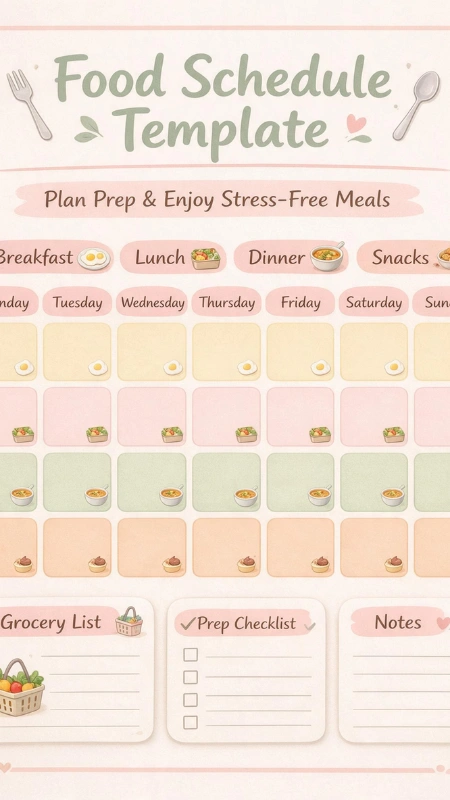
What Is a Food Schedule Template?
A food schedule template is a structured layout that organizes:
- Your weekly or monthly meals
- Grocery planning
- Meal prep sessions
- Portion distribution
- Nutritional goals
Think of it as your personal roadmap for meals. Instead of improvising daily, you decide once and execute smoothly.
Why It Works
When you plan meals ahead:
- You reduce decision fatigue.
- You minimize impulse takeout orders.
- You align meals with your health goals.
- You create consistency.
According to research on behavioral psychology and habit formation, reducing daily decisions increases follow-through. When your meals are pre-decided, you’re far more likely to stick to healthy habits.
Why You Need a Food Schedule Template
1. You Save Hours Every Week
Without a plan:
- You browse recipes randomly.
- You shop without structure.
- You cook from scratch every night.
With a food schedule template:
- Grocery trips become targeted and faster.
- Batch cooking reduces weekday prep time.
- You eliminate repetitive thinking.
Many meal planners report saving 3–5 hours per week just by organizing meals in advance.
2. You Spend Less on Groceries
Impulse buying decreases when you shop with purpose.
A structured template helps you:
- Buy only what you need.
- Plan meals around ingredients already in your pantry.
- Use leftovers strategically.
- Avoid duplicate purchases.
Food waste statistics show that households throw away a significant portion of purchased groceries. Planning reduces that dramatically.
3. You Eat Healthier Without Overthinking It
When you don’t plan, convenience wins. And convenience often means processed, high-calorie options.
With a food schedule template, you can:
- Balance proteins, carbs, and healthy fats.
- Add more vegetables intentionally.
- Control portions.
- Align meals with fitness goals.
Instead of hoping you’ll eat well, you design it.
How to Create Your Own Food Schedule Template
You don’t need complicated software. You need structure.
Step 1: Choose Your Format
Pick what fits your lifestyle:
- Printable weekly planner
- Google Sheets or Excel
- Notion template
- Meal planning app
- Simple notebook
Digital tools offer flexibility. Paper planners offer visibility. Choose the one you’ll actually use.
Step 2: Map Out Your Week Realistically
Look at your calendar first.
Ask yourself:
- Which days are busiest?
- When will you have time to cook?
- Are there social events?
- Will leftovers help mid-week?
Then structure your template like this:
- Breakfast
- Lunch
- Dinner
- Snacks
- Prep day
Be honest. Planning elaborate meals on your busiest workday sets you up for failure.
Step 3: Pick Core Meals Strategically
Instead of planning seven unique dinners, try:
- 3 main dinner recipes
- 1 leftover night
- 1 quick emergency meal
- 1 flexible or takeout night
This reduces pressure and increases success.
Step 4: Build a Categorized Grocery List
Organize by sections:
- Produce
- Proteins
- Dairy
- Grains
- Pantry
- Frozen
This mirrors how stores are laid out, saving you time while shopping.
Step 5: Schedule Meal Prep Time
Pick one main prep window:
- Sunday afternoon
- Wednesday evening refresh
- Split prep sessions
During prep time:
- Wash and chop vegetables.
- Cook grains in bulk.
- Marinate proteins.
- Portion snacks.
Prep once. Benefit all week.
Sample Weekly Food Schedule Template
Here’s a simple example you can replicate.
| Day | Breakfast | Lunch | Dinner | Snacks |
|---|---|---|---|---|
| Monday | Oatmeal & Fruit | Chicken Salad | Veggie Stir Fry | Greek Yogurt |
| Tuesday | Smoothie | Turkey Wrap | Baked Salmon & Rice | Almonds |
| Wednesday | Eggs & Toast | Quinoa Bowl | Chicken Tacos | Apple Slices |
| Thursday | Overnight Oats | Leftovers | Pasta Primavera | Protein Bar |
| Friday | Avocado Toast | Tuna Salad | Homemade Pizza | Dark Chocolate |
| Day | Breakfast | Lunch | Dinner | Snacks |
|---|---|---|---|---|
| Saturday | Greek Yogurt & Fruit | Chickpea Salad | Baked Chicken & Vegetables | Nuts |
| Sunday | Eggs & Whole-Grain Toast | Leftover Chicken Bowl | Lentil Soup & Whole-Grain Bread | Apple Slices |
You can customize this food schedule template for calories, macros, or family preferences.
Meal Prep Recipes for Your Food Schedule Template
Below are two reliable meal prep options that work well in any weekly plan.
Grilled Chicken Power Bowl
Ingredients
| Ingredient | Quantity |
|---|---|
| Chicken breast | 2 lbs |
| Brown rice | 2 cups |
| Broccoli | 3 cups |
| Olive oil | 2 tbsp |
| Garlic powder | 1 tsp |
| Salt & pepper | To taste |
Instructions
- Season chicken and grill or bake.
- Cook brown rice in bulk.
- Steam broccoli.
- Divide into containers.
Divide the chicken, brown rice, and broccoli into individual containers according to your portion needs. The total number of servings will depend on the portion sizes.
Overnight Oats for Meal Prep
Ingredients (Per Jar)
| Ingredient | Quantity |
|---|---|
| Rolled oats | ½ cup |
| Chia seeds | 1 tbsp |
| Almond milk | ¾ cup |
| Honey | 1 tsp |
| Berries | ½ cup |
Instructions
- Add the rolled oats, chia seeds, almond milk, and honey to a clean jar or airtight container.
- Stir well, cover, and refrigerate over time.
- Add the berries before serving for better freshness and texture.
- Keep the jars refrigerated at 40°F (4°C) or below.
- For meal prep, prepare only the amount you can use within 3–4 days. If you need breakfasts for the rest of the week, prepare a fresh batch midweek.
Food Safety Tip: Keep overnight oats refrigerated and do not leave them at room temperature for extended periods. Discard any portion that has been stored improperly or shows signs of spoilage. For general food-storage guidance, consult the FoodSafety.gov Cold Food Storage Chart.
Food Schedule Template for Different Lifestyles
Your template should reflect your reality.
For Families
- Include kid-approved meals.
- Plan bulk cooking.
- Assign meal responsibilities.
- Add snack planning for school lunches.
For Weight Loss
Enhance your food schedule template by adding:
- Calorie column
- Protein target
- Portion size notes
- Weekly progress check-in
Structure increases accountability.
For Busy Professionals
Focus on:
- 30-minute dinners
- Slow cooker recipes
- Minimal ingredients
- Repeatable breakfasts
Consistency beats complexity.
Common Mistakes to Avoid
Even the best food schedule template fails if you:
- Overcomplicate meals.
- Ignore leftovers.
- Skip prep day.
- Plan meals you don’t enjoy.
- Forget pantry inventory checks.
Your system should make life easier—not feel like a second job.
How to Stay Consistent With Your Food Schedule Template
Keep It Flexible
Life happens. If Tuesday’s dinner becomes Wednesday’s, that’s fine. The template is a guide—not a rigid rulebook.
Use Theme Nights
- Meatless Monday
- Taco Tuesday
- Pasta Wednesday
- Stir-Fry Friday
Themes simplify decision-making.
Prep Ingredients Instead of Full Meals
Sometimes chopping vegetables and cooking grains is enough. You don’t need fully assembled dishes every time.
FAQ About Food Schedule Template
What is the best food schedule template for beginners?
The best food schedule template for beginners is a simple weekly grid with breakfast, lunch, dinner, and snack sections. Keep it minimal at first. You can always add details later.
How often should you update your food schedule template?
Most people update their food schedule template weekly. If you prefer bulk planning, you can outline dinners for the month and rotate breakfasts and lunches.
Can a food schedule template help with weight loss?
A food schedule template can support weight management by helping you plan balanced meals, organize grocery shopping, and make more deliberate food choices. However, a schedule alone does not support weight loss. Results depend on your overall eating habits, activity level, individual needs, and consistency.
Is a printable or digital food schedule template better?
If you like visual reminders on your fridge, printable works well. If you prefer editing flexibility and automation, digital is better. The right choice is the one you’ll consistently use.
The Benefits of Using a Food Schedule Template
A food schedule template can make weekly meal planning easier and more organized. By deciding what to cook before shopping, you can create a more focused grocery list, use ingredients you already have, and reduce last-minute meal decisions.
With regular use, your schedule may help you:
- Organize grocery shopping around planned meals.
- Prepare ingredients ahead of busy weekdays.
- Make balanced meals a more consistent part of your routine.
- Use perishable ingredients before they spoil.
- Reduce the stress of deciding what to cook each day.
The benefits depend on your household needs, cooking habits, and how consistently you use the schedule. Start with a simple plan and adjust it as you learn what works best for you.
Your Next Step: Start This Week
Don’t wait for the perfect template.
Here’s what you can do right now:
- Write down 5 dinners you already know how to cook.
- Assign them to next week.
- Build a grocery list from those meals.
- Schedule one prep session.
- Try it for seven days.
That’s it.
Once you experience how much smoother your week feels, you won’t want to go back.
Final Thoughts
A food schedule template is a practical way to organize meals, plan grocery shopping, and prepare for a busy week. It does not need to be complicated or perfect to be useful.
Start by planning a few familiar meals, make a grocery list based on your plan, and set aside time to prepare ingredients when convenient. At the end of the week, review what worked and make adjustments for the following week.
Choose a printable or digital format that fits your routine, and keep your schedule flexible enough to accommodate leftovers, changing plans, and your household’s needs.
Start with one week and build a meal-planning routine that works for you.
Disclaimer: This article is for general educational purposes and is not medical or professional advice. Please consult a qualified healthcare professional before making changes to your diet, exercise, or health routine. See our Medical Disclaimer.