It’s 5:30 PM. You’ve just walked through the door after a long day. Your brain is fried, your feet ache, and the last thing you want to do is stand over a hot stove. You open the refrigerator hoping for inspiration, but all you see is a half-used jar of salsa, some wilting spinach, and leftovers from three days ago that you’re no longer sure are safe to eat. The panic sets in. Do you spend another twenty dollars on takeout? Do you try to cobble together a meal that nobody will really enjoy?
Table of Contents
We have all been there. That moment of decision fatigue is exhausting. It often leads to choices that don’t align with your health goals or your budget. But imagine a different scenario. Imagine coming home to a kitchen where dinner is already portioned out, ready to heat, and actually tastes good. Imagine knowing exactly what you are eating for the next three days. This isn’t a fantasy; it is the result of knowing how to create a meal prep plan.
Meal prepping isn’t about eating plain chicken and broccoli for every meal until you quit in a week. It is about buying back your time. It is about reducing the mental load of deciding what to eat so you can focus on living your life. If you are ready to stop the 5 PM panic and start enjoying your evenings again, you are in the right place. Let’s walk through the simple steps to planning meals, choosing recipes, and organizing groceries so you can master your kitchen.
Why Bother? The Real Benefits of Meal Prepping
Before diving into the logistics, you need to understand why this effort is worth it. When you are tired, motivation is scarce. Knowing the tangible benefits can keep you going when you want to skip the planning session.
Reclaiming Your Time
Think about how much time you spend cooking during a typical week. If you cook dinner from scratch every night, plus pack lunches, you could be spending ten hours or more in the kitchen. When you learn how to create a meal prep plan, you batch those tasks. Chopping vegetables once for three meals saves significant time. Cooking a large batch of grains on Sunday means you don’t have to boil water on Wednesday night. Studies on time management suggest that batching similar tasks reduces the “switching cost” of your brain, making you more efficient. You aren’t just saving cooking time; you are saving cleanup time too.
Financial Freedom and Reduced Waste
Have you ever looked at your grocery receipt and wondered where the money went? Impulse buys are the budget killer. When you shop without a plan, you buy things you don’t need. Worse, you buy fresh produce that sits in the crisper drawer until it turns into slime. Food waste is a massive financial drain. According to USDA data, the average household throws away a significant portion of the food they buy. By planning exactly what you need, you only buy what you will eat. This simple shift can save hundreds of dollars a month.
Healthier Choices, Less Stress
When hunger strikes and there is no food ready, convenience wins. Usually, that means high sodium, high sugar, and low nutrition. Prepping your meals puts you in control of the ingredients. You decide the portion sizes. You decide the amount of salt. Beyond the physical health benefits, there is a mental health component. Removing the daily question of “What’s for dinner?” reduces decision fatigue. That mental space can be used for relaxation, hobbies, or spending time with family.
Step-by-Step: How to Create a Meal Prep Plan
Now that you know why this matters, let’s get into the mechanics. You don’t need to be a chef to do this. You just need a system.
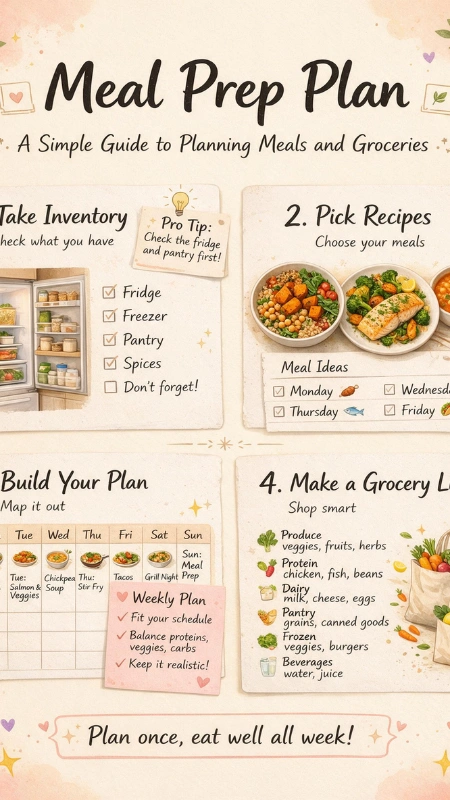
Step 1: Assess Your Schedule
Realism is the key to consistency. A common mistake is planning for a perfect week when you live in an imperfect world. Look at your calendar for the upcoming week.
- Identify Busy Nights: If you have late meetings or kids’ activities on Tuesday and Thursday, do not plan a cook-from-scratch meal for those nights. Plan for leftovers or quick assemblies.
- Count Your Meals: Do you need breakfast, lunch, and dinner? Or just lunches for work? Be honest about how many meals you actually eat at home versus out.
- Check Your Pantry: Before writing a single recipe, see what you already have. That can of beans or bag of rice needs to be used before you buy more.
Step 2: Choose Your Recipes Wisely
This is where most people get stuck. There are too many options. To simplify how to create a meal prep plan, use a strategy to narrow down your choices.
The Rule of Three
Try to select recipes that share ingredients. If one meal requires a whole bunch of cilantro and another requires two sprigs, you are left with waste. If your lunch bowl uses chicken breast and your dinner stir-fry uses chicken breast, you can cook it all at once. This minimizes waste and simplifies your shopping list.
Balance Macros and Flavors
Boredom is the enemy of meal prep. If you eat the same texture and flavor profile every day, you will crave takeout by Wednesday.
- Mix Textures: Combine something crunchy (like roasted veggies) with something soft (like grains or beans).
- Vary Proteins: Don’t just use chicken. Mix in eggs, tofu, lentils, or fish.
- Sauce Matters: A bland chicken breast is sad. A chicken breast with a spicy peanut sauce or a zesty lemon vinaigrette is a meal. Prepare sauces separately so your food doesn’t get soggy.
Step 3: Block Time for Prep
You cannot prep if you don’t schedule it. Treat this time like a doctor’s appointment.
- The Power Hour: Many people find Sunday afternoon works best. Dedicate one to two hours.
- Prep vs. Cook: You don’t have to fully cook everything. You can wash and chop veggies, marinate proteins, and cook grains. Then, during the week, you just assemble and heat. This keeps food fresher.
- Involve Others: If you have a partner or older children, assign tasks. One person chops, one person cooks. It cuts the time in half.
Sample Weekly Menu and Ingredient Table
Seeing is believing. Here is a concrete example of a three-day plan that utilizes overlapping ingredients to maximize efficiency. This table shows how you can structure your planning to minimize waste.
| Meal | Recipe Name | Key Ingredients | Prep Time |
|---|---|---|---|
| Breakfast | Overnight Oats | Rolled oats, chia seeds, berries, almond milk | 5 mins (night before) |
| Lunch | Quinoa Chicken Bowl | Grilled chicken, quinoa, spinach, lemon dressing | 30 mins (batch cook) |
| Dinner | Roasted Veggie Stir-Fry | Tofu or Chicken, broccoli, bell peppers, soy sauce | 25 mins |
| Snack | Apple & Nut Butter | Apples, almond butter | 2 mins |
| Grocery Overlap | Protein: Chicken Breast (used in Lunch & Dinner) Veg: Broccoli (used in Dinner & Snack sides) |
In this example, you buy a large pack of chicken. Half is grilled for the lunches, and the other half is cubed for the dinners. The broccoli is roasted for dinner, and any extra can be steamed for a side snack. This overlap is the secret to efficient planning.
Organizing Groceries: From List to Cart
Once your plan is set, you need to shop. Walking into a store without a strategy is dangerous. The layout of grocery stores is designed to make you impulse buy.
Categorize Your Shopping List
Don’t write your list in the order you think of items. Write it in the order you walk through the store.
- Produce: Fruits and vegetables first.
- Proteins: Meat, fish, tofu, eggs.
- Dairy: Milk, cheese, yogurt.
- Pantry: Grains, spices, canned goods.
- Frozen: Vegetables or backup meals.
This prevents you from backtracking through aisles, which exposes you to more marketing traps. There are great digital apps like AnyList or Bring! that allow you to check off items as you go, so you don’t forget the soy sauce at the bottom of the list.
Stick to the Perimeter
Generally, the outer edges of the grocery store contain the whole foods. The inner aisles are where the processed boxes live. When you learn how to create a meal prep plan focused on health, aim to fill 80% of your cart from the perimeter. You might need rice or oats from the aisles, but keep the processed snacks to a minimum.
Digital Tools vs. Pen and Paper
Use what works for your brain. Some people love the tactile feel of crossing items off a paper note. Others prefer syncing a list with their spouse via an app. The tool doesn’t matter; the consistency does. Just ensure you check your pantry before you leave the house so you don’t buy three jars of cumin.
Storage and Safety: Keeping Food Fresh
There is nothing worse than opening a container on Wednesday to find your lunch has spoiled. Food safety is critical when you are preparing meals in advance.
Choosing the Right Containers
Invest in quality storage. Glass containers are ideal because they don’t stain, they don’t hold odors, and they are microwave-safe. If you use plastic, ensure it is BPA-free. Look for containers with compartments if you like to keep your sauces separate from your grains. Airtight seals are non-negotiable to prevent moisture loss and freezer burn.
Fridge vs. Freezer Guidelines
You need to know the lifespan of your food.
- Cooked Chicken/Beef: Safe in the fridge for 3-4 days.
- Cooked Grains: Safe for 4-5 days.
- Chopped Veggies: Best within 2-3 days.
- Sauces: Usually last 1-2 weeks depending on ingredients.
How Long Does It Last?
If you are prepping for a full week (5 days), you should freeze the meals for Thursday and Friday on Sunday night. Move them to the fridge the night before you plan to eat them. This ensures you aren’t eating food that has been sitting for too long. Always follow USDA food safety guidelines regarding temperature. Never leave cooked food out at room temperature for more than two hours during your prep session.
Labeling Systems
It sounds tedious, but it saves food. Use a piece of masking tape and a marker to write the date on the lid. When you have three similar-looking containers in the fridge, you will know exactly which one needs to be eaten first. This simple habit prevents the “mystery container” syndrome.
Troubleshooting: What If You Fall Off the Wagon?
You will have weeks where life happens. You might get sick, work late, or simply feel too tired to prep. This does not mean you have failed. It means you are human.
Start Small
If the idea of prepping twenty meals is overwhelming, don’t do it. Start with breakfast. Prep five overnight oats. That is five mornings where you don’t have to think. Once that becomes a habit, add lunches. Mastering how to create a meal prep plan is a progression, not a switch you flip overnight.
The “Emergency Meal” Stash
Always keep a backup in the freezer. A frozen pizza, a bag of frozen dumplings, or a pre-made frozen soup can save you when your fresh prep runs out or gets ruined. This prevents the panic order of expensive takeout.
Involve the Family
If you are cooking for others, get them on board. Ask your partner what they want to eat. Let your kids wash the vegetables. When people feel involved in the process, they are more likely to eat the food and less likely to complain. It also lightens your load.
Conclusion: Your Journey to a Calmer Kitchen
Learning how to create a meal prep plan is about more than just food. It is about taking control of your routine. It is about deciding that your time is valuable and your health is a priority. Yes, it requires an upfront investment of time on the weekend. But the return on that investment is evenings free from stress, wallets free from unnecessary spending, and bodies fueled by nutritious food.
You don’t need to be perfect. You just need to start. Pick one meal type for next week. Write down three recipes. Make a list. Go to the store. When you sit down to eat a meal you prepared with intention, you will feel the difference. Your kitchen can be a place of nourishment rather than chaos.
Ready to take back your time? Grab a pen and paper right now. Write down three dinners you enjoy cooking. Check your calendar for next week. Take that first step today, and next Sunday, you’ll be glad you did.
FAQ: Common Questions About Meal Prepping
Here are answers to some of the most common questions people have when starting out.
How do I start if I have no cooking skills?
You do not need to be a chef. Start with “assembly” meals. Think salads, wraps, or bowls where you cook a protein and simply add raw or roasted vegetables. Use store-bought rotisserie chickens or pre-cut veggies to reduce the skill barrier. As you get comfortable, you can learn how to create a meal prep plan that involves more cooking.
Is it safe to eat meal prepped food after 5 days?
Generally, no. For optimal safety and quality, you should aim to eat refrigerated meals within 3 to 4 days. If you need meals for day 5, freeze them immediately after prep and thaw them the night before. Bacteria can grow even in the fridge, so when in doubt, throw it out.
Can I learn how to create a meal prep plan on a budget?
Absolutely. In fact, meal prepping is one of the best ways to save money. Focus on seasonal produce, buy proteins in bulk, and use inexpensive staples like rice, beans, and lentils. Avoid pre-packaged “diet” meals and make them yourself from whole ingredients.
How to create a meal prep plan for weight loss?
Focus on portion control and satiety. Ensure every meal has a source of protein and fiber (vegetables). These keep you full longer. Pre-portioning your snacks is also crucial, as it prevents mindless eating. Calculate your calorie needs beforehand so you know how much to prep.
What are the best containers for freezing meals?
Glass containers with locking lids are excellent, but heavy-duty freezer bags are great for soups and stews. Ensure you squeeze as much air out of the bags as possible to prevent freezer burn. Always label the contents and the date before putting them in the freezer.