
You’ve probably asked yourself this before: How long should I walk to lose weight?
Maybe you’ve started walking in the evenings. Maybe you track your steps and feel proud when you hit 8,000… but then wonder if it’s enough. Or maybe you’re at the very beginning, standing at the edge of a new routine, hoping walking can finally be the simple solution that sticks.
Table of Contents
Here’s the truth: walking can help you lose weight. But the magic isn’t in a random number of minutes. It’s in strategy, consistency, and knowing how to adjust your effort to your goal.
By the time you finish reading this guide, you’ll know:
- Exactly how long you should walk to lose weight
- How many steps actually matter
- How fast you need to go
- What to eat alongside your walking routine
- How long it takes to see visible results
Let’s break it down step by step.
Why Walking Works for Weight Loss
Before answering how long should I walk to lose weight, you need to understand why walking works at all.
Walking is a form of low-impact cardiovascular exercise. That means:
- It increases your heart rate.
- It burns calories.
- It improves circulation and metabolism.
- It reduces stress (which directly affects fat storage).
Unlike extreme workouts, walking doesn’t shock your body. You’re more likely to stick with it long term—and long-term consistency is what leads to real fat loss.
The Calorie Equation (Simple and Honest)
Weight loss comes down to one principle:
You must burn more calories than you consume.
Roughly speaking:
- 1 pound of body fat = about 3,500 calories.
- A daily 500-calorie deficit = around 1 pound lost per week.
Walking helps you create part of that deficit.
For example:
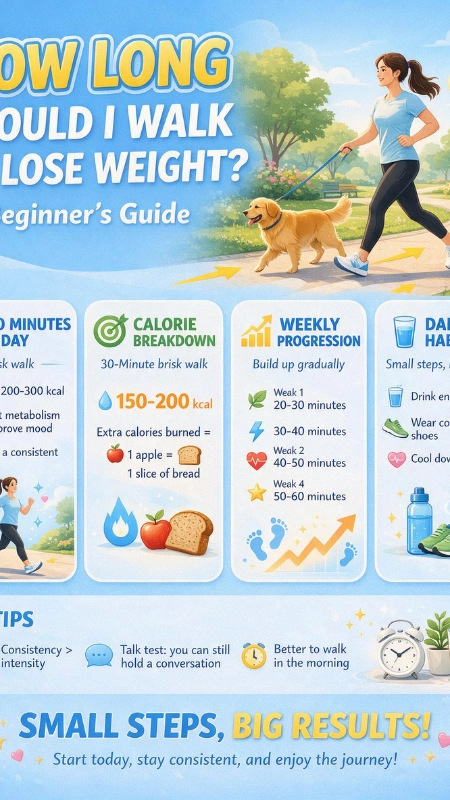
- A 155-pound person burns about 140–170 calories walking briskly for 30 minutes.
- Heavier individuals burn more.
- Lighter individuals burn slightly less.
That means walking alone won’t fix everything—but it can absolutely move the scale in your favor when combined with smart eating.
How Long Should I Walk to Lose Weight? (The Clear Answer)
Let’s get specific.
“To achieve healthy weight loss and long-term maintenance, aligning your routine with CDC physical activity guidelines recommends aiming for at least 150 to 300 minutes of moderate-intensity walking per week.”
If You’re a Beginner
Start here:
- ✅ 30 minutes per day
- ✅ 5 days per week
- ✅ Brisk pace
That gives you 150 minutes per week, which aligns with CDC recommendations for moderate activity.
This level can help you:
- Maintain weight
- Begin gradual fat loss
- Improve cardiovascular health
If you’re currently inactive, even 20 minutes a day is a powerful starting point. You can increase over time.
Walking Duration Based on Your Goal
Your ideal walking time depends on what you’re trying to achieve.
1. For Mild Weight Loss (0.5 lb per week)
- 30–40 minutes per day
- 8,000–10,000 steps daily
- Slight calorie reduction (300/day)
This approach is sustainable and ideal if you want steady, low-stress progress.
2. For Faster Weight Loss (1–2 lbs per week)
If you’re asking, how long should I walk to lose weight quickly?, here’s your answer:
- 45–60 minutes per day
- 10,000–12,000+ steps
- Structured calorie control
- Brisk or incline walking
At this level, you may burn 300–400 calories per session depending on your weight and speed.
3. If You’re Overweight or Obese
Start slower:
- 15–20 minutes daily
- Gradually increase by 5 minutes each week
- Focus on consistency, not intensity
Your joints and muscles need time to adapt. What matters most is building the habit.
How Many Steps Per Day to Lose Weight?
The 10,000-step rule is popular—but it’s not magic.
Here’s what research suggests:
- 7,000–8,000 steps: Strong health benefits
- 8,000–10,000 steps: Supports moderate weight loss
- 12,000+ steps: Higher calorie burn
If you’re wondering whether 10,000 steps are necessary, the answer is no—but they help.
“Adopting a brisk walking pace elevates your heart rate into the fat-burning zone, which according to Mayo Clinic walking experts, accelerates calorie burn while protecting your joints.”
How to Increase Your Steps Without Feeling Overwhelmed
- Park farther from entrances.
- Take walking phone calls.
- Walk for 10 minutes after meals.
- Use stairs instead of elevators.
- Schedule short evening walks.
Small decisions add up quickly.
How Fast Should You Walk to Lose Weight?
Duration matters—but intensity matters too.
What Counts as Brisk Walking?
- 3.0–4.0 mph pace
- You can talk, but not sing
- Slightly out of breath
Brisk walking burns significantly more calories than casual strolling.
Power Walking
If you swing your arms and increase pace:
- You engage your core.
- You elevate heart rate faster.
- You burn up to 50% more calories than slow walking.
Incline Walking (Higher Effort)
Adding hills or treadmill incline:
- Activates glutes and hamstrings
- Increases calorie burn dramatically
- Improves cardiovascular endurance
Even a 5–10% incline can make a big difference.
A 4-Week Beginner Walking Plan
If you prefer structure, follow this:
Week 1
- 20 minutes daily
- Comfortable pace
- Focus on habit-building
Week 2
- 30 minutes daily
- Slightly brisk pace
Week 3
- 40 minutes daily
- Add 2–3 short speed bursts (1 minute faster pace)
Week 4
- 45–60 minutes daily
- Include hills or incline
Take at least one rest day per week.
What to Eat While Walking for Weight Loss
Walking alone won’t override poor nutrition. If you eat back every calorie you burn, progress stalls.
Aim for:
- High protein
- High fiber
- Controlled portions
- Whole foods over processed snacks
Simple Calorie Strategy
Reduce daily intake by 300–500 calories while maintaining balanced nutrition.
Sample Weight-Loss Friendly Meals
Breakfast Bowl
| Ingredient | Quantity | Calories | Why It Helps |
|---|---|---|---|
| Rolled oats | ½ cup | 150 | High fiber, keeps you full |
| Chia seeds | 1 tbsp | 60 | Supports satiety |
| Blueberries | ½ cup | 40 | Low-calorie sweetness |
| Almond milk | 1 cup | 30 | Light, dairy-free option |
Lunch Plate
| Ingredient | Quantity | Calories | Why It Helps |
|---|---|---|---|
| Grilled chicken | 4 oz | 180 | Lean protein |
| Quinoa | ½ cup | 110 | Sustained energy |
| Mixed greens | 1 cup | 20 | Volume without calories |
| Olive oil | 1 tbsp | 120 | Healthy fats |
Dinner Option
| Ingredient | Quantity | Calories | Why It Helps |
|---|---|---|---|
| Salmon | 4 oz | 200 | Protein + omega-3 |
| Steamed broccoli | 1 cup | 55 | Fiber-rich |
| Sweet potato | ½ cup | 90 | Balanced carbs |
Common Mistakes That Slow Down Walking Weight Loss
Even if you’re walking daily, these habits can block progress:
- Walking too slowly
- Overestimating calories burned
- Rewarding yourself with high-calorie treats
- Skipping strength training
- Being inconsistent on weekends
Consider adding 2 days of light strength training per week to preserve muscle and boost metabolism.
How Long Does It Take to See Results From Walking?
This part matters because unrealistic expectations ruin motivation.
Week 1–2
- Improved energy
- Reduced bloating
- Better sleep
Week 3–4
- 1–3 pounds lost (if consistent)
- Clothes feel slightly looser
6–8 Weeks
- Visible changes in waistline
- Noticeable endurance increase
3 Months
- Significant fat loss possible
- Walking becomes part of your identity
If the scale doesn’t move immediately, measure:
- Waist circumference
- Progress photos
- How clothes fit
Walking vs Other Cardio
| Activity | Calories Burned (30 mins) | Impact Level | Beginner Friendly |
|---|---|---|---|
| Walking | 120–170 | Low | Yes |
| Jogging | 240–350 | High | Moderate |
| Cycling | 200–300 | Low | Yes |
| HIIT | 300–450 | High | Advanced |
Walking may burn fewer calories per minute, but it’s sustainable—and sustainability wins.
FAQ: How Long Should I Walk to Lose Weight?
How long should I walk to lose weight as a beginner?
Start with 30 minutes per day, 5 days per week. Increase gradually to 45–60 minutes for faster results.
How long should I walk to lose weight if I want to lose 10 pounds?
Aim for:
- 45–60 minutes daily
- 300 minutes per week
- A moderate calorie deficit
Expect roughly 8–12 weeks with consistency.
Can I lose weight by walking 30 minutes a day?
Yes, especially if paired with controlled eating. You can lose about 0.5–1 pound per week depending on your calorie balance.
Is it better to walk longer or faster to lose weight?
Walking faster increases calorie burn in less time. Ideally, combine both longer duration and brisk pace.
The Bottom Line: Just Start Walking
So, how long should you walk to lose weight?
Long enough to create a calorie deficit.
Long enough to stay consistent.
Long enough to make it a lifestyle—not a short experiment.
Start with 20–30 minutes. Build to 45–60. Add intensity when you’re ready. Eat with intention. Track your steps. Stay patient.
You don’t need extreme workouts.
You don’t need complicated plans.
You need consistency.
Your Next Step
Today—not next Monday—commit to:
- A 30-minute walk
- Tracking your steps
- Planning your next healthy meal
Then repeat tomorrow.
If this guide helped you, share it with someone who keeps asking, “How long should I walk to lose weight?”
Your journey starts with one step. Take it.
Disclaimer: This article is for general educational purposes and is not medical or professional advice. Please consult a qualified healthcare professional before making changes to your diet, exercise, or health routine. See our Medical Disclaimer.