
Have you ever noticed how stress sneaks up on you?
It starts small — a tight deadline, a restless night, an unanswered message — and before long, your shoulders feel tense, your thoughts race, and even simple tasks seem overwhelming. You tell yourself you’ll relax later. But later rarely comes.
Table of Contents
If you’re searching for how to relieve stress, you’re already taking an important first step. Stress isn’t a weakness. It’s your body’s built‑in alarm system. The real challenge is learning how to calm that alarm before it runs your life.
In this guide, you’ll discover practical, research-backed, and realistic ways to feel calm and relaxed — without complicated routines or expensive solutions. These are strategies you can start using today.
What Is Stress and Why Does It Affect You So Deeply?
Stress is your body’s natural reaction to pressure or perceived danger. When you feel threatened — physically or emotionally — your nervous system releases hormones like cortisol and adrenaline. Your heart rate increases. Your muscles tighten. Your focus sharpens.
This response is helpful in short bursts. It keeps you alert and ready to act.
But when stress becomes constant, your body stays in “survival mode.” And that’s where problems begin.
Signs You May Need Stress Relief
You might not always recognize stress immediately. It often shows up in subtle ways:
- Frequent headaches or muscle tension
- Irritability or mood swings
- Trouble sleeping
- Digestive discomfort
- Difficulty concentrating
- Feeling overwhelmed by small tasks
According to the American Psychological Association, chronic stress is linked to heart disease, weakened immunity, anxiety disorders, and depression. In other words, learning how to relieve stress isn’t just about comfort — it’s about protecting your long-term health.
How to Relieve Stress Naturally at Home
The good news? You don’t need a complete lifestyle overhaul. Small, consistent habits can shift your nervous system from chaos to calm.
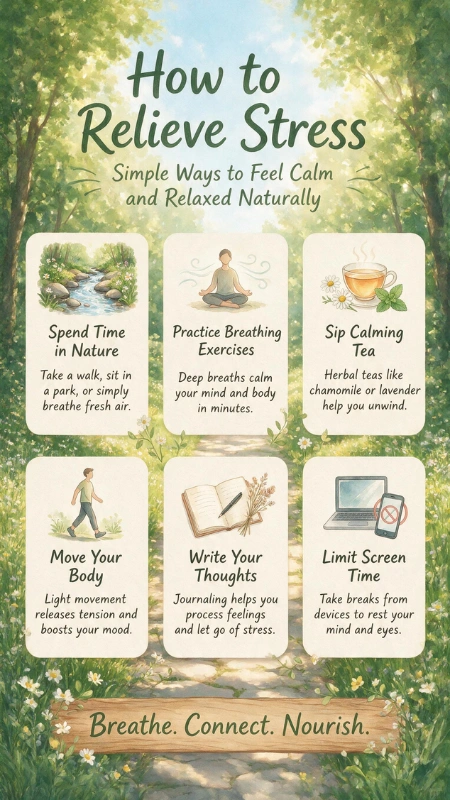
1. Deep Breathing: Your Built-In Calm Button
You breathe all day, yet most of the time it’s shallow and automatic. When you’re stressed, your breathing becomes faster and more restricted. Slowing it down sends a signal to your brain: You’re safe.
Try the 4-7-8 Method
- Inhale through your nose for 4 seconds
- Hold your breath for 7 seconds
- Slowly exhale for 8 seconds
- Repeat 4 times
This simple exercise activates your parasympathetic nervous system — the part responsible for relaxation.
Slow, comfortable breathing may help some people feel calmer during stressful moments. Try breathing gently without forcing your breath or holding it longer than feels comfortable. The 4-7-8 method is optional; if it causes dizziness or discomfort, return to normal breathing.
If you’re wondering how to relieve stress quickly, this is one of the fastest ways.
2. Move Your Body to Calm Your Mind
When stress builds up, it creates physical tension. Movement releases it.
You don’t need intense workouts. What matters is consistency.
Stress-Relieving Exercises You Can Start Today
- A 20-minute brisk walk
- Gentle yoga stretches
- Bodyweight exercises
- Dancing to your favorite song
- Light stretching before bed
Exercise increases endorphins — natural chemicals that improve mood and reduce discomfort. Even short sessions can make a difference.
If your mind feels stuck, move your body. You’ll often find clarity follows motion.
3. Herbal Teas and Natural Drinks for Relaxation
Herbal teas can be part of a relaxing daily routine, especially when you take time to sit quietly and enjoy a warm drink. However, evidence that specific herbal teas relieve stress or anxiety is limited, and their effects vary. They should not replace professional care when stress or anxiety becomes difficult to manage.
If you use herbal products regularly, check for possible allergies, medication interactions, and other safety concerns.
Best Teas for Stress Relief
| Ingredient | Key Benefit | How It Helps You Relax |
|---|---|---|
| Chamomile | Mild sedative | Promotes calmness and better sleep |
| Lavender | Soothing aroma | Reduces nervous tension |
| Lemon Balm | Mood support | Eases anxious feelings |
| Green Tea (L-theanine) | Relaxing amino acid | Encourages calm focus |
Simple Anti-Stress Tea Recipe
| Ingredient | Quantity |
|---|---|
| Dried chamomile flowers | 1 tablespoon |
| Lavender buds | 1 teaspoon |
| Hot water | 1 cup |
| Raw honey (optional) | 1 teaspoon |
Instructions:
- Place herbs in a cup.
- Pour hot water over them.
- Let steep for 5–7 minutes.
- Strain and sip slowly.
Chamomile has been studied for its calming properties and is often used to support better sleep and reduced anxiety.
The act of pausing to make tea also creates a mindful ritual — which in itself helps relieve stress.
Lifestyle Changes That Help You Stay Calm Long-Term
Quick fixes are helpful, but long-term peace requires sustainable habits.
Improve Your Sleep Quality
Sleep and stress are deeply connected. When you sleep poorly, cortisol rises. When cortisol rises, sleep becomes harder.
To improve your sleep:
- Go to bed at the same time each night
- Keep your bedroom cool and dark
- Avoid screens at least 60 minutes before bed
- Reduce caffeine after midday
Research shows sleep deprivation increases emotional reactivity, making everyday problems feel larger than they are.
If you want to know how to relieve stress naturally, protecting your sleep is non-negotiable.
Eat Foods That Support Your Nervous System
What you eat influences how you feel.
Certain nutrients play a role in regulating mood and reducing stress responses.
Top Foods That Help Relieve Stress
| Food | Key Nutrient | Benefit |
|---|---|---|
| Dark chocolate | Magnesium | Supports relaxation |
| Salmon | Omega-3 fatty acids | Reduces inflammation and anxiety |
| Avocados | B vitamins | Supports brain health |
| Almonds & walnuts | Healthy fats | Stabilize mood |
| Spinach | Magnesium | Eases muscle tension |
Magnesium, in particular, is known as the “relaxation mineral.” Low levels are associated with increased stress sensitivity.
Small dietary adjustments can create noticeable changes in how you feel.
Reduce Daily Stress Triggers
Sometimes stress relief isn’t about adding something new — it’s about removing what drains you.
Ask yourself:
- Does constant social media scrolling increase anxiety?
- Are you overcommitting and struggling to say no?
- Is caffeine amplifying your nervousness?
Try these adjustments:
- Limit news and social media exposure
- Set realistic boundaries
- Schedule breaks during work
- Practice time-blocking
You deserve a pace that supports your well-being.
Mental and Emotional Strategies for Stress Relief
Your thoughts influence your stress levels more than you might realize.
Journaling: Clear Your Mental Clutter
When your thoughts swirl endlessly, writing them down helps organize and release them.
Try:
- A nightly “brain dump”
- Listing three things you’re grateful for
- Writing about what’s worrying you without judgment
Studies on expressive writing suggest it can reduce emotional distress and improve overall mental health.
You don’t need perfect grammar. You just need honesty.
Strengthen Social Connections
Stress feels heavier when carried alone.
Talking to someone you trust can shift your perspective and reduce emotional intensity.
Ways to build connection:
- Call a friend
- Join a local group or club
- Spend quality time with family
- Consider therapy or counseling
Human connection regulates your nervous system. Sometimes the most powerful stress relief is simply feeling understood.
Quick Stress Relief Techniques (When You Need Immediate Calm)
There will be moments when stress hits suddenly — before a meeting, during conflict, or late at night.
Here are fast techniques you can use anywhere.
The 5-4-3-2-1 Grounding Method
Identify:
- 5 things you can see
- 4 things you can touch
- 3 things you can hear
- 2 things you can smell
- 1 thing you can taste
This technique pulls your focus away from anxious thoughts and back into the present moment.
Progressive Muscle Relaxation
- Start at your toes.
- Tense muscles for 5 seconds.
- Release slowly.
- Move upward through your body.
This reduces physical tension you may not even realize you’re holding.
Step Outside
Nature has measurable calming effects. Even 10 minutes outdoors can lower stress markers and improve mood.
If you’re wondering how to relieve stress instantly, fresh air and natural light are surprisingly powerful.
When to Seek Professional Help
While daily stress is common, chronic stress that interferes with work, relationships, or health may require professional support.
Consider reaching out if you experience:
- Persistent anxiety
- Panic attacks
- Ongoing sleep disruption
- Physical symptoms without clear cause
- Feelings of hopelessness
Therapies like Cognitive Behavioral Therapy (CBT) are highly effective for stress management.
Seeking help is strength — not weakness.
FAQ: How to Relieve Stress Effectively
What is the fastest way to relieve stress?
Controlled breathing exercises and short physical movement can lower stress levels within minutes by calming your nervous system.
How to relieve stress naturally without medication?
You can use meditation, exercise, herbal teas, journaling, balanced nutrition, and proper sleep to manage stress naturally.
Can certain foods help relieve stress?
Yes. Foods rich in magnesium, omega-3 fatty acids, and B vitamins support your brain and nervous system, helping you feel calmer.
How to relieve stress before bed?
Create a wind-down routine that includes limiting screen time, drinking herbal tea, practicing deep breathing, and maintaining a consistent sleep schedule.
Conclusion: Small Daily Habits Create Lasting Calm
Learning how to relieve stress doesn’t require dramatic life changes. It’s about consistent, small decisions that signal safety to your body and clarity to your mind.
You don’t have to fix everything today.
Start with one habit:
- Take a 10-minute walk
- Try the breathing exercise
- Make calming tea tonight
- Write down what’s on your mind
Relief begins with action — even small action.
If you would like to explore a gentle movement-based approach, read our guide to yoga poses for stress relief.
If this guide helped you, share it with someone who might need it. And more importantly, choose one strategy now and put it into practice. Your future self will thank you.
You deserve to feel calm.
Disclaimer: This article is for general educational purposes and is not medical or professional advice. Please consult a qualified healthcare professional before making changes to your diet, exercise, or health routine. See our Medical Disclaimer.