
Eating well does not have to be complicated. You do not need an expensive diet, special foods, or a strict meal plan to improve your eating habits. Understanding the basics of nutrition can help you make better food choices, prepare balanced meals, and support your health over time.
Table of Contents
A balanced diet provides your body with energy and essential nutrients, including carbohydrates, protein, fats, vitamins, minerals, fiber, and water. Your nutritional needs may change depending on your age, activity level, health, and stage of life.
In this complete basic nutrition guide, you will learn how nutrients work, how to build balanced meals, how to plan your grocery shopping, and how to develop healthy eating habits that fit your daily routine.
1. What Is Basic Nutrition Guide?
Basic nutrition is the study of how food provides the energy and nutrients your body needs to function. Your body uses nutrients to support growth, maintain tissues, regulate normal processes, and perform everyday activities.
A healthy eating pattern includes a variety of foods rather than relying on a single ingredient or food group. Fruits, vegetables, whole grains, protein-rich foods, dairy products or suitable alternatives, and healthy sources of fat can all contribute to a balanced diet.
The best eating pattern is one that meets your nutritional needs, respects your food preferences, fits your budget, and can be maintained over time.
For general guidance on healthy eating, visit the USDA MyPlate website, which offers practical information about food groups and balanced meals.
2. Understanding Macronutrients
Macronutrients are nutrients that your body needs in relatively large amounts. They include carbohydrates, protein, and fat. Each plays a different role in maintaining health.
Carbohydrates: An Important Source of Energy
Carbohydrates provide energy for your brain, muscles, and other body functions. They are found in foods such as bread, rice, oats, potatoes, beans, fruits, and milk.
Choose a variety of carbohydrate sources, with an emphasis on fiber-rich foods such as:
- Whole-grain bread and pasta
- Oats and brown rice
- Beans, lentils, and peas
- Fruits and vegetables
You do not need to eliminate carbohydrates to eat healthily. Instead, consider the quality of the foods you eat, your overall dietary pattern, and your individual needs.
Protein: Supporting Growth and Repair
Protein helps your body build and repair tissues. It also support the production of enzymes and other substances needed for normal body functions.
Good sources of protein include:
- Eggs
- Fish and seafood
- Chicken and other poultry
- Beans, lentils, and chickpeas
- Tofu and other soy foods
- Nuts and seeds
- Milk, yogurt, and other dairy products
Try to include a suitable protein source in your main meals. Combining different protein foods throughout the week can help provide a variety of nutrients.
Fats: Choosing the Right Sources
Dietary fat provides energy, helps your body absorb vitamins A, D, E, and K, and supports normal cell function.
Unsaturated fats are found in foods such as olive oil, avocados, nuts, seeds, and oily fish. Replacing some saturated fats with unsaturated fats can support heart health.
Foods such as butter, fatty meats, and some baked or packaged products can contain more saturated fat. Check food labels and consider your overall eating pattern rather than judging a food by one nutrient alone.
Industrial trans fats should be avoided where possible. The World Health Organization provides more information in its guidance on healthy diets.
3. Understanding Vitamins and Minerals
Vitamins and minerals are micronutrients. Your body needs them in smaller amounts than macronutrients, but they are essential for many normal functions.
Important Vitamins
Vitamin A: Supports normal vision and immune function. Sources include carrots, sweet potatoes, spinach, and eggs.
B vitamins: Help the body use energy from food and support other processes. Sources include whole grains, legumes, eggs, meat, and leafy green vegetables, depending on the specific vitamin.
Vitamin C: Supports collagen formation and helps the body absorb iron from plant foods. Sources include oranges, berries, peppers, broccoli, and tomatoes.
Vitamin D: Helps the body absorb calcium and supports bone health. Sources include certain fish, fortified foods, and sunlight-related production in the skin. Food sources alone may not meet everyone’s needs.
Vitamin E: Helps protect cells from oxidative damage. Sources include nuts, seeds, and some vegetable oils.
Vitamin K: Plays an important role in blood clotting and bone health. Green leafy vegetables are useful sources.
Important Minerals
Calcium: Supports bones and teeth. Sources include dairy products, calcium-fortified alternatives, and certain vegetables.
Iron: Helps the body make hemoglobin, which carries oxygen in the blood. Sources include meat, beans, lentils, and iron-fortified cereals.
Potassium: Supports normal muscle and nerve function. Sources include potatoes, beans, vegetables, fruits, and yogurt.
Magnesium: Contributes to normal muscle, nerve, and bone function. Sources include nuts, seeds, whole grains, and legumes.
Zinc: Supports immune function and wound recovery. Sources include meat, seafood, dairy foods, beans, and nuts.
Eating a varied diet is a practical way to obtain many essential vitamins and minerals. Supplements may be useful in particular circumstances, but they are not automatically necessary for everyone. High doses can sometimes cause harm or interact with medications, so seek professional advice before taking them.
For reliable information about individual nutrients, consult the National Institutes of Health Office of Dietary Supplements.
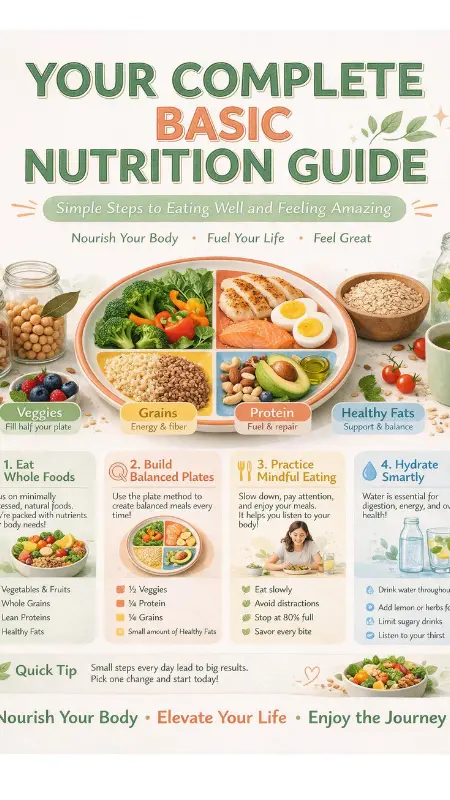
4. How to Build a Balanced Plate
You do not have to calculate every calorie or weigh every ingredient to make a balanced meal. A simple plate method can help you include a variety of food groups.
For many meals, try the following approach:
- Fill about half your plate with vegetables and fruits, giving priority to vegetables.
- Fill about one-quarter with a protein food, such as fish, eggs, chicken, tofu, or beans.
- Fill about one-quarter with grains or other starchy foods, choosing whole grains more often when possible.
- Add a suitable source of healthy fat, such as olive oil, nuts, or seeds.
- Choose water or another suitable unsweetened drink most often.
This is a flexible starting point, not a strict rule. Your needs may differ depending on your age, activity level, appetite, medical conditions, and cultural food preferences.
Example of a Balanced Day
Breakfast: Oatmeal with milk or a fortified alternative, fruit, and a small serving of nuts.
Lunch: Grilled chicken or chickpeas with brown rice and a mixed vegetable salad.
Snack: Plain yogurt with fruit, or vegetables served with hummus.
Dinner: Baked fish or tofu with potatoes and cooked vegetables.
Drinks: Water throughout the day, adjusting your intake to your needs and circumstances.
These are examples, not a prescribed meal plan. Portion sizes and food choices should reflect your individual needs.
5. The Importance of Fiber and Water
Why Fiber Matters
Fiber is found in plant foods, including vegetables, fruits, whole grains, beans, lentils, nuts, and seeds. It supports digestive health, and some types of fiber can help manage blood cholesterol and blood glucose.
To increase your fiber intake:
- Choose whole-grain bread and cereals more often.
- Add beans or lentils to soups, salads, and other meals.
- Eat whole fruits regularly instead of relying only on juice.
- Include vegetables in lunch and dinner.
- Increase fiber gradually if your current intake is low.
Drink enough fluids as you increase fiber, since fluid helps fiber work properly. Some people with digestive conditions may need individualized advice about the amount and type of fiber they consume.
Staying Hydrated
Water helps regulate body temperature, transport substances around the body, and support normal bodily functions.
Your fluid needs vary according to activity, climate, age, diet, and health. Hot weather and exercise can increase fluid requirements. Water is a useful everyday choice, while foods such as fruits and vegetables also contribute to fluid intake.
Rather than following one fixed amount that is supposed to suit everyone, pay attention to your circumstances and thirst. People who have been advised to restrict fluids because of a medical condition should follow their healthcare professional’s guidance.
6. Healthy Eating Throughout Different Life Stages
Nutritional needs change throughout life. A balanced eating pattern should reflect the needs of the person, rather than following the same rules for everyone.
Children and Teenagers
Growing children and teenagers need enough energy and nutrients to support growth and development. Offer a variety of foods, including fruits, vegetables, whole grains, protein foods, and suitable sources of calcium.
Regular meals and snacks can help meet their needs. Avoid imposing restrictive weight-loss diets on children without guidance from an appropriate healthcare professional.
Adults
Adults can support their health by eating a variety of nutrient-rich foods, staying physically active, and choosing an eating pattern they can maintain. Individual needs vary with body size, activity, health, and other factors.
Older Adults
Older adults may need to pay particular attention to protein, vitamin B12, vitamin D, calcium, hydration, and overall food intake. Appetite, dental problems, medication use, and changes in mobility can affect eating habits.
If eating becomes difficult or weight changes unexpectedly, a healthcare professional can help identify the cause and recommend appropriate support.
Pregnancy and Breastfeeding
Pregnancy and breastfeeding can change nutritional needs. Folate, iron, iodine, and other nutrients may require special attention. Advice about supplements and food safety is especially important during pregnancy.
People who are pregnant or breastfeeding should follow guidance from their healthcare professional rather than relying on a general meal plan.
7. Nutrition and Medical Conditions
Nutrition can be an important part of managing some health conditions, but dietary changes are not a substitute for appropriate medical care.
For example, people living with diabetes may benefit from meal planning that considers carbohydrate-containing foods, portion sizes, medication, and activity. However, the right approach varies from person to person.
People with kidney disease may need individualized guidance about sodium, potassium, phosphorus, protein, or fluids, depending on their condition and treatment. People with celiac disease need to avoid gluten, while those with food allergies must avoid their specific allergens.
Do not follow restrictive diets or make major changes to prescribed treatment based only on general online advice.
For more information, see these reputable resources:
- American Diabetes Association: Food and Nutrition
- NIDDK: Healthy Living with Diabetes
- MedlinePlus: Nutrition
If you have a medical condition or take medication that affects your diet, ask your healthcare professional or a registered dietitian for advice tailored to you.
8. Practical Tips for Healthy Grocery Shopping
Healthy eating often begins before you enter the kitchen. Planning your shopping can help you save money, reduce food waste, and make balanced meals easier to prepare.
Make a Shopping List
Plan a few meals before shopping. Then write down the ingredients you need. This can reduce impulse purchases and help you avoid buying food you will not use.
Choose a Variety of Foods
Depending on your preferences and budget, consider adding:
- Seasonal fruits and vegetables
- Whole grains such as oats, brown rice, or whole-grain bread
- Protein foods such as eggs, beans, lentils, fish, or poultry
- Milk, yogurt, or suitable fortified alternatives
- Nuts, seeds, and vegetable oils
Fresh, frozen, and canned foods can all be useful choices. Frozen vegetables can be nutritious and convenient, while canned products may be helpful when fresh foods are expensive or unavailable. Compare labels and choose lower-sodium or no-added-sugar options when appropriate.
Read Food Labels
Check serving sizes, ingredients, and the amounts of nutrients that matter to you. Comparing similar products can help you identify options with less sodium, added sugar, or saturated fat.
Remember that no single number on a label tells you everything about a food’s nutritional value. Consider the whole product and how it fits into your usual eating pattern.
For more guidance, visit the U.S. Food and Drug Administration’s Nutrition Facts Label resource.
9. Easy Meal Planning for Busy Days
Meal planning does not need to involve preparing every meal for an entire week. Even a little preparation can make busy days easier.
Start with a Simple Plan
Choose a few breakfasts, lunches, and dinners you enjoy. Reuse ingredients across different meals to save time and reduce waste.
For example:
- Breakfast: Oatmeal, eggs with whole-grain toast, or yogurt with fruit.
- Lunch: Leftovers, a bean salad, or a whole-grain sandwich with a protein filling.
- Dinner: A sheet-pan meal with vegetables and chicken or tofu, a lentil curry, or fish with rice and vegetables.
- Snacks: Fruit, nuts, yogurt, or vegetables with hummus.
Prepare Ingredients in Advance
You can wash and cut vegetables, cook a batch of grains, prepare beans, or portion out ingredients ahead of time. Store food safely and refrigerate perishable items promptly.
Cooked meals should be stored in suitable containers and handled according to food-safety guidance. When in doubt about how long a food can be stored, consult the USDA Food Safety and Inspection Service.
Keep Your Plan Flexible
A meal plan should make life easier, not create unnecessary stress. Frozen vegetables, canned beans, and other convenient foods can be part of a balanced eating pattern.
If your schedule changes, use your available ingredients to assemble a simple meal instead of feeling that you have failed to follow the plan.
10. Common Nutrition Mistakes to Avoid
Eliminating Entire Food Groups Without a Reason
Some diets remove carbohydrates, fats, or other food groups completely. Such restrictions are not necessary for everyone and can make it harder to obtain a variety of nutrients. Special diets may be appropriate for particular medical needs, but they should be planned carefully.
Believing That One Food Can Fix Everything
No single food supports clear skin, strong hair, weight loss, or perfect health. Overall eating patterns, sleep, physical activity, genetics, medical conditions, and other factors all influence health.
Depending Too Much on Supplements
Supplements can be useful in some circumstances, but they do not replace a varied diet. High doses of certain vitamins and minerals can be harmful. Seek qualified advice if you think you may have a nutrient deficiency.
Following Strict Rules That Are Difficult to Maintain
An eating pattern that is too restrictive may be difficult to sustain. Focus on realistic improvements, such as adding vegetables to meals, choosing whole grains more often, and preparing food at home when practical.
Ignoring Individual Needs
Nutrition advice found online may not apply to everyone. Your needs can differ because of age, activity, pregnancy, allergies, medical conditions, or medication use. Ask a qualified professional when you need personalized guidance.
11. Frequently Asked Questions
What is the most important part of basic nutrition?
There is no single most important nutrient or food. A healthy eating pattern combines a variety of foods that provide energy, protein, fats, carbohydrates, vitamins, minerals, fiber, and fluids in amounts that suit your needs.
Do I need to count calories to eat healthily?
Not necessarily. Some people find calorie tracking useful for a specific purpose, but many can improve their eating habits by focusing on food variety, meal balance, hunger and fullness cues, and appropriate portions. People with a history of disordered eating should seek professional guidance before starting restrictive tracking.
Are carbohydrates bad for health?
No. Carbohydrates are an important energy source. Whole grains, fruits, vegetables, and legumes provide carbohydrates along with useful nutrients and fiber. The type and amount that suit you depend on your overall diet and individual circumstances.
Should I take a multivitamin every day?
Not everyone needs a multivitamin. Whether a supplement is appropriate depends on your diet, life stage, health, and possible nutrient deficiencies. Ask a healthcare professional before taking high doses or combining multiple supplements.
How can I start eating better on a budget?
Plan meals around affordable staples such as oats, beans, lentils, eggs, seasonal produce, and whole grains. Frozen vegetables and canned beans can also be convenient options. Preparing meals at home and using leftovers safely may help reduce waste.
How long does it take to develop healthier eating habits?
There is no fixed timeline. Start with one or two realistic changes, such as eating a fruit with breakfast or adding vegetables to dinner. Build on those changes as they become part of your routine.
Where can I learn more about nutrition?
Begin with reliable sources such as MyPlate, MedlinePlus Nutrition, and the NIH Office of Dietary Supplements. If you need advice for a medical condition, consult an appropriate healthcare professional.
12. Conclusion
Understanding basic nutrition can help you make informed food choices without following complicated rules. A balanced eating pattern includes a variety of foods, adequate fluids, and nutrients that support your body’s needs.
Start with small, practical steps: add more vegetables and fruits, choose whole grains more often, include suitable protein sources, and plan a few simple meals in advance. You do not have to change everything at once.
Remember that healthy eating is not about perfection. It is about building habits that are realistic, enjoyable, and suitable for your circumstances.
Medical disclaimer: This article is for general educational purposes only and does not replace individualized medical advice, diagnosis, or treatment. Consult a qualified healthcare professional for advice about your personal nutritional needs or a medical condition.
Disclaimer: This article is for general educational purposes and is not medical or professional advice. Please consult a qualified healthcare professional before making changes to your diet, exercise, or health routine. See our Medical Disclaimer.