
Planning meals for the week can feel overwhelming when you are balancing work, family responsibilities, grocery shopping, and everyday tasks. You may know what foods you enjoy, but deciding what to cook, remembering ingredients, and keeping the kitchen organized can take more time than expected.
The right meal planning tools and resources can make this process easier. You do not need an expensive kitchen, several paid apps, or a complicated system. A simple weekly planner, an organized grocery list, and a few practical storage containers may be enough to get started.
Table of Contents
In this guide, you will discover useful meal planning apps, printable templates, grocery list tools, and kitchen essentials that can help you organize your meals and make your routine more manageable.
Meal Planning Weekly Menu
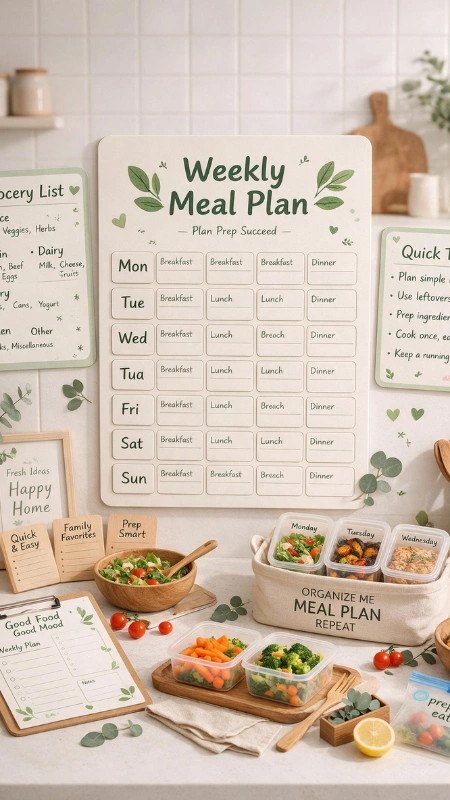
What Are Meal Planning Tools and Resources?
Meal planning tools are items, apps, and systems that help you decide what to eat, organize recipes, prepare shopping lists, and keep track of ingredients.
Some tools are digital, such as recipe management apps and shared grocery lists. Others are simple physical items, such as a notebook, a magnetic menu planner, food storage containers, and labels.
The best option depends on your lifestyle, budget, cooking habits, and the amount of organization you need.
You can also read our guide to how to plan weekly meals for a step-by-step approach to creating a practical meal plan.
1. Printable Meal Planning Templates
A printable template is a simple way to organize your meals without relying on a phone or computer.
A basic weekly planner can include:
- Days of the week
- Breakfast, lunch, and dinner
- Planned leftovers
- Ingredients to prepare ahead
- A grocery shopping checklist
- Notes for busy days
You can print a blank template and fill it in by hand each week. Alternatively, create your own table in a document or spreadsheet.
What Should a Useful Meal Planner Include?
Choose a template that is easy to read and has enough space for your notes. A planner does not need decorative designs or complicated sections to be useful.
For example, your weekly table could look like this:
| Day | Planned Meal | Preparation Notes |
|---|---|---|
| Monday | Chicken and vegetable stir-fry | Prepare vegetables ahead |
| Tuesday | Bean and tomato chili | Make extra portions |
| Wednesday | Leftover chili with rice | Reheat leftovers safely |
| Thursday | Baked fish and vegetables | Check freezer ingredients |
| Friday | Homemade vegetable pizza | Use available toppings |
This is only an example. Replace the meals with recipes that suit your household, preferences, and budget.
For an official planning resource, visit the USDA’s MyPlate weekly meal planning guidance. It explains how to check your kitchen supplies, plan meals, organize grocery lists, and make use of leftovers.
2. Meal Planning Apps and Digital Tools
Digital tools can be helpful if you prefer keeping recipes, menus, and shopping lists on your phone or computer.
You do not need to install several apps. Start with one tool that solves your main problem.
Paprika Recipe Manager
Paprika is a recipe management app that allows users to organize recipes, create meal plans, and build grocery lists. Its features include recipe saving, ingredient scaling, and pantry organization.
It may be useful if you frequently find recipes online and want to keep them in one place.
Visit the official Paprika website to review its features and available versions.
Shared Grocery Lists
A shared grocery list can help households coordinate shopping. Instead of relying on memory or sending several messages, family members can add items to a common list.
You can use a grocery list app, a shared document, or a simple note on your phone. The important thing is to have one reliable place for the list.
Calendar and Reminder Apps
A regular calendar can also support meal planning. Add reminders for tasks such as checking the refrigerator, shopping for ingredients, preparing food, or moving frozen food to the refrigerator for safe thawing.
You may already have a calendar app on your device, so you might not need another subscription.
How to Choose a Meal Planning App
Before choosing an app, consider the following questions:
- Can you save and organize your favorite recipes?
- Does it create grocery lists?
- Can you adjust ingredient quantities?
- Is it easy to use on your device?
- Does it require a paid subscription or a separate purchase?
- Does it offer the features you actually need?
Check the official app website for current features, compatibility, and pricing before purchasing. Features and prices can change over time.
3. Grocery List Tools That Make Shopping Easier
A grocery list connects your meal plan to your shopping trip. Without one, it is easy to forget important ingredients or buy items you already have.
You can organize your list by supermarket section:
Produce
- Vegetables
- Fruits
- Fresh herbs
Protein foods
- Eggs
- Beans and lentils
- Chicken, fish, or other proteins you use
Grains and pantry items
- Rice
- Oats
- Pasta
- Canned tomatoes
- Other pantry staples
Refrigerated and frozen foods
- Yogurt or suitable alternatives
- Frozen vegetables
- Other ingredients required by your recipes
Before shopping, check your refrigerator, freezer, and pantry. Cross off anything you already own and add quantities where necessary.
The USDA’s MyPlate meal planning resource also recommends planning around available ingredients, considering your schedule, and organizing a grocery list.
These small steps can help reduce unnecessary purchases and make shopping more focused.
4. Kitchen Essentials for Meal Preparation
You do not need every kitchen gadget available. A few reliable tools can make preparing ingredients more convenient.
A Sharp Chef’s Knife and Cutting Board
A suitable chef’s knife and stable cutting board are useful for chopping vegetables, preparing fruit, and cutting ingredients for recipes.
Choose equipment that feels comfortable to use and is appropriate for your experience. Keep knives sharp and follow safe handling practices.
Measuring Cups and Spoons
Measuring tools can help you follow recipes consistently, especially when baking or preparing unfamiliar dishes.
They are optional for many everyday meals, but useful when accurate quantities matter.
Sheet Pans and Basic Cookware
A sheet pan can help you roast vegetables and prepare simple one-pan meals. A saucepan, frying pan, and suitable cooking pot can cover many everyday cooking needs.
Choose cookware based on the recipes you prepare most often rather than buying a large collection of specialized equipment.
A Food Thermometer
A food thermometer is a practical safety tool for checking whether foods have reached recommended internal cooking temperatures. This is particularly useful when preparing meat, poultry, fish, and reheated leftovers.
For guidance on safe cooking and food handling, consult the USDA’s Food Safety and Inspection Service.
5. Food Storage Containers and Refrigerator Organization
Food storage containers can make prepared ingredients and leftovers easier to organize. They can also help you identify what needs to be eaten first.
When choosing containers, consider:
- Whether the lids close securely
- Whether the containers are easy to clean
- Whether they fit your refrigerator and freezer
- Whether they are suitable for the intended temperature
- Whether you can see the contents clearly
Glass and food-safe plastic containers are both available in different sizes. Choose according to your needs and budget, and always follow the manufacturer’s instructions for heating, freezing, and cleaning.
Label Prepared Food
Use labels or masking tape to write the food name and preparation date on each container.
Place older prepared foods where you can see them easily. This simple habit can help you remember what you have and use ingredients before they spoil.
Follow Safe Storage Practices
Refrigerate perishable food promptly. The USDA advises refrigerating leftovers within two hours and generally using refrigerated leftovers within three to four days. Reheat leftovers to an internal temperature of 165°F (74°C).
For more information, read the official USDA guide to leftovers and food safety.
Food safety recommendations vary by food type, so follow specific storage guidance when needed.
6. Create a Simple Meal Planning Station
A small meal planning station can help keep your routine organized. You do not need a separate room or a large board.
Choose one convenient place in your kitchen or home for:
- Your weekly meal planner
- A grocery list
- A pen or marker
- Recipe notes
- Shopping reminders
- A list of ingredients that need to be used soon
You could use a magnetic notepad on the refrigerator, a clipboard, a small whiteboard, or a digital note on your phone.
The best system is one you can see and update easily. If you prefer using your phone, keep your menu and shopping list together so you do not have to search through several apps.
7. How to Build a Simple Meal Planning Routine
The tools are only useful if they make your routine easier. Start with a short weekly process rather than trying to organize everything at once.
Step 1: Review Your Schedule
Look at the week ahead and identify busy evenings. Choose quick meals for those days and save more involved recipes for when you have extra time.
Step 2: Check Your Kitchen
Review the ingredients in your refrigerator, freezer, and pantry. Decide which foods should be used first.
Step 3: Choose a Few Meals
Select a manageable number of meals based on your schedule. Repeating favorite recipes and using leftovers can make the process simpler.
For more inspiration, browse our guide to weekly menu ideas for easy family meals.
Step 4: Prepare Your Shopping List
Write down the ingredients you need and check their quantities. Remove items you already have before going shopping.
Step 5: Prepare What You Can
Wash vegetables, organize ingredients, or prepare a few components in advance if it suits your schedule. Store food safely and avoid preparing more than you can reasonably use.
Step 6: Review and Adjust
At the end of the week, consider what worked well. Keep useful recipes, remove unnecessary steps, and adjust the next plan to match your real routine.
For additional meal inspiration, you can also explore our guide to easy healthy meals for busy days.
Common Mistakes When Choosing Meal Planning Tools
Buying Too Many Products
You do not need multiple planners, expensive containers, and specialized kitchen appliances to begin. Start with what you own and add tools only when they solve a real problem.
Using Too Many Apps
Switching between several apps can make planning more complicated. Choose one main place for your menu and grocery list.
Creating an Overly Complicated Schedule
A detailed plan may look impressive but can become difficult to maintain. Leave room for leftovers, simple meals, and changes to your schedule.
Ignoring Food Storage
Organizing containers is not enough. Prepared food must also be stored at safe temperatures and used within recommended time frames.
Choosing Tools Without Comparing Costs
Check the price, features, compatibility, and any recurring fees before buying an app or kitchen product. A free notebook or basic digital list may be all you need.
Frequently Asked Questions
What are the best tools for meal planning?
The best tools depend on your needs. A weekly planner, a grocery list, basic cookware, and suitable food storage containers are useful starting points. A recipe management app may help if you save and organize many recipes.
Is a meal planning app necessary?
No. You can plan meals with paper, a spreadsheet, or a simple calendar. Use an app only if its features make planning easier for you.
How can I plan meals on a budget?
Check your kitchen before shopping, compare prices, use ingredients across multiple meals, and choose foods that fit your budget. Frozen and canned foods may also be practical options for many recipes.
How do I keep my meal planning system organized?
Keep your menu, shopping list, and preparation notes in one accessible place. Review your supplies regularly and update your list when ingredients run low.
What containers are best for meal preparation?
Choose containers that are easy to clean, close securely, and are suitable for the way you intend to use them. Follow the manufacturer’s instructions for refrigeration, freezing, and reheating.
How long can prepared leftovers stay in the refrigerator?
According to USDA guidance, most cooked leftovers can be refrigerated for three to four days when handled and stored correctly. Refrigerate them promptly and freeze portions you will not use in time.
Final Thoughts
Meal planning does not have to involve expensive products or a complicated digital system. A simple planner, an organized grocery list, and a few practical kitchen essentials can help you manage recipes, ingredients, and food storage more effectively.
Start with the tools you already have. Choose one planning method, organize your shopping list, and make small adjustments each week. As your routine develops, you can decide whether an app, printable template, or additional kitchen tool would genuinely help.
The goal is not to create a perfect system. It is to make meal planning easier to manage and more suitable for your everyday life. around your table—will thank you.
Disclaimer: This article is for general educational purposes and is not medical or professional advice. Please consult a qualified healthcare professional before making changes to your diet, exercise, or health routine. See our Medical Disclaimer.