
Your body needs more than protein, carbohydrates, fats, and vitamins to function properly. It also depends on essential minerals, a group of inorganic nutrients involved in building bones, transmitting nerve signals, regulating fluid balance, and supporting normal metabolism.
Unlike some compounds your body can manufacture, essential mineral elements must come from outside the body, primarily through food and drinking water.
Table of Contents
Calcium helps maintain strong bones and teeth. Iron is needed to transport oxygen through the bloodstream. Magnesium participates in hundreds of enzyme-controlled reactions, while potassium supports normal muscle and nerve function.
Even though these nutrients are required in different amounts, each plays an important role.
The good news is that many familiar foods—including beans, leafy greens, dairy products, nuts, seeds, whole grains, and seafood—provide valuable minerals.
This guide explains the most important essential minerals, their functions, recommended daily intakes, food sources, possible deficiency signs, and supplement precautions. It also includes a practical mineral-rich recipe.
What Are Essential Minerals?
Essential minerals are chemical elements the body needs for normal growth, maintenance, and physiological function.
They differ from vitamins because they are inorganic elements rather than organic compounds.
The body cannot create mineral elements. Instead, it obtains them from foods, beverages, and, when appropriate, supplements.
Minerals contribute to many bodily processes, including:
- Building and maintaining bones and teeth
- Regulating muscle contraction
- Supporting electrical signaling in nerves
- Maintaining fluid and electrolyte balance
- Producing thyroid hormones
- Transporting oxygen
- Supporting normal enzyme and immune-system function
The amount needed varies considerably.
Some minerals are required in hundreds or thousands of milligrams per day, while others are needed in much smaller quantities.
Macrominerals vs. Trace Minerals
Minerals are commonly divided into two groups.
Macrominerals, also called major minerals, are generally required in larger amounts.
They include calcium, phosphorus, magnesium, sodium, potassium, chloride, and sulfur.
Trace minerals are required in smaller amounts.
Examples include iron, zinc, iodine, selenium, copper, manganese, and molybdenum.
The amount needed does not determine a mineral’s importance.
For example, adults require only microgram quantities of iodine, but iodine is essential for normal thyroid hormone production.
Are There Exactly 13 Essential Minerals?
Some introductory nutrition guides describe 13 essential minerals: seven major minerals and six trace minerals.
However, this simplified list often leaves out molybdenum.
Other lists include additional elements, such as chromium and fluoride, although their status requires more careful interpretation.
Molybdenum is an established essential trace element.
Chromium has historically been included in nutrition reference tables, but its essential role in humans remains uncertain.
Fluoride contributes to dental health but is not classified as essential for human growth and development in the same way as calcium or iron.
For accuracy, this guide explains the commonly taught 13-mineral framework while also including molybdenum and clarifying these distinctions.
List of Essential Minerals and Their Functions
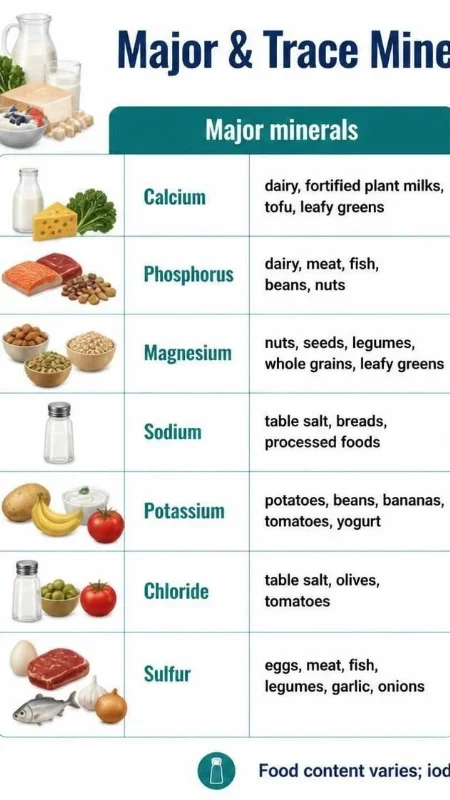
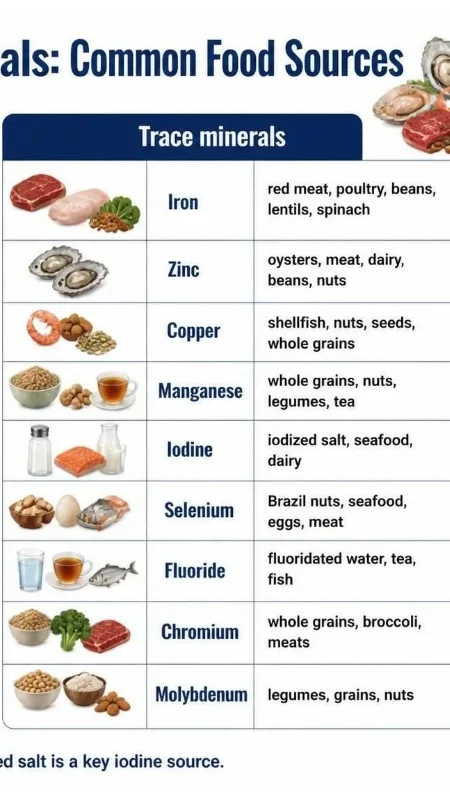
The following table provides an overview of the seven major minerals and seven established trace minerals discussed in this guide.
Essential Minerals Food Sources and Functions
| Mineral | Main Functions | Good Food Sources |
|---|---|---|
| Calcium | Bones, teeth, muscle contraction, nerve signaling | Milk, yogurt, calcium-set tofu, fortified plant milk |
| Phosphorus | Bones, teeth, ATP, cell membranes | Dairy, meat, fish, beans, nuts |
| Magnesium | Enzyme function, muscles, nerves, energy metabolism | Pumpkin seeds, almonds, beans, leafy greens |
| Sodium | Fluid balance, nerves, muscles | Table salt and many prepared foods |
| Potassium | Fluid balance, nerve transmission, muscle function | Potatoes, beans, yogurt, bananas |
| Chloride | Fluid balance, stomach acid production | Table salt, salted foods |
| Sulfur | Component of sulfur-containing amino acids and compounds | Eggs, meat, legumes, nuts |
| Iron | Oxygen transport and energy metabolism | Meat, lentils, beans, fortified cereals |
| Zinc | Immune function, wound recovery, enzyme activity | Oysters, beef, beans, pumpkin seeds |
| Iodine | Thyroid hormone production | Iodized salt, seafood, dairy |
| Selenium | Antioxidant enzymes and thyroid metabolism | Seafood, eggs, meats, Brazil nuts |
| Copper | Iron metabolism, connective tissue, enzyme function | Nuts, seeds, shellfish, legumes |
| Manganese | Enzyme activity, metabolism, bone-related processes | Whole grains, nuts, legumes |
| Molybdenum | Cofactor for certain enzymes | Legumes, grains, nuts |
Food mineral content varies with growing conditions, processing, preparation, and serving size.
For detailed nutrient composition, consult USDA FoodData Central.
Essential Minerals Benefits and Functions
Minerals contribute to several interconnected systems in the body.
1. Bone and Tooth Health
Calcium and phosphorus are major structural components of bones and teeth.
Magnesium also contributes to normal bone metabolism.
Adequate mineral intake supports skeletal maintenance throughout life.
However, strong bones depend on more than minerals alone.
Vitamin D, sufficient energy intake, physical activity, and other factors also matter.
Eating more calcium than recommended does not automatically increase bone density.
2. Nerve and Muscle Function
Sodium, potassium, calcium, and magnesium help regulate electrical signaling and muscle function.
Potassium and sodium gradients across cell membranes are particularly important for nerve impulses.
Calcium participates in the processes that allow muscles to contract.
Magnesium contributes to normal neuromuscular function.
Severe disturbances in electrolyte levels can cause serious symptoms and require medical assessment.
3. Oxygen Transport and Energy Metabolism
Iron is required to make hemoglobin, the protein in red blood cells that carries oxygen.
It also contributes to normal cellular energy metabolism.
Phosphorus is part of ATP, a molecule cells use to transfer energy.
Magnesium supports numerous enzymes involved in energy production.
These minerals do not supply calories themselves, but they help the body use energy obtained from food.
4. Immune Function and Tissue Maintenance
Zinc supports normal immune function, DNA synthesis, and wound recovery.
Copper and selenium are involved in enzyme systems that protect cells and support normal physiological processes.
Insufficient intake can impair normal function.
However, taking extra minerals when you already obtain adequate amounts does not necessarily improve immunity.
5. Thyroid Function
Iodine is required to produce thyroid hormones.
Selenium contributes to enzymes involved in thyroid hormone metabolism.
Both too little and too much iodine can cause thyroid problems.
This is one reason high-dose iodine supplements should not be used casually.
How Much of Each Mineral Do You Need Daily?
Daily mineral recommendations differ by age, sex, pregnancy status, and other factors.
Two common reference terms are:
Recommended Dietary Allowance (RDA): The average daily intake considered sufficient to meet the needs of nearly all healthy people in a specific group.
Adequate Intake (AI): A reference intake used when evidence is insufficient to establish an RDA.
These are not interchangeable with minimum amounts required to avoid immediate deficiency symptoms.
Adult Daily Mineral Intake Guide
The table below uses U.S. Dietary Reference Intakes for generally healthy adults ages 19–50 who are not pregnant or breastfeeding.
| Mineral | Men | Women | Reference Type |
|---|---|---|---|
| Calcium | 1,000 mg | 1,000 mg | RDA |
| Phosphorus | 700 mg | 700 mg | RDA |
| Magnesium | 400–420 mg | 310–320 mg | RDA |
| Sodium | 1,500 mg | 1,500 mg | AI |
| Potassium | 3,400 mg | 2,600 mg | AI |
| Chloride | 2,300 mg | 2,300 mg | AI |
| Iron | 8 mg | 18 mg | RDA |
| Zinc | 11 mg | 8 mg | RDA |
| Iodine | 150 mcg | 150 mcg | RDA |
| Selenium | 55 mcg | 55 mcg | RDA |
| Copper | 900 mcg | 900 mcg | RDA |
| Manganese | 2.3 mg | 1.8 mg | AI |
| Molybdenum | 45 mcg | 45 mcg | RDA |
| Sulfur | No separate established RDA | No separate established RDA | Not established |
Important: Sodium’s AI of 1,500 mg is not a target encouraging additional sodium intake. The recommended limit for adults is generally less than 2,300 mg of sodium daily, although medical circumstances may require different guidance.
The ranges for magnesium reflect age-related differences within the 19–50 age group.
Calcium recommendations increase for women beginning at age 51 and for men beginning at age 71.
Iron requirements also differ with age and reproductive status.
Why Individual Requirements Differ
Pregnancy and breastfeeding can increase requirements for certain minerals, including iodine and iron.
Older adults may need particular attention to calcium intake.
People with gastrointestinal conditions affecting absorption may have additional risks.
Athletes who lose substantial amounts of sweat may need individualized hydration and electrolyte planning.
People with kidney disease may need restrictions or adjustments involving potassium, phosphorus, sodium, or other minerals.
Do not use a general mineral chart as a substitute for individualized medical advice.
Best Food Sources for Macrominerals
Most people can obtain essential minerals from a varied eating pattern.
Calcium-Rich Foods
Useful calcium sources include:
- Milk and yogurt
- Calcium-fortified plant beverages
- Calcium-set tofu
- Canned salmon with edible bones
- Certain leafy green vegetables
Calcium absorption differs between foods.
For example, spinach contains calcium, but its oxalate content reduces how much calcium the body can absorb.
Calcium-fortified foods can be helpful for people who avoid dairy.
Check labels because fortification amounts vary.
Magnesium-Rich Foods
Magnesium is found in numerous plant foods.
Especially useful sources include pumpkin seeds, almonds, black beans, lentils, spinach, and whole grains.
A meal containing beans, brown rice, vegetables, and seeds can provide magnesium from several ingredients.
Potassium-Rich Foods
Potassium is found in potatoes, beans, lentils, yogurt, bananas, tomatoes, and many vegetables.
It is important for normal nerve and muscle function.
However, potassium supplements and potassium-based salt substitutes may be unsafe for people with certain kidney conditions or those taking medications that increase blood potassium.
Phosphorus-Rich Foods
Phosphorus is widely available in meat, fish, dairy products, legumes, nuts, and grains.
Most people eating a varied diet can obtain sufficient phosphorus.
People with chronic kidney disease may need individualized phosphorus management.
Sodium and Chloride
Sodium and chloride are commonly consumed together as sodium chloride, or table salt.
Both are essential for fluid balance and other functions.
However, sodium deficiency caused simply by inadequate dietary sodium is uncommon among generally healthy people eating typical diets.
Many packaged and restaurant foods contribute substantial sodium.
The goal for most adults is not to increase sodium intake but to avoid excessive consumption.
Sulfur-Containing Foods
Sulfur is present in amino acids such as methionine and cysteine.
Protein-containing foods, including eggs, fish, meat, legumes, and nuts, supply sulfur-containing compounds.
There is no separate established daily sulfur requirement for healthy adults.
Best Food Sources of Trace Minerals
Trace minerals are needed in small amounts, but insufficient intake can still affect health.
Iron
Iron supports oxygen transport.
Food sources include lean meat, poultry, seafood, lentils, beans, and fortified cereals.
Iron from animal foods, known as heme iron, is generally absorbed more efficiently than nonheme iron from plant foods.
Eating vitamin C-rich foods alongside plant-based iron sources can improve nonheme iron absorption.
For example, add bell peppers or lemon juice to a lentil salad.
Avoid taking iron supplements without a clear reason, since excess iron can be harmful.
Zinc
Zinc supports immune function, wound recovery, and numerous enzymes.
Sources include oysters, meat, dairy products, beans, nuts, and seeds.
Plant foods contain zinc, although phytates in some foods can reduce absorption.
Soaking, fermenting, and other preparation methods can sometimes improve mineral availability.
Iodine
Iodine is essential for thyroid hormone production.
Iodized salt is an important dietary source in many countries.
Other sources include seafood, dairy foods, and eggs.
Not all specialty salts are iodized.
For example, sea salt and Himalayan salt may contain little iodine unless specifically fortified.
Selenium
Selenium is found in seafood, meat, eggs, and some nuts.
Brazil nuts can contain very high and variable amounts of selenium.
Eating multiple Brazil nuts daily or combining them with selenium supplements can sometimes lead to excessive intake.
Copper
Copper contributes to iron metabolism and normal connective-tissue formation.
Sources include shellfish, nuts, seeds, whole grains, and legumes.
Excessive zinc supplementation can interfere with copper absorption.
Manganese
Manganese supports several enzyme systems.
Whole grains, nuts, legumes, and tea contribute dietary manganese.
Deficiency is uncommon in people eating varied diets.
Molybdenum
Molybdenum is required for the activity of certain enzymes.
Legumes, grains, and nuts are common sources.
Dietary deficiency is very rare.
Signs of Essential Mineral Deficiency
Mineral deficiencies can produce symptoms, but many symptoms are nonspecific.
Fatigue, weakness, muscle cramps, and difficulty concentrating can have numerous causes unrelated to mineral intake.
Symptoms alone cannot reliably identify a deficiency.
Possible Deficiency-Related Problems
| Mineral | Possible Effects of Inadequate Intake |
|---|---|
| Iron | Iron-deficiency anemia, fatigue, weakness |
| Calcium | Long-term inadequate intake may contribute to poor bone health |
| Magnesium | In severe deficiency, weakness, muscle spasms, or abnormal heart rhythms |
| Potassium | Weakness, cramps, or potentially dangerous heart rhythm disturbances |
| Zinc | Impaired wound recovery, changes in taste, reduced immune function |
| Iodine | Thyroid dysfunction and goiter |
| Selenium | Deficiency-related problems in susceptible populations |
| Copper | Anemia, neurological abnormalities |
| Phosphorus | Weakness or bone problems in severe deficiency |
A dietary intake below the RDA on one day does not establish a clinical deficiency.
Deficiency assessment may require a review of diet, medical history, medications, and appropriate laboratory tests.
Who May Be at Greater Risk?
Risk depends on the mineral, but some groups require additional attention.
These include people with restrictive diets, malabsorption disorders, certain chronic illnesses, or increased nutritional needs.
Pregnant people may need particular attention to iron and iodine.
People who menstruate may have higher iron requirements.
Individuals following vegan diets should plan reliable sources of nutrients such as iron, zinc, iodine, and vitamin B12, the latter being a vitamin rather than a mineral.
Older adults may need particular attention to calcium and overall dietary adequacy.
When to Seek Medical Advice
Consult a healthcare professional if you experience persistent unexplained fatigue, weakness, numbness, or other concerning symptoms.
Seek urgent care for fainting, severe weakness, chest pain, or symptoms suggesting a serious electrolyte disturbance.
Do not attempt to treat suspected potassium, iron, or other mineral deficiencies with high-dose supplements without appropriate assessment.
Essential Mineral Supplements Guidelines
Supplements can be useful when dietary intake is inadequate or a medical condition increases requirements.
However, they are not automatically necessary for everyone.
When Supplements May Help
A clinician may recommend mineral supplementation for:
- Diagnosed iron deficiency
- Inadequate calcium intake when food-based strategies are insufficient
- Specific pregnancy-related nutritional needs
- Certain absorption disorders
- Documented deficiencies associated with medical conditions
The correct dose depends on the mineral, the reason for supplementation, and the individual’s health status.
Why More Is Not Always Better
Some minerals can cause harm when consumed in excessive amounts.
Too much supplemental iron can be toxic, particularly to children.
Excess zinc can contribute to copper deficiency.
High selenium intake can cause selenium toxicity.
Excess iodine can disrupt thyroid function.
Magnesium from supplements or medications can cause diarrhea at higher intakes; people with impaired kidney function may also be at risk of excessive magnesium accumulation.
Calcium supplements may cause gastrointestinal symptoms and can interact with some medications.
Medication Interactions
Minerals can affect the absorption or action of medications.
For example, calcium and iron supplements can interfere with absorption of levothyroxine when taken too close together.
Calcium, magnesium, iron, and zinc can also interfere with absorption of certain antibiotics.
Potassium supplements may be unsafe with some blood pressure medicines.
Always discuss supplement use with a pharmacist or qualified healthcare professional if you take prescription medications.
For detailed nutrient-specific guidance, consult the NIH Office of Dietary Supplements.
Mineral-Rich Recipe: Lentil, Spinach, and Pumpkin Seed Bowls
This plant-based meal combines lentils, quinoa, spinach, pumpkin seeds, and vegetables.
It provides several essential minerals, including magnesium, iron, potassium, zinc, and phosphorus.
The lemon dressing adds flavor and vitamin C, which can support absorption of nonheme iron from plant foods.
Recipe Overview
| Detail | Amount |
|---|---|
| Recipe name | Lentil, Spinach, and Pumpkin Seed Bowls |
| Preparation time | 15 minutes |
| Cooking time | 25 minutes |
| Total time | 40 minutes |
| Servings | 4 |
| Difficulty | Easy |
| Diet | Vegan, if all packaged ingredients are suitable |
Ingredients
| Ingredient | Amount |
|---|---|
| Dry quinoa | ¾ cup (about 128 g) |
| Water for quinoa | 1½ cups |
| Cooked lentils, drained | 2 cups |
| Baby spinach | 4 cups, loosely packed |
| Red bell pepper | 1 large, diced |
| Cherry tomatoes | 1 cup, halved |
| Pumpkin seeds, unsalted | ¼ cup (about 32 g) |
| Olive oil | 2 tablespoons |
| Fresh lemon juice | 3 tablespoons |
| Garlic | 1 clove, minced |
| Ground cumin | ½ teaspoon |
| Black pepper | ¼ teaspoon |
| Salt | ¼ teaspoon, optional |
| Fresh parsley | ¼ cup, chopped |
Step-by-Step Instructions
Step 1: Cook the quinoa.
Rinse the quinoa under running water.
Combine it with 1½ cups of water in a saucepan.
Bring to a boil, cover, and reduce the heat.
Simmer for approximately 15 minutes, or according to package instructions.
Remove from the heat and let stand, covered, for five minutes.
Fluff with a fork.
Step 2: Prepare the vegetables.
Wash the spinach, bell pepper, tomatoes, and parsley.
Drain thoroughly.
Dice the bell pepper and halve the cherry tomatoes.
Step 3: Warm the lentils.
If using canned lentils, drain and rinse them.
Place the cooked lentils in a saucepan with a small splash of water.
Warm over medium heat for approximately three to five minutes, stirring occasionally.
If using dried lentils, cook them fully before beginning the recipe; the listed cooking time assumes they are already cooked.
Step 4: Prepare the dressing.
Whisk together the olive oil, lemon juice, minced garlic, cumin, black pepper, and optional salt.
Step 5: Combine the ingredients.
Place the cooked quinoa and warm lentils in a large bowl.
Add spinach, bell pepper, tomatoes, and parsley.
Pour over the dressing and toss gently.
The warmth of the quinoa and lentils may soften the spinach slightly.
Step 6: Add pumpkin seeds.
Divide the mixture evenly among four serving bowls.
Sprinkle each serving with pumpkin seeds.
Step 7: Serve.
Serve warm or at room temperature immediately after preparation.
For leftovers, refrigerate promptly rather than leaving the cooked grains and lentils at room temperature.
Estimated Nutrition Per Serving
| Nutrient | Approximate Amount |
|---|---|
| Calories | 390 kcal |
| Protein | 17 g |
| Carbohydrates | 51 g |
| Total fat | 14 g |
| Fiber | 13 g |
| Iron | 5 mg |
| Magnesium | 150 mg |
| Potassium | 750 mg |
| Zinc | 3 mg |
These figures are preliminary estimates for one-quarter of the recipe. They have not been independently calculated from specific USDA FoodData Central entries.
Mineral estimates can vary substantially with the lentil product, pumpkin seeds, vegetable weights, and actual serving size.
Why This Recipe Provides Minerals
Lentils contribute iron, potassium, magnesium, and phosphorus.
Spinach supplies magnesium and other micronutrients, although some minerals are less bioavailable because of naturally occurring compounds such as oxalates.
Pumpkin seeds provide magnesium, zinc, and iron.
Quinoa contributes magnesium and phosphorus.
Bell peppers and lemon juice supply vitamin C, which can improve absorption of nonheme iron from the meal.
This recipe is a useful mineral-rich meal, but it does not provide all essential minerals in sufficient amounts to meet daily needs by itself.
For example, iodine and calcium may require attention elsewhere in the day’s eating pattern.
Recipe Variations
Higher-calcium version: Add calcium-set tofu, checking the nutrition label because calcium content varies.
Higher-protein version: Add cooked chicken, tofu, or edamame.
Different grains: Replace quinoa with cooked brown rice or another suitable whole grain.
Nut and seed substitution: Replace pumpkin seeds with sunflower seeds if preferred. Mineral values will differ.
Food Storage and Safety
Refrigerate leftovers within two hours of preparation.
When ambient temperatures exceed 90°F (32°C), refrigerate within one hour.
Store in covered, shallow containers at 40°F (4°C) or below.
Consume refrigerated leftovers within three to four days.
If reheating, heat leftovers to 165°F (74°C).
Keep prepared quinoa and lentils refrigerated rather than leaving them at room temperature for extended periods.
Source: FoodSafety.gov.
How to Get More Essential Minerals From Everyday Meals
You do not need to memorize every mineral requirement to improve the mineral quality of your diet.
Focus on food variety.
Breakfast
Try oatmeal with yogurt, pumpkin seeds, and fruit.
This meal can contribute calcium, magnesium, phosphorus, and other nutrients.
Lunch
Prepare a lentil or bean salad with leafy greens, bell peppers, and whole grains.
Legumes contribute iron, magnesium, potassium, and other minerals.
Dinner
Choose fish, tofu, or another protein source with vegetables and a whole grain.
Include calcium-rich foods regularly, especially if you avoid dairy.
Snacks
Useful choices include yogurt, fruit, nuts, seeds, and edamame.
A Practical Daily Strategy
Aim to include:
- Several servings of vegetables and fruit
- Whole grains regularly
- Beans, lentils, or other legumes
- Nuts and seeds in appropriate portions
- Calcium-rich foods or fortified alternatives
- A variety of protein sources
- Iodine-containing foods or iodized salt used within sensible sodium limits
No single food supplies every essential mineral in ideal quantities.
A varied dietary pattern is usually more practical than trying to obtain all minerals from one “superfood.”
Frequently Asked Questions About Essential Minerals
What Are the Most Important Essential Minerals?
All established essential minerals have important roles.
Calcium, magnesium, potassium, iron, zinc, iodine, and selenium are commonly discussed because of their functions and potential dietary concerns.
However, importance does not mean everyone needs supplements containing them.
What Are the Seven Macrominerals?
The seven commonly recognized major minerals are calcium, phosphorus, magnesium, sodium, potassium, chloride, and sulfur.
They are generally needed in larger amounts than trace minerals.
Are There 13 or 14 Essential Minerals?
Some educational lists identify 13, typically seven major minerals and six trace minerals.
However, molybdenum is also an established essential trace element, making 14 in the classification used in this article.
Other lists may include chromium or fluoride, but their status is not identical to that of established essential nutrients.
Can You Get All Essential Minerals From Food?
Many healthy people can meet mineral requirements through a varied diet.
However, needs differ, and some people benefit from fortified foods or medically recommended supplements.
People following restrictive diets or managing certain conditions may need additional planning.
What Is the Most Common Mineral Deficiency?
Iron deficiency is among the most common nutritional deficiencies worldwide.
Its prevalence varies substantially by population, age, sex, and region.
Do Mineral Supplements Improve Energy?
Mineral supplements can help correct deficiencies that impair normal function.
However, taking additional minerals when intake is already adequate does not necessarily increase energy or improve performance.
Can Too Many Minerals Be Harmful?
Yes.
Excessive intake of certain minerals, particularly from supplements, can cause toxicity or interfere with other nutrients.
Follow established dosage guidance and seek medical advice when appropriate.
Final Takeaway
Essential minerals support nearly every major system in the body, from bone maintenance and muscle contraction to oxygen transport, thyroid function, and normal metabolism.
The best way to obtain them is usually through a varied eating pattern that includes vegetables, fruit, legumes, whole grains, nuts, seeds, and appropriate animal or fortified plant foods.
Understanding daily requirements can help identify potential dietary gaps, but mineral supplements should not be treated as universally necessary.
Choose nutrient-rich foods regularly, pay attention to individual health needs, and seek professional advice when deficiency or excessive intake is a concern.
Disclaimer: This article is for general educational purposes and is not medical or professional advice. Please consult a qualified healthcare professional before making changes to your diet, exercise, or health routine. See our Medical Disclaimer.