
A high-protein, low-carb meal plan can help you organize balanced meals, include a variety of protein sources, and reduce your reliance on refined carbohydrates. With a little planning, you can prepare satisfying breakfasts, lunches, dinners, and snacks without making every meal complicated.
However, low-carb eating does not mean eliminating all carbohydrates. Vegetables, beans, fruit, and other nutrient-rich foods can still contribute valuable fiber, vitamins, and minerals. Your ideal balance depends on your health, activity level, food preferences, and individual nutritional needs.
Table of Contents
This guide explains how to build a practical high-protein, lower-carb eating plan, provides seven days of meal ideas, and shares simple recipes and preparation tips.
High Protein Low Carb Meal Plan
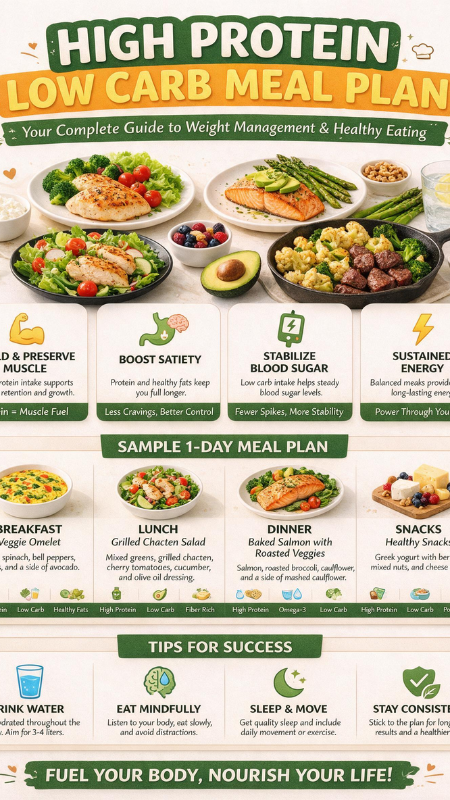
What Is a High-Protein, Low-Carb Meal Plan?
A high-protein, low-carb meal plan emphasizes protein-rich foods while limiting some carbohydrate sources, particularly sugary drinks, sweets, and highly refined grains.
Protein supports muscle maintenance, tissue repair, and many normal body functions. Carbohydrates provide energy, while fiber-rich carbohydrate foods support digestive health and can help make meals more satisfying.
There is no single protein or carbohydrate target that suits everyone. Your needs depend on factors such as body size, activity level, age, health conditions, and personal goals.
Rather than following a rigid number, start by choosing a suitable protein source for each main meal, filling much of your plate with non-starchy vegetables, and adjusting carbohydrate portions to your needs.
Potential Benefits and Important Considerations
A well-planned eating pattern may offer several benefits:
1. Helps make meals satisfying
Including protein at meals may help you feel satisfied after eating. Combining protein with vegetables, healthy fats, and fiber-rich foods can make meals more balanced.
2. Supports muscle maintenance
Protein supplies amino acids needed for maintaining and repairing muscle tissue. People who exercise regularly may benefit from distributing protein sources throughout the day.
3. Can reduce reliance on refined carbohydrates
Replacing some sugary snacks and refined-grain foods with eggs, fish, poultry, tofu, vegetables, and other nutrient-rich options may improve overall meal quality.
4. May support some weight-management goals
Some people find a lower-carbohydrate eating pattern useful for managing their food intake. However, results vary, and no specific meal plan supports weight loss.
5. May affect blood glucose and blood lipids
Reducing carbohydrate intake can improve certain blood-glucose measures for some people, but the response depends on the individual and the overall quality of the diet. A lower-carb plan is not automatically healthier, and replacing carbohydrates with large amounts of saturated fat may be counterproductive.
Important: If you have diabetes, kidney disease, a history of disordered eating, or another medical condition requiring dietary management, speak with a qualified healthcare professional before making substantial changes. People taking insulin or certain glucose-lowering medicines may need medication adjustments when carbohydrate intake changes.
Best Foods to Include
Choose a variety of foods rather than relying on only one or two protein sources.
| Food group | Examples | Practical tips |
|---|---|---|
| Poultry and lean meat | Chicken, turkey, lean beef | Grill, bake, roast, or cook in a pan |
| Fish and seafood | Salmon, tuna, sardines, shrimp | Include different varieties throughout the week |
| Eggs | Whole eggs, egg whites | Combine with vegetables for a quick meal |
| Dairy foods | Plain Greek yogurt, cottage cheese, suitable cheeses | Check added sugar and saturated fat |
| Plant-based proteins | Tofu, tempeh, edamame | Useful for meat-free meals |
| Legumes | Lentils, chickpeas, beans | They contain carbohydrates as well as protein and fiber |
| Non-starchy vegetables | Spinach, broccoli, zucchini, peppers, cauliflower | Use a variety of colors |
| Healthy fat sources | Olive oil, avocado, nuts, seeds | Use portions that fit your needs |
| Lower-carbohydrate fruit options | Berries and other whole fruits in suitable portions | Choose whole fruit rather than sugary drinks |
You can find more ideas in our guide to best good protein foods.
How to Build a Balanced Meal
A simple meal-building method can make planning easier.
Step 1: Choose a protein source.
Start with chicken, fish, eggs, tofu, plain Greek yogurt, or another protein-rich food.
Step 2: Add non-starchy vegetables.
Include broccoli, leafy greens, zucchini, mushrooms, cauliflower, or peppers to add variety and fiber.
Step 3: Include a suitable source of healthy fat.
Olive oil, nuts, seeds, or avocado can add flavor and help make the meal satisfying.
Step 4: Adjust carbohydrate portions to your needs.
You do not have to eliminate every carbohydrate food. Depending on your goals and health needs, you may include modest portions of beans, lentils, fruit, oats, or whole grains.
Step 5: Make the plan realistic.
Choose meals you enjoy and can prepare consistently. A simple plan you can maintain is usually more practical than a strict plan built around expensive or unfamiliar ingredients.
A 7-Day High-Protein, Low-Carb Meal Plan
The following plan is a starting point for meal inspiration, not a personalized prescription. Portion sizes and total nutrition will vary according to ingredients and preparation methods. Adjust meals to your hunger, activity level, health needs, and dietary preferences.
Day 1
Breakfast: Scrambled eggs with spinach and tomatoes.
Lunch: Grilled chicken salad with cucumber, leafy greens, olive oil, and lemon dressing.
Dinner: Baked salmon with broccoli and roasted zucchini.
Snack ideas: Plain Greek yogurt or a small handful of nuts.
Day 2
Breakfast: Plain Greek yogurt with chia seeds and a small portion of berries.
Lunch: Turkey lettuce wraps with avocado, tomatoes, and cucumber.
Dinner: Lean beef or tofu stir-fry with broccoli, mushrooms, and peppers.
Snack ideas: A boiled egg or sliced cucumber with hummus.
Day 3
Breakfast: Vegetable omelet with mushrooms and a little cheese.
Lunch: Tuna salad with leafy greens, celery, and olive-oil dressing.
Dinner: Roast chicken with cauliflower mash and green beans.
Snack ideas: Cottage cheese or a few nuts.
Day 4
Breakfast: Cottage cheese with a small portion of berries and seeds.
Lunch: Grilled tofu or chicken bowl with spinach, cucumber, peppers, and tahini dressing.
Dinner: Baked cod with asparagus and a side salad.
Snack ideas: Plain yogurt or boiled eggs.
Day 5
Breakfast: Egg muffins with spinach and peppers.
Lunch: Salmon salad with leafy greens, cucumber, and avocado.
Dinner: Turkey meatballs with zucchini noodles and tomato sauce.
Snack ideas: Celery sticks with nut butter or a small serving of cheese.
Day 6
Breakfast: Scrambled eggs with mushrooms and tomatoes.
Lunch: Chicken lettuce wraps with avocado and crunchy vegetables.
Dinner: Grilled shrimp or tofu with cauliflower rice and sautéed vegetables.
Snack ideas: Plain Greek yogurt or a boiled egg.
Day 7
Breakfast: Plain Greek yogurt with chia seeds and a few berries.
Lunch: Egg salad with mixed greens and cucumber.
Dinner: Roast turkey or baked tempeh with Brussels sprouts and roasted cauliflower.
Snack ideas: Nuts, cottage cheese, or fresh vegetables with hummus.
How to Customize the Plan
- For vegetarian meals: Use tofu, tempeh, eggs, plain Greek yogurt, or other suitable protein sources.
- For a higher-energy day: Adjust portions and include additional carbohydrate foods if appropriate for your needs.
- For more variety: Swap fish, poultry, eggs, and plant proteins across the week.
- For a tighter food budget: Use eggs, canned fish, frozen vegetables, and suitable store-brand protein sources.
- For meal preparation: Cook a few protein sources and wash or chop vegetables ahead of time.
This example does not establish a fixed daily calorie or carbohydrate limit. If you need a specific nutritional target, a registered dietitian or other qualified healthcare professional can help you determine an appropriate plan.
Three Easy High-Protein, Lower-Carb Recipes
1. Vegetable Egg Muffins
Ingredients
- 4 eggs
- 1 cup chopped spinach
- ½ cup diced bell pepper
- ¼ cup grated cheese, optional
- Black pepper and a small amount of salt
Instructions
- Preheat the oven to 375°F (190°C).
- Beat the eggs in a bowl.
- Stir in the spinach, bell pepper, seasoning, and cheese if using.
- Divide the mixture among lightly greased muffin cups.
- Bake for approximately 15–20 minutes, until the eggs are set.
- Let the muffins cool before storing them.
Serve with additional vegetables or another food that suits your nutritional needs.
2. Garlic Salmon with Roasted Vegetables
Ingredients
- 2 salmon fillets
- 2 cups broccoli florets
- 1 zucchini, sliced
- 1 tablespoon olive oil
- 2 garlic cloves, minced
- Lemon juice, black pepper, and herbs
Instructions
- Preheat the oven to 400°F (200°C).
- Place the broccoli and zucchini on a baking tray and toss with some olive oil and seasoning.
- Add the salmon and season with garlic, lemon juice, and herbs.
- Roast until the vegetables are tender and the salmon is cooked through. Cooking time will depend on the thickness of the fillets.
- Serve immediately.
3. Turkey or Chicken Lettuce Wraps
Ingredients
- 1 pound (450 g) lean ground turkey or finely chopped chicken
- 1 teaspoon olive oil
- 1 small bell pepper, diced
- ½ cup chopped mushrooms
- Lettuce leaves
- Garlic, black pepper, and your preferred herbs
Instructions
- Heat the olive oil in a skillet over medium heat.
- Add the turkey or chicken and cook thoroughly.
- Stir in the bell pepper, mushrooms, garlic, and seasoning.
- Continue cooking until the vegetables soften.
- Spoon the mixture into clean lettuce leaves and serve.
For a meat-free alternative, use crumbled tofu or another suitable plant-based protein.
Smart Snack Ideas
Snacks are optional. Choose them according to your hunger, daily routine, and nutritional needs.
Some convenient options include:
- Plain Greek yogurt.
- Boiled eggs.
- Cottage cheese.
- A small portion of nuts or seeds.
- Cucumber or bell-pepper slices with hummus.
- Cheese with fresh vegetables.
- Tuna served with cucumber slices.
- Edamame, if it fits your preferred carbohydrate intake.
Pay attention to serving sizes when needed, especially for calorie-dense foods such as nuts, seeds, cheese, and nut butter.
Meal Prep and Storage Tips
Planning ahead can make a high-protein, lower-carb eating pattern easier to follow.
1. Prepare a few protein options.
Cook suitable portions of chicken, fish, eggs, tofu, or other proteins for upcoming meals. You do not need to prepare every meal for the entire week at once.
2. Wash and cut vegetables.
Keep ready-to-use vegetables in clean containers to make salads, omelets, and quick dinners easier to assemble.
3. Make a short shopping list.
Organize your list by protein foods, vegetables, dairy or alternatives, pantry staples, and seasonings. This can reduce unnecessary purchases.
4. Use flexible meal combinations.
Prepare a few ingredients that can be combined in different ways. For example, cooked chicken can be used in a salad one day and lettuce wraps the next.
5. Store food safely.
Refrigerate perishable foods promptly in suitable containers. Follow current food-safety guidance for refrigeration times, reheating, and freezing. Do not assume that every prepared meal will remain safe for the same length of time.
For more planning ideas, see our guide to high-protein meal plans.
Frequently Asked Questions
Is a high-protein, low-carb meal plan suitable for everyone?
No. Nutritional needs differ, and some people need individualized dietary advice. People with kidney disease, diabetes treated with medication, or other relevant medical conditions should seek professional guidance before making major dietary changes.
Can this eating pattern help with weight management?
It may help some people organize satisfying meals and manage their overall food intake. However, results depend on many factors, including total energy intake, activity, sleep, health, and consistency. No particular meal plan supports weight loss.
Do I need to eliminate carbohydrates completely?
No. A lower-carbohydrate plan can still include vegetables, berries, legumes, and other carbohydrate-containing foods in portions that fit your needs. Fiber-rich foods can be valuable parts of a balanced diet.
How much protein should I eat each day?
There is no universal target for everyone. Requirements depend on factors such as body weight, age, activity level, health status, and goals. Avoid adopting a high protein target solely because it appears in an online meal plan; seek professional advice if you are unsure.
Can I follow this plan without eating meat?
Yes. Eggs, tofu, tempeh, plain Greek yogurt, cottage cheese, and other suitable foods can provide protein. Beans and lentils also provide protein and fiber, although they contain carbohydrates.
Can I prepare these meals in advance?
Many components can be prepared ahead of time, including cooked proteins, washed vegetables, and egg muffins. Store foods safely, refrigerate perishable items promptly, and freeze portions that will not be used within the recommended storage period.
What if I feel tired or hungry on a low-carb plan?
Review whether you are eating enough overall and whether your meals include a suitable balance of protein, fats, vegetables, and other foods. A restrictive plan may not meet your needs. Persistent symptoms or significant changes in how you feel should be discussed with a healthcare professional.
Final Thoughts
A high-protein, lower-carb meal plan can provide a useful framework for organizing meals around protein-rich foods, vegetables, and practical recipes. The seven-day example in this guide is intended to help you get started, not to prescribe the same portions or nutritional targets for everyone.
Focus on variety, food quality, safe preparation, and a routine that works for your life. Adjust the plan to your needs, and seek qualified professional advice if you require individualized nutrition guidance.
For additional meal ideas, explore our guide to easy high-protein meals.
Disclaimer: This article is for general educational purposes and is not medical or professional advice. Please consult a qualified healthcare professional before making changes to your diet, exercise, or health routine. See our Medical Disclaimer.