Important safety note: This sample plan is general information, not a personal diet prescription. A 1,200-calorie level is too low for many adults, and it is not suitable for everyone. Do not follow it if you are pregnant or breastfeeding, under 18, older, managing a medical condition, taking medication (including diabetes medication), or have a history of disordered eating. If you feel dizzy, weak, unwell, or notice unusual symptoms, stop and seek medical advice. Speak with a doctor or registered dietitian before starting any calorie-restricted plan.
A meal plan can make healthy eating easier by reducing last-minute decisions, simplifying grocery shopping, and helping you prepare balanced meals in advance. Some people look for a 1,200-calorie diet plan when researching weight management, but this calorie level is not appropriate for everyone.
Your energy needs depend on factors such as age, body size, activity level, and health status. A low-calorie plan may leave some adults without enough energy or nutrients, so it is important to seek individualized guidance before adopting a restrictive eating pattern.
Table of Contents
In this guide, you will find balanced meal ideas, practical food choices, a simple meal-prep routine, and tips for building a sustainable eating pattern. The examples are for general education, not a prescription to eat exactly 1,200 calories per day.
Important health note: Consult a qualified healthcare professional or registered dietitian before following a low-calorie diet, particularly if you have a medical condition, take medication that affects blood sugar, are pregnant or breastfeeding, or have a history of disordered eating. Children and teenagers should not follow adult calorie-restriction plans.
1200 Calorie Diet Plan
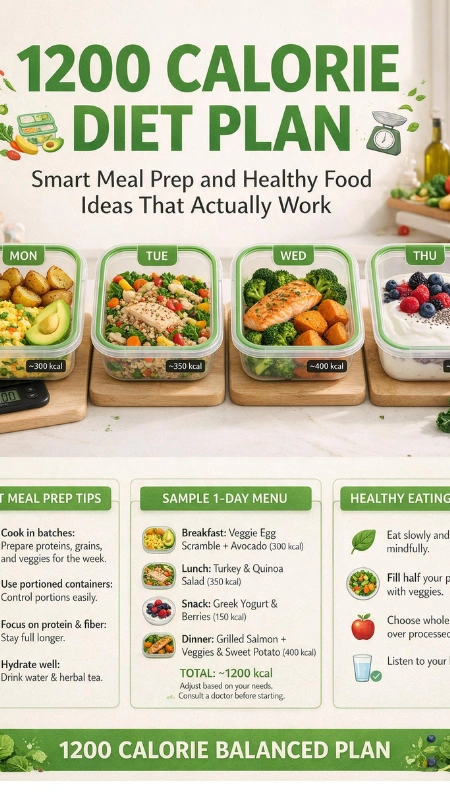
1200-Calorie Diet Plan: Sample Meals, Food Choices, and Safety Tips
What Is a 1200-Calorie Diet Plan?
A 1,200-calorie diet plan is an eating plan that limits daily energy intake to approximately 1,200 calories. Although this number appears in some weight-management resources, it should not be treated as a universal target.
Some adults may need substantially more energy to support everyday activities, exercise, and normal body functions. Eating fewer calories than your body needs can make it difficult to obtain sufficient protein, essential fats, vitamins, and minerals.
Is a 1200-Calorie Diet Suitable for Everyone?
No. Calorie needs vary considerably between individuals. A fixed target may be too restrictive for active adults or people with higher energy requirements.
Before following a low-calorie plan, consider:
- Your usual activity level and exercise routine.
- Your age, body size, and weight-management goals.
- Your medical history and any medications you take.
- Whether the plan provides enough food and a broad range of nutrients.
- Your energy, concentration, hunger, and overall well-being.
Persistent dizziness, weakness, fatigue, or excessive hunger should not be ignored. These symptoms may indicate that your eating pattern needs to be reviewed by a healthcare professional.
For a more individualized starting point, the NIDDK Body Weight Planner can help eligible adults estimate calorie and activity goals. It is an educational tool, not a substitute for medical advice.
How Balanced Meals Support Weight Management
A useful eating plan focuses on more than a calorie number. Food quality, variety, portion sizes, personal preferences, and consistency all matter.
Include Protein at Meals
Protein helps maintain body tissues and contributes to meal satisfaction. Useful sources include:
- Eggs and plain Greek yogurt.
- Fish and seafood.
- Chicken or turkey.
- Beans, chickpeas, and lentils.
- Tofu and other soy foods.
- Cottage cheese and other dairy foods, if tolerated.
You do not need to rely on one protein source. Rotating animal and plant-based options can make meals more varied.
Choose Fiber-Rich Foods
Vegetables, whole fruits, beans, lentils, oats, and whole grains provide fiber and a range of nutrients. They can also help make meals more satisfying.
Increase fiber gradually and drink enough fluids, especially if your usual diet is low in fiber.
Include Healthy Fats
Olive oil, nuts, seeds, avocado, and oily fish can contribute unsaturated fats and other valuable nutrients. These foods can be part of a balanced eating pattern, but portion sizes still influence the total energy in a meal.
Use Carbohydrates as Part of a Balanced Meal
Carbohydrates are not automatically unhealthy. Oats, brown rice, potatoes, quinoa, fruit, and whole-grain bread can all fit into a varied diet.
Pair carbohydrate-rich foods with protein, vegetables, or healthy fats to create meals that meet your preferences and nutritional needs.
Sample Daily Meal Ideas
The following meals illustrate how to combine protein, vegetables, fruit, whole grains, and fats. They are examples to adapt, not a complete prescription for a 1,200-calorie diet.
Calorie values vary with brands, ingredients, preparation methods, and serving sizes. If you need a medically appropriate calorie target, ask a qualified professional to help you determine it.
Breakfast: Vegetable and Egg Scramble
Ingredients
- 2 eggs.
- 1 cup fresh spinach.
- ½ cup sliced mushrooms.
- ½ cup cherry tomatoes.
- 1 teaspoon olive oil.
- 1 slice whole-grain bread, if desired.
- Black pepper and herbs to taste.
Method
- Warm the olive oil in a nonstick pan.
- Add the mushrooms and cook until softened.
- Add the spinach and tomatoes.
- Beat the eggs, pour them into the pan, and stir gently until cooked.
- Serve with whole-grain bread if desired.
This breakfast combines eggs with vegetables and can be adjusted with additional food to suit your appetite and energy needs.
Lunch: Chicken and Quinoa Bowl
Ingredients
- 3–4 ounces cooked chicken breast.
- ½–¾ cup cooked quinoa.
- 1–2 cups mixed greens and chopped vegetables.
- ¼ avocado, if desired.
- Lemon juice.
- 1 teaspoon olive oil.
- Black pepper and dried herbs.
Method
- Cook the chicken thoroughly and slice it.
- Prepare the quinoa according to its package instructions.
- Place the greens and vegetables in a bowl.
- Add the chicken, quinoa, and avocado.
- Dress with lemon juice, olive oil, and herbs.
For a plant-based alternative, replace the chicken with chickpeas, lentils, or tofu.
Dinner: Baked Salmon with Roasted Vegetables
Ingredients
- A salmon fillet, sized to your needs.
- 1 cup sliced zucchini.
- 1 cup chopped bell pepper.
- 1 teaspoon olive oil.
- Lemon juice.
- Garlic, dill, parsley, or other herbs.
Method
- Preheat the oven to 400°F (200°C).
- Arrange the vegetables on a baking tray and toss them with olive oil and herbs.
- Add the salmon and season with lemon juice and pepper.
- Bake until the vegetables are tender and the salmon is cooked through.
- Check that the thickest part of the fish reaches 145°F (63°C).
If you do not eat fish, try chicken, tofu, or beans with the vegetables. Adjust the accompanying grain or starchy vegetable according to your needs.
Snack Ideas
Snacks are optional and should reflect your hunger, schedule, and individual needs. Examples include:
- Plain Greek yogurt with berries.
- An apple with a small serving of nuts.
- Carrot and cucumber sticks with hummus.
- Cottage cheese with fruit.
- Whole-grain crackers with cheese.
- A banana with plain yogurt.
You do not need to skip a snack simply to remain under an arbitrary calorie target. If you regularly feel hungry between meals, review the overall adequacy of your eating pattern.
How to Build a Balanced Day of Eating
Instead of trying to force every meal into a strict calorie limit, use a flexible structure that can be adapted to your needs.
A practical day may include:
- Breakfast: Protein-rich food, fruit or vegetables, and a whole grain if desired.
- Lunch: Protein, vegetables, a grain or starchy vegetable, and a source of fat.
- Dinner: Protein, several vegetables, and a suitable carbohydrate source.
- Snacks: Optional foods chosen according to hunger, activity, and preference.
This structure is a starting point rather than a fixed prescription. Serving sizes and the number of meals you need depend on your personal circumstances.
For more information about food portions and individual calorie needs, see the NIDDK guide to choosing appropriate food portions.
Healthy Food Ideas for Everyday Meals
Keeping a variety of convenient ingredients at home makes balanced meals easier to assemble.
Protein-Rich Foods
Choose from:
- Eggs.
- Plain Greek yogurt.
- Chicken or turkey.
- Fish and canned tuna.
- Lentils, chickpeas, and beans.
- Tofu.
- Cottage cheese.
Frozen fish, canned beans, and plain yogurt can be convenient options when fresh ingredients are not available.
Vegetables and Fruits
Stock a mix of fresh, frozen, or canned produce, such as:
- Spinach and mixed greens.
- Broccoli and cauliflower.
- Zucchini and bell peppers.
- Tomatoes and cucumbers.
- Apples, oranges, and bananas.
- Berries, fresh or frozen.
Choose canned vegetables and beans with less added sodium when possible, and rinse canned beans if you prefer.
Whole Grains and Starchy Foods
Useful options include:
- Oats.
- Brown rice.
- Quinoa.
- Whole-grain bread and wraps.
- Potatoes and sweet potatoes.
- Whole-wheat pasta.
These foods provide energy and can contribute fiber and other nutrients. You do not need to eliminate carbohydrates to build balanced meals.
Sources of Unsaturated Fats
Consider:
- Olive oil.
- Nuts and seeds.
- Avocado.
- Tahini.
- Oily fish.
Use portions that suit your needs while remembering that these foods can be energy-dense.
A Simple Weekly Meal-Prep Routine
Meal preparation can save time without requiring you to cook every meal in advance. A flexible routine also helps you use ingredients before they spoil.
Step 1: Choose a Few Meals
Pick two breakfast options, two lunches, and two or three dinners that use overlapping ingredients. For example, roasted vegetables can accompany chicken one day and chickpeas the next.
Step 2: Prepare Ingredients
Depending on your schedule, you could:
- Wash and chop vegetables.
- Cook a batch of rice or quinoa.
- Prepare lentils or rinse canned beans.
- Cook chicken or another protein.
- Mix a simple lemon and olive oil dressing.
You do not need to prepare every ingredient at once. Choose the tasks that will make your busiest days easier.
Step 3: Store Food Safely
Refrigerate perishable food within two hours of cooking, or within one hour when the temperature is above 90°F (32°C). Keep the refrigerator at 40°F (4°C) or below.
Most cooked leftovers should be used within three to four days when properly refrigerated. Freeze portions you will not use within that period, and reheat leftovers thoroughly.
See the USDA FSIS guide to leftovers and food safety for additional guidance.
Step 4: Keep Convenient Ingredients Available
Useful staples include:
- Frozen vegetables.
- Canned beans and lentils.
- Oats.
- Whole-grain bread.
- Eggs.
- Plain yogurt.
- Canned fish.
- Fresh or frozen fruit.
These ingredients make it easier to prepare a meal when you have little time.
For more practical ideas, read our guides to planning weekly meals and easy healthy meals.
Common Mistakes to Avoid
1. Treating 1,200 Calories as a Universal Goal
A fixed calorie target cannot account for everyone’s energy needs. Do not assume that eating less is always better or that a plan is appropriate simply because it has a specific calorie number.
A better approach: Seek individualized advice and focus on a balanced eating pattern that supports your health.
2. Cutting Out Entire Food Groups Without a Reason
Eliminating all carbohydrates or fats can make a diet unnecessarily restrictive and may reduce food variety.
A better approach: Include vegetables, fruits, protein foods, whole grains or other carbohydrate sources, and unsaturated fats in portions appropriate for you.
3. Forgetting That Drinks and Extras Count
Cooking oil, dressings, sweetened drinks, and sauces can change the energy content of a meal. However, tracking every calorie is not necessary or appropriate for everyone.
A better approach: Be aware of ingredients and portions without letting food tracking become stressful or obsessive.
4. Preparing the Same Meals Every Day
Repeating meals can save time, but too little variety can make eating less enjoyable and limit the range of nutrients you obtain.
A better approach: Rotate protein sources, vegetables, fruits, and grains throughout the week.
5. Ignoring Persistent Hunger or Fatigue
Ongoing hunger, weakness, dizziness, or difficulty concentrating should not be treated as a test of willpower.
A better approach: Reassess whether you are eating enough and seek professional guidance if symptoms persist.
Building Sustainable Eating Habits
A useful eating routine should fit your life rather than require constant effort to maintain.
Start with a few practical habits:
- Plan some meals before shopping.
- Keep convenient, nutritious ingredients available.
- Prepare only what you can store safely and use in time.
- Eat a variety of foods that you enjoy.
- Choose physical activity that suits your abilities and health.
- Get adequate sleep and drink fluids regularly.
- Review your routine when your schedule or needs change.
Progress varies from person to person. Changes in body weight can reflect several factors, including fluid levels, and a particular result cannot be expected within a fixed number of days.
If calorie counting causes distress or leads you to ignore hunger, consider a less restrictive approach with help from a qualified professional.
Frequently Asked Questions
Is a 1,200-Calorie Diet Plan Safe?
It may be too restrictive for many people. Whether this intake is appropriate depends on individual energy and nutrient requirements. Consult a qualified healthcare professional or registered dietitian before starting a low-calorie plan, especially if you have a medical condition or take medication.
How Much Weight Can You Lose on a 1,200-Calorie Diet?
Weight change depends on individual energy needs, activity, starting weight, health, and other factors. It is not possible to predict a reliable result for every person from a calorie number alone. Focus on sustainable habits and avoid promises of a particular amount of weight loss within a set period.
Can I Exercise While Following a Low-Calorie Diet?
Physical activity can be part of a healthy lifestyle, but exercise can increase energy requirements. If your intake is too low, you may experience fatigue or have difficulty recovering. Ask a qualified professional whether your eating plan provides enough energy for your activity level.
What Should I Do If I Feel Hungry Between Meals?
First, consider whether your meals contain enough food and a useful combination of protein, fiber-rich foods, carbohydrates, and fats. A snack may be appropriate when you are hungry. Persistent or excessive hunger can also indicate that your overall intake is inadequate, so do not simply ignore it to meet a calorie target.
Do I Need to Meal-Prep Every Meal?
No. Preparing a few ingredients or meals in advance can be enough. You can cook grains, wash vegetables, prepare a protein, or keep convenient ingredients ready for quick meals. Choose a routine that fits your schedule and food-safety needs.
Where Can I Learn More About My Calorie Needs?
The NIDDK Body Weight Planner is an educational resource for eligible adults. A registered dietitian or other qualified healthcare professional can provide guidance tailored to your health, goals, and circumstances.
Final Thoughts
A balanced eating routine is about more than reaching a particular calorie number. Meal planning can make shopping and cooking easier, while a variety of nutritious foods helps support overall health.
A 1,200-calorie diet is not suitable for everyone, and the sample meals in this guide should not be treated as an individualized prescription. Focus on food variety, safe meal preparation, and a routine you can maintain. When you need a specific calorie target, seek advice based on your personal needs rather than relying on a one-size-fits-all plan.
Start with one practical step: choose a few balanced meals for the coming week, make a shopping list, and prepare ingredients that will save you time. Small, realistic changes can help you build a healthier routine without relying on extreme restrictions.
Disclaimer: This article is for general educational purposes only and is not medical advice. It does not replace guidance from a doctor or registered dietitian. Calorie needs vary widely between people, so please seek professional advice before starting any calorie-restricted plan.