Learning about nutrition can feel confusing when you encounter different opinions about carbohydrates, fats, calories, and supplements. One source may recommend avoiding certain foods, while another suggests adding them to your diet. For beginners, understanding which information to trust is an important first step.
Nutrition courses can help organize this information into clear lessons. A good course explains how food supports the body, how to recognize reliable health advice, and how to apply basic nutrition principles when shopping, cooking, and planning meals.
Table of Contents
You do not need a science background to begin learning about nutrition. With the right resources and practical exercises, you can build your knowledge gradually and make more informed food choices.
In this guide, you will discover what beginner nutrition courses teach, how to choose a reliable course, which practical skills to develop, and how to apply what you learn in everyday life.
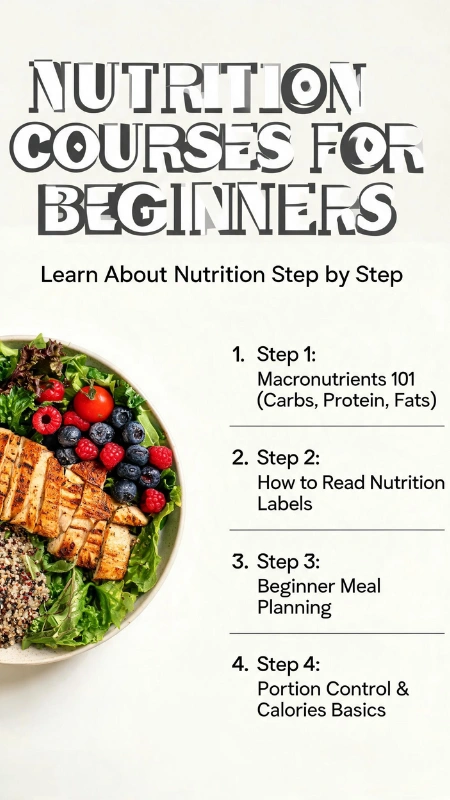
1. Why Learn About Nutrition?
Nutrition education helps you understand the relationship between food, nutrients, and health. It can also make everyday decisions easier, from choosing breakfast to comparing food labels at the supermarket.
A well-designed introductory course may help you:
- Understand the basic roles of carbohydrates, protein, and fats.
- Recognize the importance of vitamins, minerals, fiber, and water.
- Build balanced meals using familiar ingredients.
- Compare food products by reading their nutrition labels.
- Identify misleading claims about diets and supplements.
- Plan simple meals that suit your preferences and budget.
The goal is not to follow a perfect diet. It is to develop practical knowledge that helps you make informed choices over time.
Why Evidence-Based Learning Matters
Nutrition advice should be based on reliable evidence rather than fear, personal anecdotes, or promises of quick results.
When evaluating a course, look for references to recognized public health organizations, qualified educators, and scientific research. Be cautious of programs that claim a single food, supplement, or diet can solve every health problem.
The World Health Organization’s healthy diet guidance provides a useful starting point for understanding healthy eating patterns.
For a broader introduction to food groups and balanced meals, you can also explore USDA MyPlate.
2. What Beginners Can Learn in Nutrition Courses
An introductory course should explain the fundamentals in a logical order. You can study one topic at a time and gradually connect the information to your daily habits.
Lesson 1: Calories, Energy, and Metabolism
Calories measure the energy provided by food and drinks. Your body uses energy to maintain essential functions, move, digest food, and carry out daily activities.
Energy needs differ between people because of factors such as age, body size, activity level, and health.
A useful introductory lesson should explain:
- What calories measure.
- How food provides energy.
- Why energy needs vary.
- How overall food quality relates to health.
- Why calorie numbers alone do not describe the full nutritional value of a meal.
For example, two foods may provide similar amounts of energy but differ in their protein, fiber, vitamins, minerals, and ability to help you feel satisfied.
Beginner takeaway: Learn to consider both energy and nutritional value rather than judging food by calories alone.
Lesson 2: Understanding Macronutrients
Macronutrients are nutrients the body needs in relatively large amounts. They include carbohydrates, protein, and fats.
Protein
Protein supports the growth and repair of body tissues and helps the body produce enzymes and other essential substances.
Common sources include:
- Eggs and fish
- Chicken and other poultry
- Beans, lentils, and chickpeas
- Tofu and other soy foods
- Milk and yogurt
- Nuts and seeds
Including a suitable protein source in your meals can help you meet your nutritional needs. The amount you need depends on individual circumstances.
Carbohydrates
Carbohydrates are an important source of energy. They are found in grains, fruits, vegetables, beans, milk, and many other foods.
Fiber-rich sources such as oats, whole grains, legumes, and whole fruits also provide nutrients that support digestive health.
Carbohydrates are not automatically unhealthy. Their nutritional value depends on the food source, the overall eating pattern, and individual needs.
Fats
Dietary fats provide energy, help the body absorb vitamins A, D, E, and K, and support normal cell function.
Sources of unsaturated fats include olive oil, avocados, nuts, seeds, and oily fish.
Learning about fats also means understanding why the types of fat you consume matter. The World Health Organization’s healthy diet guidance explains general recommendations concerning different fats.
Beginner takeaway: A balanced eating pattern can include all three macronutrients. You do not need to eliminate an entire nutrient group without a specific reason.
Lesson 3: Vitamins and Minerals
Vitamins and minerals are micronutrients. The body needs them in smaller amounts, but they support many essential functions.
Some important examples include:
- Iron: Helps the body produce hemoglobin, which carries oxygen in the blood.
- Calcium: Supports bones and teeth.
- Vitamin D: Helps the body absorb calcium and supports bone health.
- Vitamin C: Supports collagen formation and helps the body absorb iron from plant foods.
- Vitamin B12: Supports normal nerve function and red blood cell formation.
- Magnesium: Contributes to normal muscle, nerve, and bone function.
A varied diet can provide many essential micronutrients. However, some people may need supplements because of dietary restrictions, life stage, a diagnosed deficiency, or other individual circumstances.
Supplements are not automatically necessary for everyone, and excessive amounts of certain nutrients can be harmful.
For detailed information about individual nutrients, consult the NIH Office of Dietary Supplements.
Lesson 4: Hydration, Electrolytes, and Caffeine
Water supports normal body functions, including temperature regulation and the transport of nutrients.
Fluid needs vary according to activity, climate, diet, age, and health. Hot weather and exercise can increase the amount of fluid you need.
Electrolytes are minerals that help regulate functions such as fluid balance and muscle activity. Special electrolyte products are not necessary for everyone; their usefulness depends on the circumstances.
Caffeine is found in coffee, tea, energy drinks, and some other products. Its effects vary between people, and consuming caffeine late in the day may interfere with sleep.
Beginner takeaway: Learn to recognize your fluid needs, understand the products you consume, and avoid assuming that expensive drinks or supplements are always beneficial.
Lesson 5: Digestion and Gut Health
The digestive system breaks down food and absorbs nutrients. Different parts of the digestive tract perform different functions, and the gut also contains a community of microorganisms.
Introductory nutrition education may cover:
- The role of dietary fiber.
- The difference between soluble and insoluble fiber.
- What probiotics and prebiotics mean.
- How different foods can affect digestion.
- Why digestive symptoms sometimes require medical assessment.
Fiber is found in foods such as beans, lentils, vegetables, fruits, oats, and whole grains. Increasing fiber gradually and drinking suitable amounts of fluid can help many people improve their dietary pattern.
Be cautious of products promising to detox your gut or remove toxins through special teas. Such claims often lack good evidence, and your liver and kidneys already perform essential functions in processing and eliminating waste.
Persistent digestive symptoms should be discussed with a qualified healthcare professional rather than treated solely with online advice.
3. How to Choose a Reliable Nutrition Course
Not every course provides the same level of education. Some focus on general food knowledge, while others are designed for healthcare professionals or people seeking formal qualifications.
Before enrolling, consider the following points.
Check the Course Content
A useful beginner course should explain basic nutrition concepts in plain language. It may include lessons about food groups, macronutrients, micronutrients, hydration, food labels, and meal planning.
Check the syllabus to make sure it matches your learning goals.
Review the Instructor’s Qualifications
Look for information about the instructor’s education and relevant experience. For medical nutrition advice, credentials and professional licensing are particularly important.
A short educational course does not automatically qualify someone to provide individualized medical nutrition therapy or practice as a registered dietitian.
Look for Reliable References
Good educational material should distinguish established evidence from emerging research and personal opinions.
Check whether the course provides sources from recognized health organizations, universities, or scientific publications.
Look for Practical Activities
Exercises can help you apply what you learn. Useful examples include:
- Comparing two nutrition labels.
- Planning balanced meals.
- Creating a grocery list.
- Identifying misleading nutrition claims.
- Reviewing the ingredients in common foods.
Understand the Cost and Certificate
Some introductory courses are free, while others charge tuition or offer paid certificates.
Before paying, check the total cost, course length, refund policy, certificate requirements, and whether the certificate is recognized for your intended purpose.
A certificate of completion does not necessarily represent a professional qualification.
Warning Signs to Avoid
Be cautious of courses that:
- Promise expected weight loss or rapid health transformations.
- Claim one diet is perfect for every person.
- Encourage unnecessary supplement purchases.
- Use frightening claims without credible evidence.
- Discourage appropriate medical treatment.
- Offer professional credentials that cannot be verified.
A good course should help you understand nutrition, not pressure you into buying products or following extreme rules.
4. Practical Nutrition Skills for Everyday Life
Learning nutrition becomes more useful when you can apply it to everyday decisions.
How to Read a Nutrition Label
Food labels provide information about serving size, calories, nutrients, and ingredients. The exact format depends on the country where the product is sold.
When comparing similar products, consider:
- Serving size: Check the amount the label describes.
- Added sugars: Compare the amount when relevant to your dietary goals.
- Sodium: Pay attention if you need to manage sodium intake.
- Fiber: Look for fiber-rich options when appropriate.
- Protein: Consider whether the food contributes useful protein to your meal.
- Ingredients: Review the ingredients, especially if you have allergies or dietary restrictions.
Do not judge a food by a single number. Consider the whole product and how it fits into your usual eating pattern.
For an example of label information in the United States, see the FDA Nutrition Facts Label guide.
How to Build a Balanced Meal
A simple plate method can help you combine different food groups without calculating every nutrient.
As a flexible starting point:
- Fill about half your plate with vegetables and fruits, giving priority to vegetables.
- Fill about one-quarter with a protein food.
- Fill about one-quarter with grains or other starchy foods.
- Include a suitable source of healthy fat if needed.
For example, you could serve grilled chicken or beans with brown rice and vegetables, then add a small amount of olive oil or another suitable fat.
This is a general guide, not a strict rule. Individual requirements can differ because of health conditions, activity levels, age, and other factors.
For more practical ideas, read our basic nutrition guide.
How to Plan Meals for a Busy Week
Meal planning can reduce daily decisions and make grocery shopping easier. You do not have to prepare every meal in advance.
Try this simple method:
- Choose two breakfasts, two lunches, and three dinners for the week.
- Reuse ingredients across different meals.
- Write a shopping list based on the recipes.
- Prepare one or two ingredients in advance.
- Keep a few convenient foods available for busy days.
Beans, eggs, frozen vegetables, oats, canned fish, and whole grains can all be useful ingredients, depending on your preferences and dietary needs.
The goal is to make healthy meals easier to prepare, not to follow a perfect schedule.
5. Three Easy Recipes for Beginners
These recipes use familiar ingredients and can be adapted to different preferences. Ingredient amounts are approximate and can be adjusted to suit your appetite and nutritional needs.
Recipe 1: Overnight Oats with Berries
Preparation time: About 5 minutes, plus refrigeration.
Ingredients:
- 1/2 cup rolled oats
- 1/2 cup plain Greek yogurt or a suitable alternative
- 1/2 cup milk or a fortified alternative
- 1 tablespoon chia seeds, optional
- 1/2 cup fresh or frozen berries
- Cinnamon to taste
Instructions:
- Combine the oats, yogurt, milk, and chia seeds in a container.
- Stir until the ingredients are mixed.
- Cover and refrigerate over time.
- Add the berries and cinnamon before serving.
Why it works: Oats provide carbohydrates and fiber, while yogurt or a suitable alternative contributes protein. Berries add flavor and other nutrients.
Recipe 2: Tuna and White Bean Salad
Preparation time: About 10 minutes.
Ingredients:
- 1 can tuna, drained
- 1/2 to 1 cup canned white beans, rinsed and drained
- 2 cups mixed salad greens
- 1 tablespoon olive oil
- 1 to 2 tablespoons lemon juice or vinegar
- Chopped cucumber or tomatoes, optional
- Black pepper and herbs to taste
Instructions:
- Place the tuna and beans in a bowl.
- Add the salad greens and any optional vegetables.
- Mix the olive oil with lemon juice or vinegar.
- Pour the dressing over the salad and season to taste.
Vegetarian option: Replace the tuna with additional beans or chickpeas.
Why it works: The beans provide fiber, while the tuna provides protein. Rinsing canned beans can reduce some of their sodium.
Recipe 3: Sheet-Pan Chicken and Vegetables
Preparation time: About 10–15 minutes, plus cooking.
Ingredients:
- 1 to 1.5 pounds chicken breast or thighs
- 4 cups mixed vegetables
- 1 to 2 tablespoons olive oil
- Paprika, garlic, and black pepper to taste
- Potatoes or cooked grains, if desired
Instructions:
- Preheat the oven to 400°F (about 200°C).
- Place the chicken and vegetables on a suitable baking tray.
- Add the olive oil and seasonings, then mix to coat.
- Bake until the vegetables are tender and the chicken reaches a safe internal temperature.
- Serve with potatoes or a suitable grain if desired.
Vegetarian option: Replace the chicken with tofu or another suitable protein source and adjust the cooking time.
Handle raw chicken separately from ready-to-eat foods, and clean utensils and surfaces after contact with raw poultry. In the United States, the USDA provides guidance on safe food handling.
6. A Simple Seven-Day Meal Framework
A flexible meal framework can help you practice the principles you learn without requiring a completely different recipe every day.
| Day | Breakfast | Lunch | Dinner |
|---|---|---|---|
| Monday | Overnight oats with berries | Tuna and bean salad | Chicken with vegetables and potatoes |
| Tuesday | Eggs with whole-grain toast | Leftover chicken and vegetables | Lentil curry with rice |
| Wednesday | Yogurt with fruit and nuts | Chickpea salad | Fish with rice and vegetables |
| Thursday | Oatmeal with milk | Leftover lentil curry | Vegetable and bean soup with bread |
| Friday | Eggs and fruit | Whole-grain sandwich with a protein filling | Tofu or chicken stir-fry |
| Saturday | Yogurt with oats and berries | Leftover stir-fry | Baked potatoes with beans and vegetables |
| Sunday | Whole-grain toast with eggs | Bean salad | Homemade soup with a protein-rich side |
These are examples, not a prescribed diet. Adjust portions and ingredients to suit your appetite, budget, cultural preferences, allergies, and nutritional needs.
You can repeat meals, substitute ingredients, and use frozen or canned foods when convenient. If you have a medical condition that affects your diet, seek individualized advice before following a restrictive meal plan.
7. Common Nutrition Myths
Myth 1: Carbohydrates Are Always Unhealthy
Fact: Carbohydrates are an important energy source. Whole grains, fruits, vegetables, and legumes can provide fiber and essential nutrients. The type and amount of carbohydrate that suit you depend on your overall eating pattern and individual needs.
Myth 2: Everyone Needs Supplements
Fact: Supplements can be helpful in particular circumstances, but not everyone needs them. Some nutrients can be harmful when consumed in excessive amounts. Seek qualified advice if you are unsure whether you need a supplement.
Myth 3: Detox Products Are Necessary for Good Health
Fact: Products marketed as detox solutions often make claims that are not supported by strong evidence. The liver and kidneys perform essential waste-processing functions. A balanced diet and appropriate healthcare are more useful foundations than unproven cleansing products.
Myth 4: Healthy Eating Requires Expensive Foods
Fact: Affordable foods such as oats, beans, lentils, eggs, seasonal produce, and frozen vegetables can contribute to a balanced eating pattern. Planning meals and using leftovers safely may also help control costs.
Myth 5: One Eating Plan Works for Everyone
Fact: Nutrition needs differ according to age, activity, health, preferences, and other factors. A suitable eating pattern should be realistic and adapted to the individual.
8. How to Study Nutrition Consistently
You do not need to spend hours studying every day. A simple learning schedule can help you build knowledge gradually.
Create a Realistic Study Plan
Try studying for 20–30 minutes three times per week.
For example:
- Week 1: Learn about food groups and basic nutrients.
- Week 2: Study nutrition labels and ingredient lists.
- Week 3: Practice building balanced meals.
- Week 4: Plan a few meals and review reliable nutrition sources.
Use short notes, write down questions, and focus on one practical skill at a time.
Practice What You Learn
Choose one small action each week. You might compare two breakfast cereals, prepare a new bean recipe, or add vegetables to a familiar meal.
Small, realistic changes can help you apply your knowledge without turning eating into a stressful task.
Use Reliable Learning Resources
Along with a course, explore educational resources from recognized organizations:
- USDA MyPlate for practical information about food groups.
- World Health Organization for general healthy eating guidance.
- NIH Office of Dietary Supplements for information about vitamins and minerals.
- MedlinePlus Nutrition for general nutrition education.
These resources can help you compare course material with established guidance. They do not replace personalized medical advice.
9. Frequently Asked Questions
Which nutrition courses are best for complete beginners?
Look for courses that explain basic nutrients, food groups, meal planning, and food labels in plain language. Reliable references, qualified instructors, and practical activities are useful signs of quality.
Are online nutrition courses worth taking?
They can be useful if you prefer flexible study and want to learn at your own pace. Before enrolling, review the course outline, instructor qualifications, cost, and whether the course matches your goals.
How long does it take to learn basic nutrition?
The time required depends on the course and how often you study. You can learn introductory concepts over several weeks, but developing a deeper understanding and applying it confidently may take longer.
Do I need a science background to study nutrition?
No. Many introductory courses are designed for people without previous science education. A good course should explain unfamiliar terms and build on each topic gradually.
Can nutrition education help with weight management?
Learning about balanced meals, food labels, portions, and meal planning may help people make informed choices related to weight management. However, outcomes vary, and no course can support weight loss. Medical conditions, medications, genetics, and other factors can affect weight.
Can a beginner nutrition course qualify me to give medical advice?
Not necessarily. An introductory course may provide general knowledge, but it does not automatically qualify you to diagnose conditions, prescribe therapeutic diets, or practice as a registered dietitian. Check the requirements in your country if you intend to work professionally in nutrition.
10. Conclusion
Learning about nutrition becomes easier when you approach it step by step. A good beginner course can help you understand nutrients, compare food labels, plan balanced meals, and recognize unreliable health claims.
Start with the fundamentals, practice one skill at a time, and use trusted sources to check what you learn. You do not need to change every meal or follow strict rules to make progress.
Choose an educational resource that matches your goals, budget, and available time. Most importantly, remember that nutrition knowledge is a tool for making informed decisions—not a demand for perfection.
Medical disclaimer: This article provides general educational information and is not a substitute for individualized medical advice, diagnosis, or treatment. Consult a qualified healthcare professional about personal nutritional needs or medical conditions.
Disclaimer: This article is for general educational purposes and is not medical or professional advice. Please consult a qualified healthcare professional before making changes to your diet, exercise, or health routine. See our Medical Disclaimer.