
You’ve probably been there before.
You decide it’s time to “eat healthier.” You cut carbs. Then someone tells you carbs are essential. You try low-fat foods. Later, you hear healthy fats are good for you. The advice feels endless—and contradictory.
So you start wondering: what are macros in diet conversations, and why does everyone keep talking about them?
Table of Contents
Here’s the truth: understanding macros isn’t about following the latest trend. It’s about learning how food actually works in your body. Once you understand macronutrients, you stop guessing. You stop fearing certain foods. And you start building meals that genuinely support your goals—whether that’s fat loss, muscle gain, or simply having steady energy throughout the day.
Let’s break it down in a way that finally makes sense.
What Are Macros in Diet? (Simple Definition)
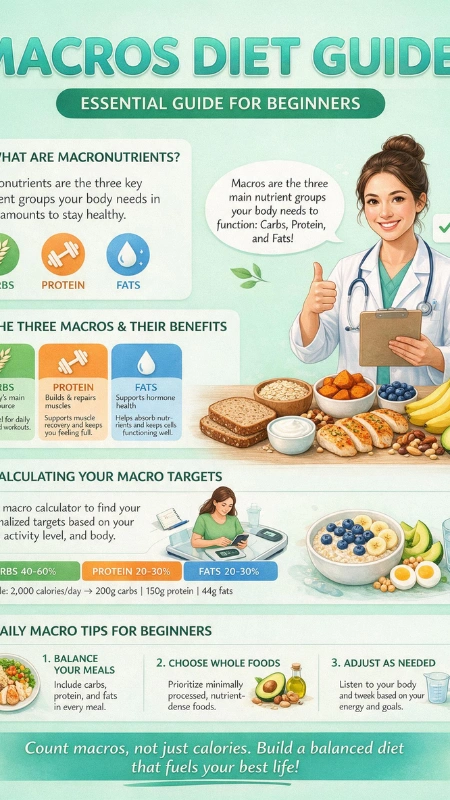
“Macros” is short for macronutrients. These are the three nutrients your body needs in large amounts to function properly:
- Protein
- Carbohydrates
- Fats
Every food you eat contains one or more of these macronutrients. Together, they provide energy (calories) and support nearly every system in your body.
If calories tell you how much energy you’re consuming, macros tell you where that energy comes from.
Understanding what are macros in diet terms means understanding how each of these nutrients affects your body differently.
Why Macros Matter More Than You Think
When you eat, your body doesn’t just count calories. It reacts differently depending on whether those calories come from protein, carbs, or fats.
Here’s why that matters to you:
- Protein helps build and repair tissue.
- Carbohydrates fuel your brain and muscles.
- Fats regulate hormones and help absorb vitamins.
You could eat 1,800 calories a day in donuts—or 1,800 calories balanced across protein, carbs, and fats. The calorie number might match, but how you feel, perform, and recover will be completely different.
That’s the power of macronutrients.
The 3 Main Macronutrients Explained
1. Protein: The Repair and Build Nutrient
If you’ve ever tried to tone up or lose weight, you’ve probably heard that you need more protein. There’s a reason for that.
“According to medical resources from MedlinePlus, understanding the biological role of macronutrients like protein is vital for cellular repair, immune function, and overall physical health.”
What Protein Does in Your Body
- Builds and repairs muscle tissue
- Supports immune function
- Produces enzymes and hormones
- Keeps you feeling full longer
Every time you work out, your muscle fibers experience tiny tears. Protein helps rebuild them stronger than before.
How Many Calories Are in Protein?
- 4 calories per gram
Common High-Protein Foods
- Chicken breast
- Eggs
- Greek yogurt
- Cottage cheese
- Tofu and tempeh
- Lentils and beans
- Fish and lean beef
How Much Protein Do You Need?
For general health, the baseline recommendation is about:
- 0.8 grams per kilogram of body weight
If you’re active, lifting weights, or trying to lose fat while maintaining muscle, you may benefit from:
- 1.2–2.2 grams per kilogram
When people ask what are macros in diet plans for weight loss, protein is usually emphasized because it increases fullness and helps preserve muscle during a calorie deficit.
2. Carbohydrates: Your Body’s Primary Fuel
Carbs often get a bad reputation. But your body is designed to use carbohydrates as its preferred energy source.
What Carbs Do
- Fuel your workouts
- Power your brain
- Replenish glycogen stores
- Support digestion (through fiber)
If you’ve ever felt foggy or exhausted on an ultra-low-carb diet, you’ve experienced what happens when your body doesn’t have enough fuel.
Calories in Carbohydrates
- 4 calories per gram
Types of Carbohydrates
Not all carbs are equal. Here’s how they break down:
1. Simple Carbs
- Fruit
- Milk
- Sugar
2. Complex Carbs
- Oats
- Brown rice
- Quinoa
- Sweet potatoes
3. Fiber (a type of carb)
- Vegetables
- Legumes
- Whole grains
Dietary guidelines typically suggest 45–65% of your daily calories come from carbohydrates, depending on your activity level.
When you understand what are macros in diet structures, you’ll see carbs aren’t the enemy—they’re strategic fuel.
3. Fats: Essential for Hormones and Health
Fat used to be blamed for everything. Now we know better.
Healthy fats are critical for your body to function properly.
What Fats Do
- Support hormone production
- Protect organs
- Help absorb vitamins A, D, E, and K
- Support brain health
Without adequate fat intake, your hormone levels can suffer—which impacts energy, mood, and recovery.
Calories in Fat
- 9 calories per gram
Fat is more calorie-dense than protein or carbs, which is why portion control matters.
Healthy Fat Sources
- Avocados
- Olive oil
- Nuts and seeds
- Fatty fish (salmon, sardines)
- Nut butters
Unsaturated fats (like olive oil and fish) are generally considered heart-healthy, while excessive saturated fat should be moderated.
Calories vs. Macros: What’s the Difference?
This is where confusion often begins.
- Calories measure total energy.
- Macros determine how that energy is distributed.
Imagine you eat 2,000 calories per day.
You could structure that 2,000 calories as:
- High carb, low fat
- High protein, moderate carb
- Balanced across all three
Each approach affects your hunger levels, performance, and body composition differently.
When you understand what are macros in diet planning, you stop thinking only about calories and start thinking about composition.
Understanding Macro Ratios
Your macro ratio is the percentage of calories you allocate to each macronutrient.
Here are general examples:
| Goal | Protein | Carbs | Fats |
|---|---|---|---|
| Weight Loss | 30–40% | 30–40% | 20–30% |
| Muscle Gain | 25–35% | 40–50% | 20–30% |
| Maintenance | 20–30% | 45–55% | 20–35% |
These are starting points—not rigid rules. Your ideal split depends on:
- Activity level
- Body composition
- Metabolism
- Personal preference
You may thrive on higher carbs if you train intensely. Or you may prefer slightly higher fats for satiety.
How to Calculate Your Macros (Step-by-Step)
If you want to move from theory to action, here’s how you can calculate your own macros.
Step 1: Determine Your Daily Calorie Needs
Use a Total Daily Energy Expenditure (TDEE) calculator. It factors in:
- Age
- Weight
- Height
- Activity level
Example:
Let’s say your maintenance calories are 2,000 per day.
“To establish a healthy foundation for daily caloric intake and macronutrient distribution, reference the comprehensive data provided by the U.S. Dietary Guidelines for Americans.”
Step 2: Choose a Macro Split
Example split:
- 40% carbs
- 30% protein
- 30% fat
Now convert percentages to grams:
- Carbs: 800 calories ÷ 4 = 200g
- Protein: 600 calories ÷ 4 = 150g
- Fat: 600 calories ÷ 9 = 67g
That’s your daily macro target.
Benefits of Tracking Macros
Tracking macros isn’t mandatory. But many people find it helpful.
Here’s why you might benefit:
- You gain clarity about what you’re eating
- You balance meals more effectively
- You avoid extreme dieting
- You protect muscle during fat loss
- You improve portion awareness
Unlike restrictive diets that eliminate entire food groups, macro tracking gives you flexibility. You can fit pizza into your plan—as long as your overall macros stay aligned.
Common Beginner Mistakes with Macros
When learning what are macros in diet systems, beginners often make avoidable errors.
1. Ignoring Food Quality
Hitting macro targets with processed foods alone may technically work—but it won’t optimize health.
2. Obsessive Tracking
You don’t need to weigh lettuce leaves forever. Macro tracking can be a temporary learning tool.
3. Setting Unrealistic Goals
Drastically slashing carbs or fats usually backfires.
4. Forgetting Micronutrients
Macros matter—but vitamins and minerals matter too. Vegetables still count.
Who May Need a Different Macro Approach?
Macronutrient needs vary from person to person. Your activity level, food preferences, health conditions, and personal goals can all influence how you plan your meals. There is no single macro ratio that works for everyone.
Athletes and Active People
People who exercise regularly may need to adjust their carbohydrate and protein intake to support training and recovery. The right balance depends on the type, intensity, and duration of exercise, as well as overall energy needs.
Vegetarians and Vegans
Plant-based diets can provide the macronutrients your body needs. Useful protein sources include beans, lentils, chickpeas, tofu, tempeh, edamame, and other soy foods. Combining a variety of plant foods throughout the day can help support a balanced diet.
People with Specific Health Needs
People with diabetes, kidney disease, or other medical conditions may need individualized nutrition advice. Pregnant or breastfeeding people may also have different nutritional requirements. Anyone with a history of disordered eating should be cautious about strict food tracking.
If you have a medical condition or need a specialized eating plan, consult a qualified healthcare professional or registered dietitian before making major dietary changes.
Remember: Macro tracking is optional. A balanced, varied diet can support good nutrition without requiring you to calculate every gram of protein, carbohydrate, or fat.
Sample 1-Day Macro-Friendly Meal Plan
Here’s how balanced macros might look in real life.
Breakfast: Protein Oatmeal Bowl
| Ingredient | Quantity | Approximate Macros |
|---|---|---|
| Rolled oats | ½ cup | 27g carbs |
| Greek yogurt | ¾ cup | 15g protein |
| Chia seeds | 1 tbsp | 4g fat |
| Blueberries | ½ cup | 10g carbs |
| Almond butter | 1 tbsp | 9g fat |
Balanced with protein, complex carbs, and healthy fats.
Lunch: Grilled Chicken Power Bowl
| Ingredient | Quantity | Approximate Macros |
|---|---|---|
| Grilled chicken | 4 oz | 28g protein |
| Quinoa | 1 cup | 39g carbs |
| Avocado | ½ | 12g fat |
| Mixed greens | 1 cup | 5g carbs |
| Olive oil | 1 tbsp | 14g fat |
This meal supports muscle recovery and sustained energy.
Dinner: Salmon and Roasted Vegetables
| Ingredient | Quantity | Approximate Macros |
|---|---|---|
| Salmon | 5 oz | 34g protein |
| Sweet potato | 1 medium | 26g carbs |
| Broccoli | 1 cup | 6g carbs |
| Olive oil | 1 tbsp | 14g fat |
You end the day with omega-3 fats and fiber-rich carbs.
Bonus Meal: Tofu and Vegetable Rice Bowl
This simple plant-based meal combines protein from tofu, carbohydrates from rice, and fiber from vegetables. You can adjust the portions to suit your appetite and nutritional needs.
Ingredients:
- 200 g extra-firm tofu
- 1 cup mixed vegetables, such as broccoli, bell peppers, and carrots
- ¾ cup cooked rice
- 1 teaspoon sesame oil
- Garlic, ginger, and a small amount of soy sauce, to taste
Instructions:
- Press the tofu to remove excess moisture, then cut it into cubes.
- Heat the sesame oil in a pan and cook the tofu until lightly golden.
- Add the vegetables, garlic, and ginger. Cook until the vegetables are tender but still slightly crisp.
- Stir in the soy sauce and serve with the cooked rice.
How to adjust the meal:
- For more carbohydrates, increase the rice portion.
- For more vegetables and fiber, add extra broccoli, carrots, or leafy greens.
- For a lower-sodium option, use reduced-sodium soy sauce or season with herbs and lemon.
Exact calories and macronutrient amounts depend on the ingredients, brands, and serving sizes. Use a reliable nutrition database or product labels if you need precise estimates.
Do You Need to Track Macros to Be Healthy?
Not necessarily.
If you eat mostly whole foods, include protein at every meal, and balance carbs and fats reasonably, you can stay healthy without tracking anything.
Macro tracking is simply a tool.
It can help if you:
- Feel stuck with weight loss
- Want to build muscle
- Need structure
- Enjoy data
But it isn’t required for lifelong health.
FAQ: What Are Macros in Diet?
What are macros in diet and why do they matter?
Macros are protein, carbohydrates, and fats. They matter because they provide energy and directly impact muscle growth, fat storage, and overall health.
What are macros in diet for weight loss?
For weight loss, macros typically prioritize higher protein intake to preserve muscle, moderate carbohydrates for energy, and controlled fats to maintain a calorie deficit.
Is counting macros better than counting calories?
Counting macros gives you more insight into nutrient balance, while calorie counting focuses only on total energy. Many people find macro tracking more effective for body composition goals.
What happens if you ignore macros?
You may still lose or gain weight depending on calories, but you might struggle with hunger, energy crashes, or muscle loss.
Are macros important if you exercise?
Yes. If you train regularly, understanding what are macros in diet planning helps you recover faster and perform better.
Final Thoughts: Take Control of Your Nutrition
Learning what are macros in diet planning isn’t about perfection. It’s about awareness.
When you understand protein, carbs, and fats, you stop reacting emotionally to food trends. You stop labeling foods as “good” or “bad.” Instead, you start making strategic choices that align with your goals.
You don’t need to overhaul everything over time.
Start simple:
- Add protein to every meal.
- Choose complex carbs more often.
- Include healthy fats in moderation.
- Pay attention to how you feel.
If you’re ready to take control, calculate your macros today and experiment for two weeks. Track your intake. Observe your energy. Adjust as needed.
Your body responds to consistency—not extremes.
Now that you know what macros are in diet planning, the next move is yours.
Disclaimer: This article is for general educational purposes and is not medical or professional advice. Please consult a qualified healthcare professional before making changes to your diet, exercise, or health routine. See our Medical Disclaimer.